Model Answer:
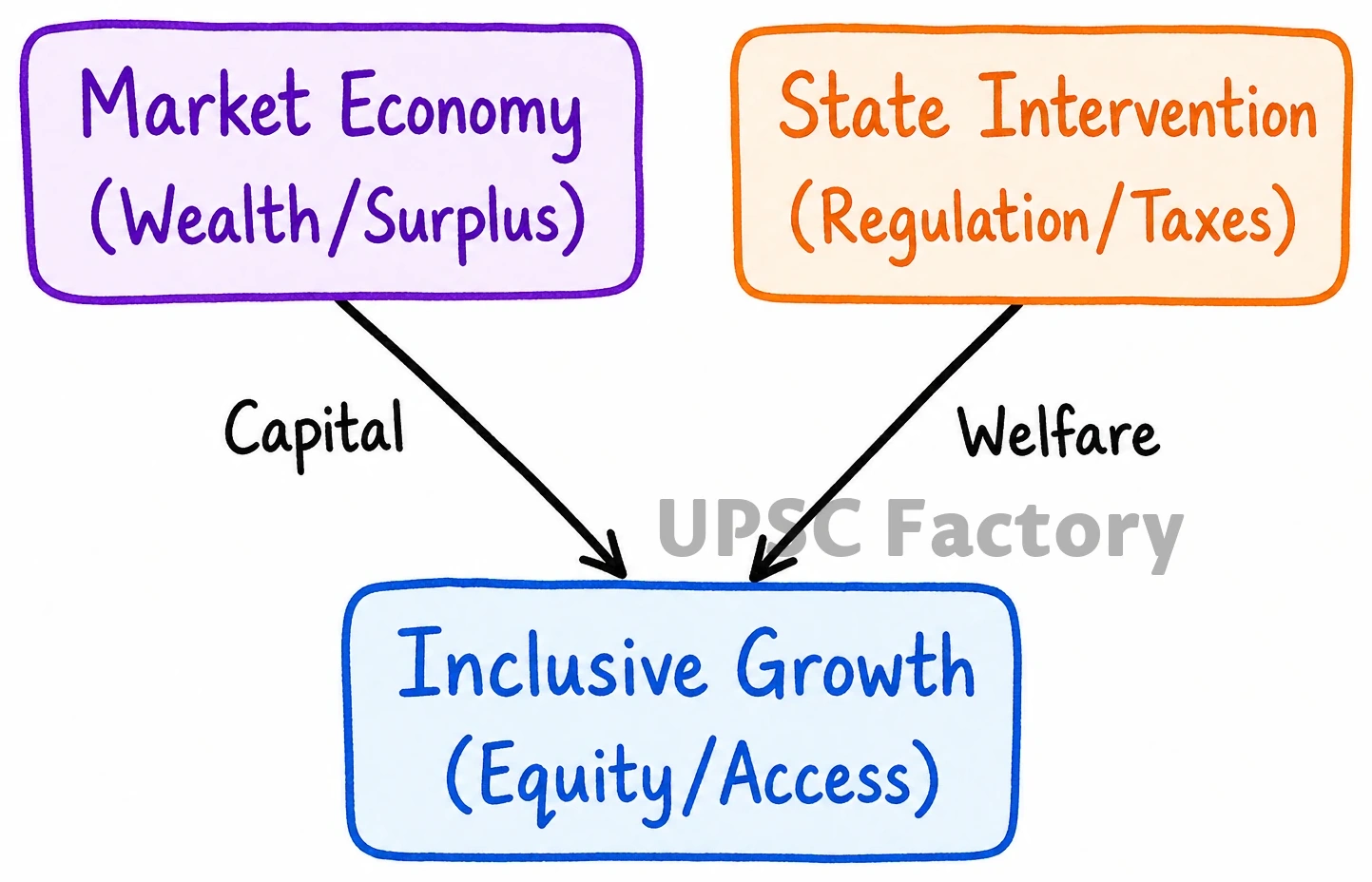
A market economy prioritizes efficiency and wealth creation but inherently risks exacerbating inequalities. However, inclusive growth remains achievable through strategic state interventions.
1. Feasibility of Inclusive Growth in a Market Economy
- Wealth Redistribution: Free markets generate capital surplus; progressive taxation mechanisms channel this into targeted welfare to bridge inequality.
- Human Capital Development: State investments in education and health build equitable capabilities, allowing marginalized groups to participate in markets.
- Correcting Market Failures: Regulatory frameworks prevent monopolistic wealth concentration and protect grassroots enterprises (e.g., Competition Commission of India).
2. Significance of Financial Inclusion for India’s Economic Growth
- Capital Formation: Formalizes dormant household savings, expanding the lending pool for productive national investments (e.g., PM Jan Dhan Yojana).
- Grassroots Entrepreneurship: Democratizes access to micro-credit, driving MSME growth and decentralized job creation (e.g., PM MUDRA Yojana).
- Welfare Efficiency: Enables targeted Direct Benefit Transfers via the JAM trinity, eliminating leakages and spurring rural consumption.
- Economic Resilience: Access to micro-insurance and pensions mitigates livelihood shocks, preventing vulnerable populations from relapsing into poverty.
Financial inclusion acts as a critical enabler, ensuring the multiplier effect of a market economy reaches the bottom of the pyramid.