Model Answer:
Under Article 213, the Governor possesses exceptional legislative power to promulgate ordinances, acting as a contingent emergency mechanism rather than a parallel law-making process.
1. Essential Conditions for Governor’s Legislative Powers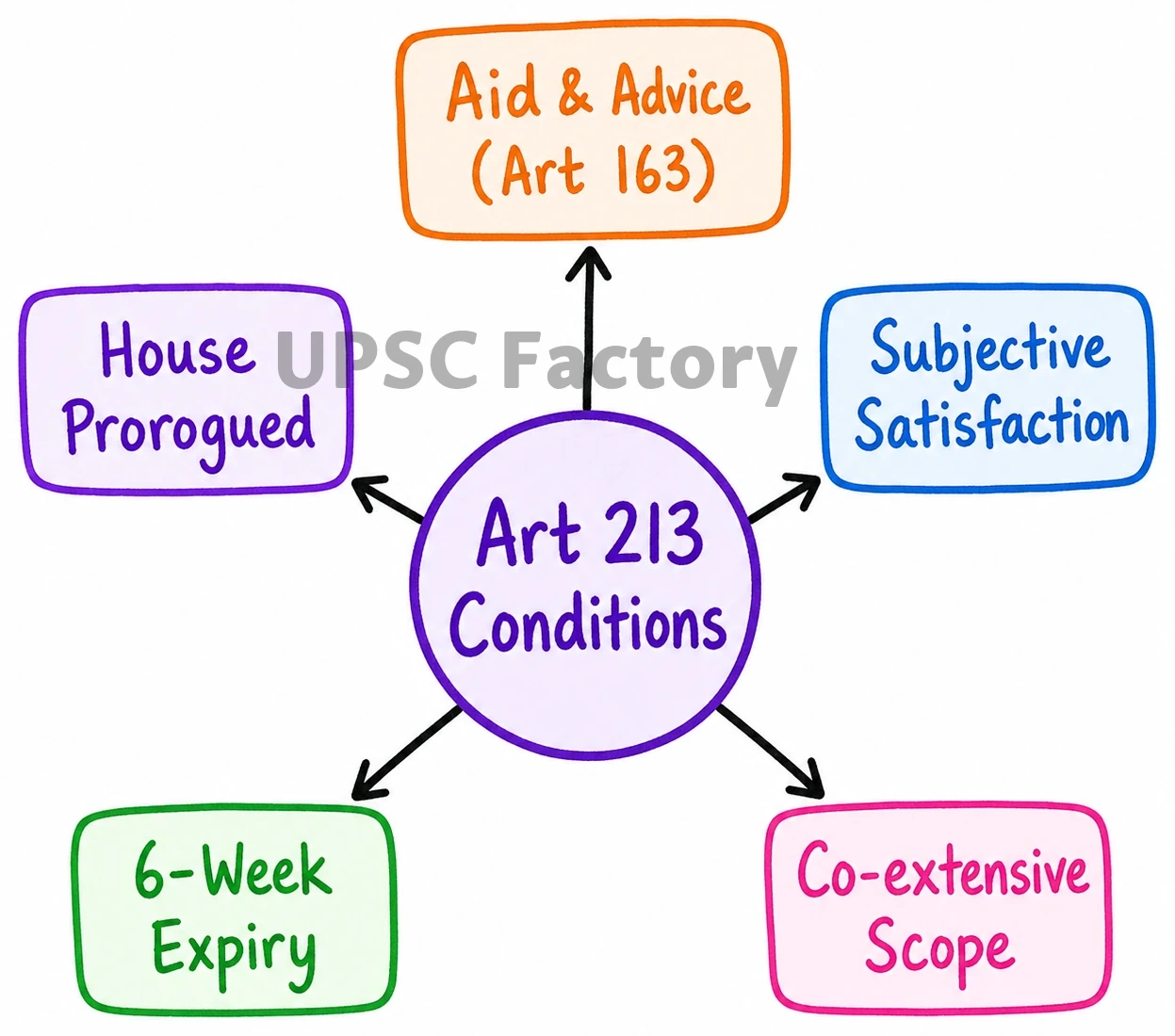
- Legislature not in session: Promulgation is constitutionally valid only when the Legislative Assembly (or both Houses) is prorogued.
- Subjective satisfaction: The Governor must be genuinely satisfied that circumstances demand urgent, immediate action.
- Aid and Advice: Power is exercised solely on the binding advice of the Council of Ministers (Article 163).
- Co-extensive jurisdiction: The scope is strictly confined to subjects where the State Legislature holds law-making authority (State/Concurrent lists).
- Prior Presidential sanction: Mandatory for ordinances containing provisions that would require the President’s assent in regular bills (e.g., interstate trade restrictions).
- Mandatory temporal limits: The ordinance must be laid before the legislature and ceases to operate six weeks from its reassembly.
2. Legality of Re-promulgation without Legislative Scrutiny
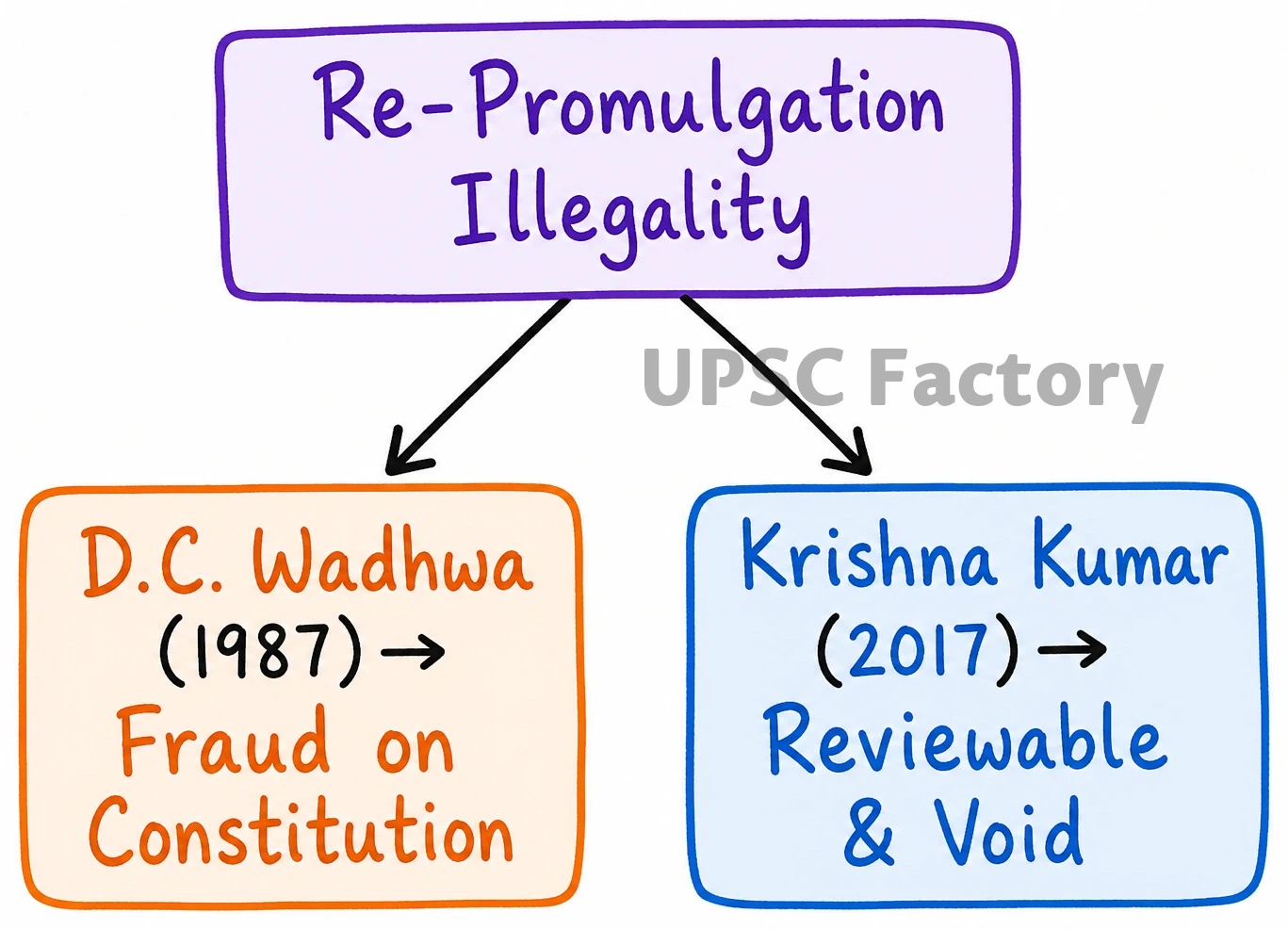
- Fraud on the Constitution: Repeated re-promulgation bypassing legislative debate subverts democratic accountability (D.C. Wadhwa Case, 1987).
- Colorable exercise of power: Utilizing executive fiat to achieve what is not passed legislatively breaches constitutional trust.
- Subject to Judicial Review: The Governor’s satisfaction and motive for re-promulgation are not immune from judicial scrutiny (Krishna Kumar Singh Case, 2017).
- Mandatory tabling rule: Failure to place the ordinance before the legislature upon reassembly renders the re-promulgation legally void (Krishna Kumar Singh Case).
- Breach of Separation of Powers: It usurps the primary law-making role of the elected legislature, threatening structural constitutional balance.
- No permanent rights: Re-promulgated ordinances without legislative sanction do not automatically create irreversible rights or obligations once lapsed.
Ordinance-making is a restricted, emergent power. Strict adherence to judicial guidelines prevents executive overreach, ensuring the primacy of the legislature and upholding parliamentary democracy.