Model Answer:
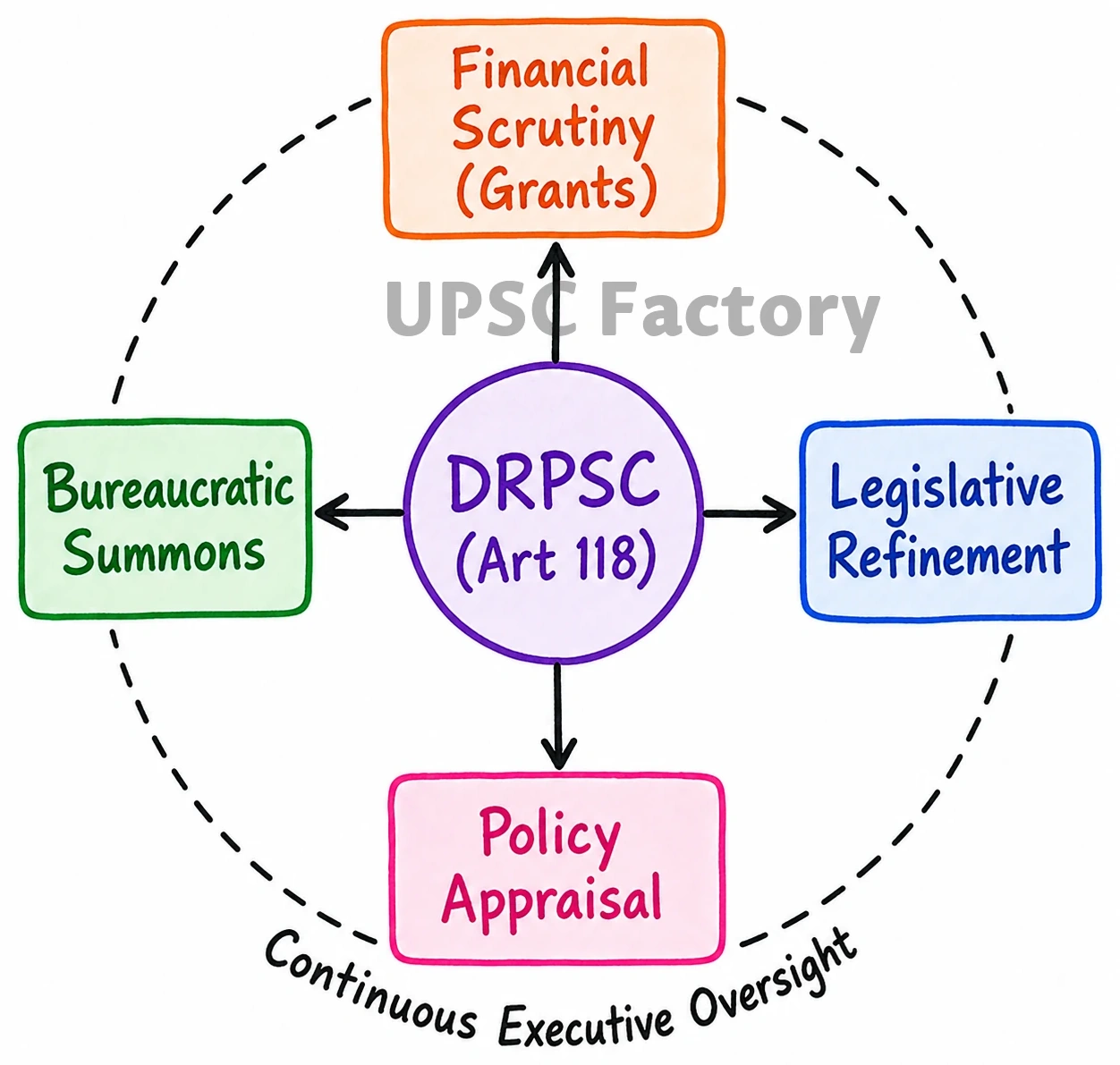
Constituted under Article 118(1), the 24 Department-related Parliamentary Standing Committees (DRPSCs) function as “mini-parliaments,” ensuring continuous, detailed, and non-partisan scrutiny to enforce executive accountability.
1. DRPSCs: Enforcing Accountability and Inspiring Reverence
- Financial Scrutiny: Rigorously analyzes Demands for Grants, exposing inefficiencies and preventing wasteful departmental expenditure (e.g., Ministry of Defence budget allocation reviews).
- Legislative Refinement: Extensively debates complex legislation, incorporating multi-stakeholder feedback in a non-partisan environment (e.g., Privacy safeguards added to the DNA Technology Bill).
- Bureaucratic Accountability: Routinely summons top officials for evidence, demanding direct explanations for policy delays or administrative lapses (e.g., Parliamentary IT Committee questioning officials on social media rules).
- Policy Appraisal: Conducts comprehensive, year-round evaluations of long-term departmental policies and national schemes (e.g., Agriculture Committee’s assessment of PM-KISAN).
- Consensus Building: Closed-door proceedings minimize political grandstanding, fostering objective, cross-party consensus on otherwise contentious administrative issues.
2. Evaluation of Working: Challenges and Shortfalls
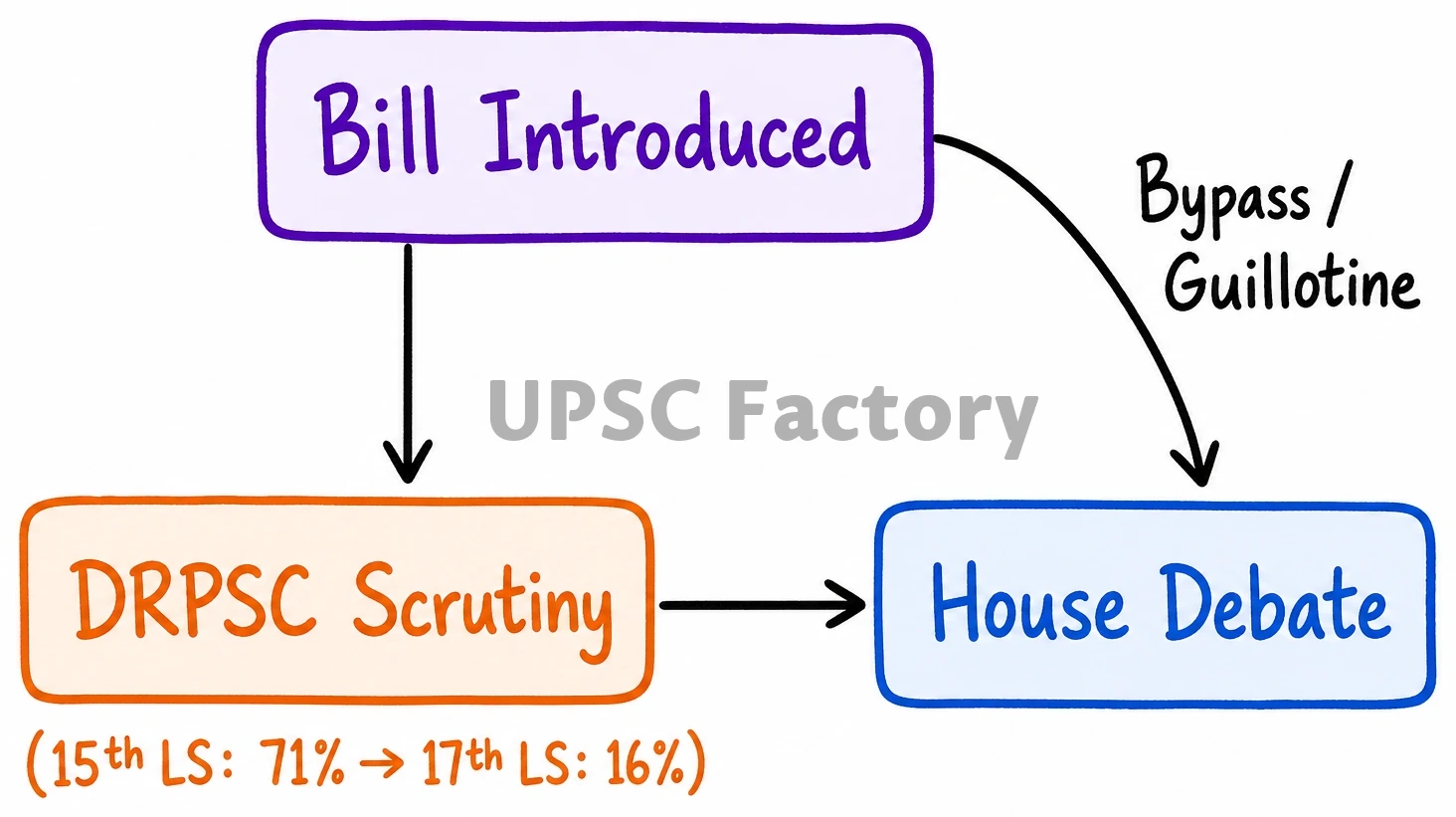
- Declining Referrals: Bypassing committees severely undermines legislative oversight (Bills referred dropped sharply from 71% in the 15th Lok Sabha to ~16% in the 17th).
- Advisory Nature: Recommendations lack binding authority, allowing the administration to frequently ignore critical committee findings without systemic penalty.
- Capacity Deficits: Committees lack dedicated institutional research support and specialized subject-matter experts to effectively evaluate highly technical administrative policies.
- Tenure and Attendance: The short one-year tenure hampers member specialization, compounded by chronically low MP attendance during crucial evidentiary hearings.
- Guillotine Effect: Budget demands are frequently passed via the guillotine mechanism before DRPSC financial reports are thoroughly debated on the Parliament floor.
To optimize DRPSCs and institutionalize reverence for parliamentary control, implementing the NCRWC’s recommendations for mandatory bill referrals and providing dedicated expert research staff is imperative.