Model Answer:
Historically an indissoluble samskara, Indian marriage is transitioning under modernization, yet largely retains its core cultural sanctity.
1. Indicators of Declining Sacramental Value
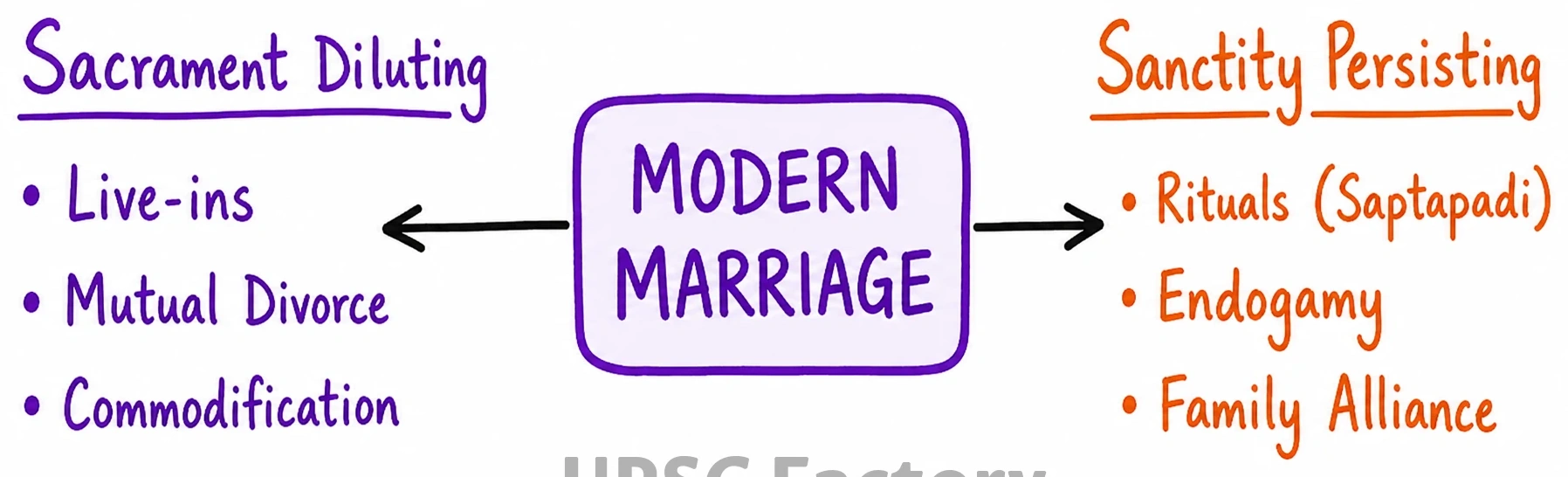
- Legal Dissolution: Rising acceptance of mutual divorce challenges the concept of an eternal union (Hindu Marriage Act 1955, Sec 13B).
- Contractual Alternatives: Growth of live-in relationships shifts the focus from sacred duty to individual choice and autonomy.
- Secularization: Inter-faith civil marriages prioritize compatibility and consent over religious mandates (Special Marriage Act 1954).
- Commodification: “Big fat Indian weddings” increasingly reduce sacred rituals to conspicuous consumption and status signaling.
2. Persistence of the Sacramental Core
- Ritual Necessity: Legal and social validity still heavily relies on traditional customary rites (e.g., Saptapadi or seven steps).
- Endogamy’s Resilience: Caste and religious boundaries remain deeply entrenched, even on modern digital matrimonial platforms (Shaadi.com).
- Social Sanctity: Divorce, despite legal ease, carries significant social stigma and remains a strict last resort.
- Family Centrality: Marriage continues to function primarily as an alliance between families, rather than just a contract between individuals.
Marriage in India is not losing its value; rather, it is evolving from a rigid, patriarchal sacrament into a flexible, egalitarian union that blends traditional sanctity with modern constitutional rights.