Model Answer:
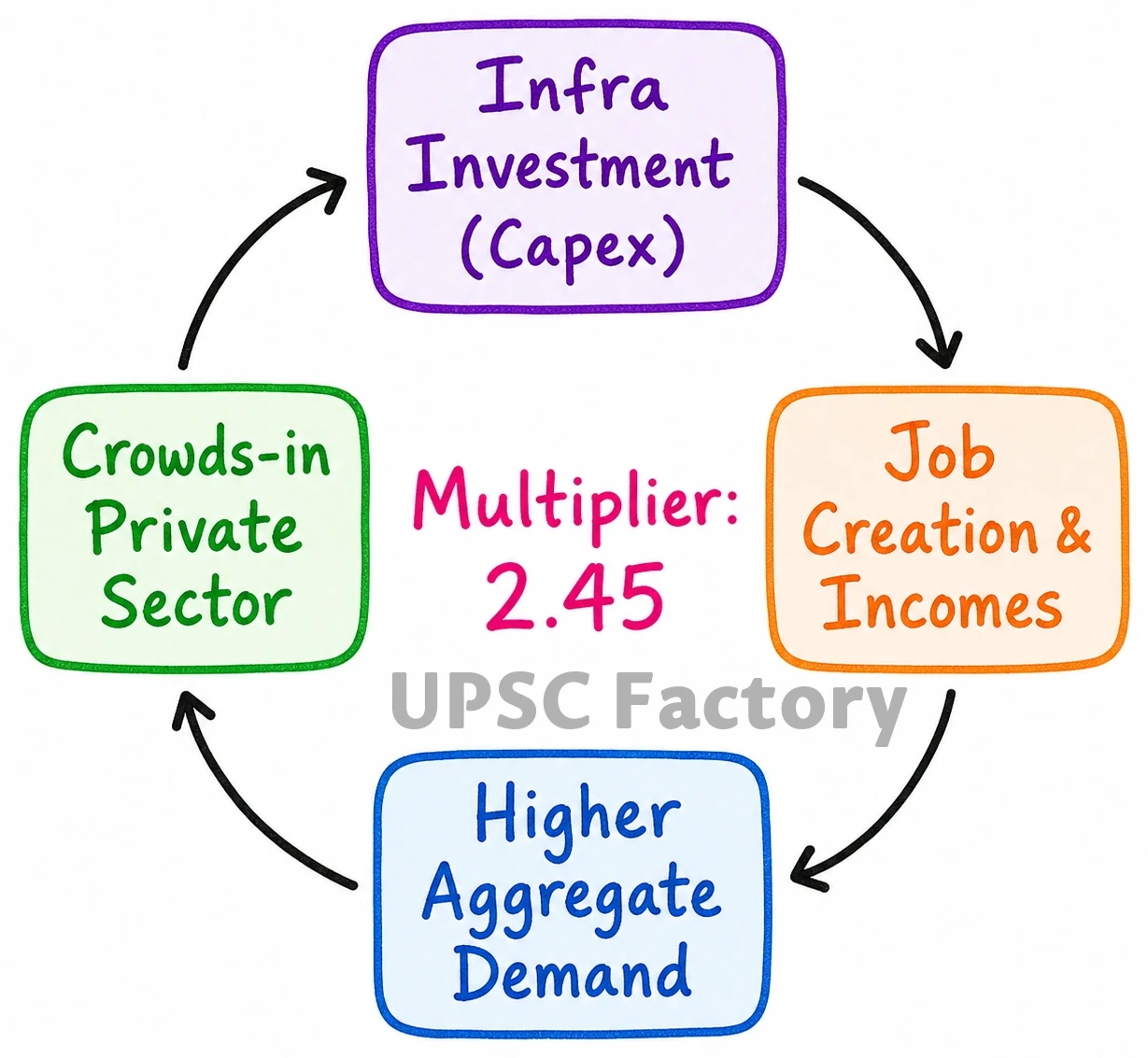
Infrastructure investment generates a high economic multiplier (RBI estimates 2.45), acting as the primary catalyst for rapid industrialization and equitable socio-economic development.
1. Infrastructure Driving Rapid Economic Growth
- Capital Multiplier: High public capital expenditure creates immediate cascading demand in core sectors like steel and cement.
- Crowding-in Investment: Robust public infrastructure development de-risks projects, attracting sustained private sector investments (National Infrastructure Pipeline).
- Logistical Efficiency: Upgraded transport networks reduce freight time and supply chain costs, boosting export competitiveness (Dedicated Freight Corridors, Bharatmala).
- Industrial Clusters: Dedicated infrastructure nodes attract manufacturing FDI and integrate domestic industries into global value chains (Delhi-Mumbai Industrial Corridor).
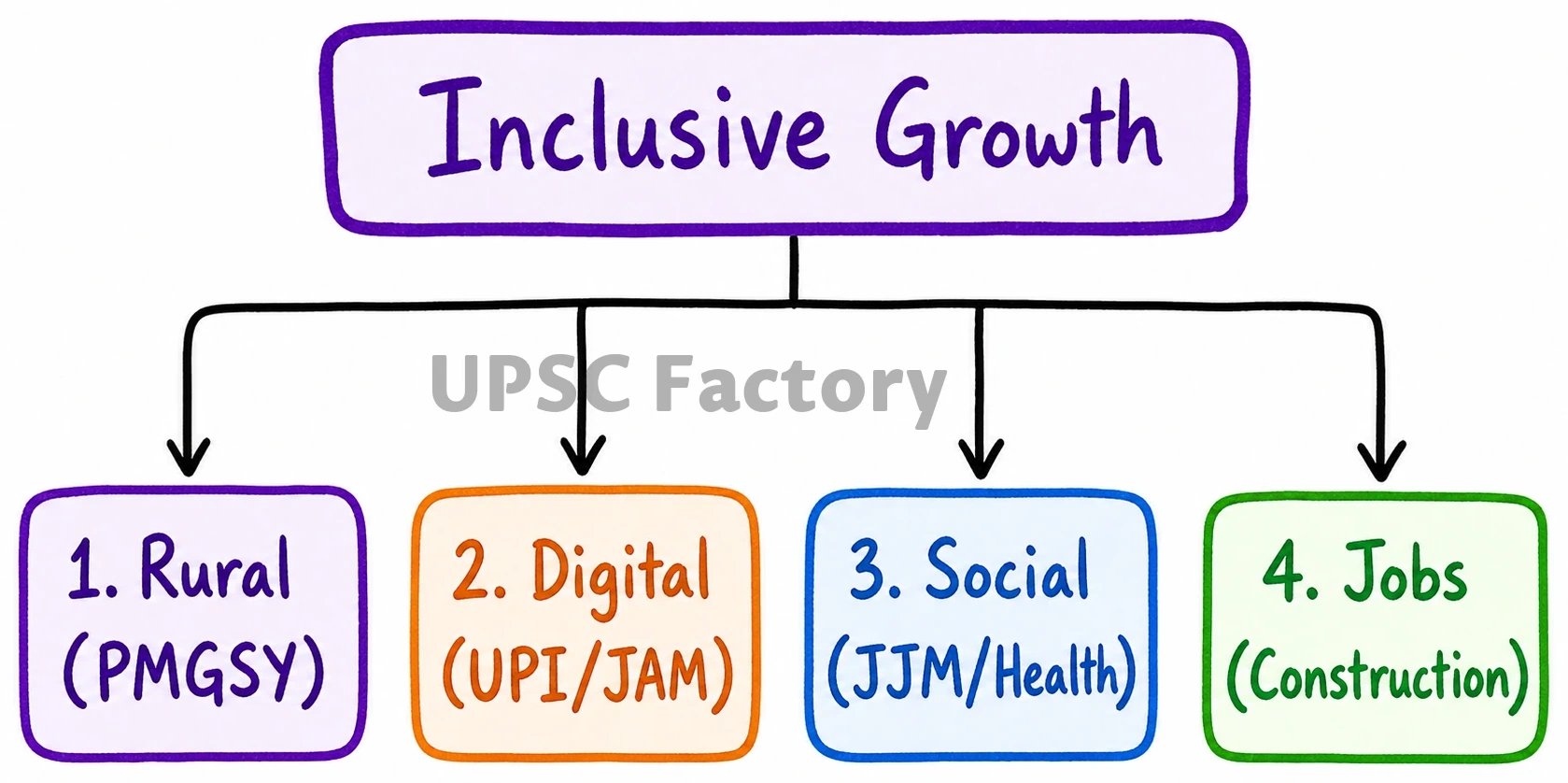
2. Enabling Broad-Based Inclusive Growth
- Rural Market Integration: All-weather connectivity links farmers directly to urban markets, reducing spoilage and boosting incomes (PMGSY).
- Human Capital: Quality social infrastructure improves health, education, and long-term labor productivity (Jal Jeevan Mission, PM-JAY).
- Mass Employment: Labor-intensive construction effectively absorbs surplus, unskilled agricultural workforce, reducing rural poverty.
- Digital Inclusion: Robust digital public infrastructure democratizes credit access and ensures leak-proof welfare delivery (JAM Trinity, UPI).
3. India’s Experience: Bottlenecks & Recent Interventions
- Execution Delays: Projects were historically plagued by complex land acquisition and clearance hurdles, causing severe cost overruns.
- Financing Stresses: Past twin-balance sheet problems paralyzed private PPP participation, forcing heavy reliance on sovereign funding.
- Siloed Planning: Fragmented inter-ministerial coordination historically resulted in disjointed, inefficient, and overlapping transport networks.
- Strategic Corrections: India has successfully shifted towards integrated multimodal planning (PM Gati Shakti), innovative asset recycling (National Monetization Pipeline), and specialized long-term credit (NaBFID).
Transitioning to next-generation, climate-resilient infrastructure via integrated planning is imperative to realize India’s vision of a $5 trillion, highly inclusive economy.