Model Answer:
Swami Vivekananda advocates for a dynamic balance between intellectual receptivity and cultural authenticity, promoting constructive assimilation while cautioning against blind imitation.
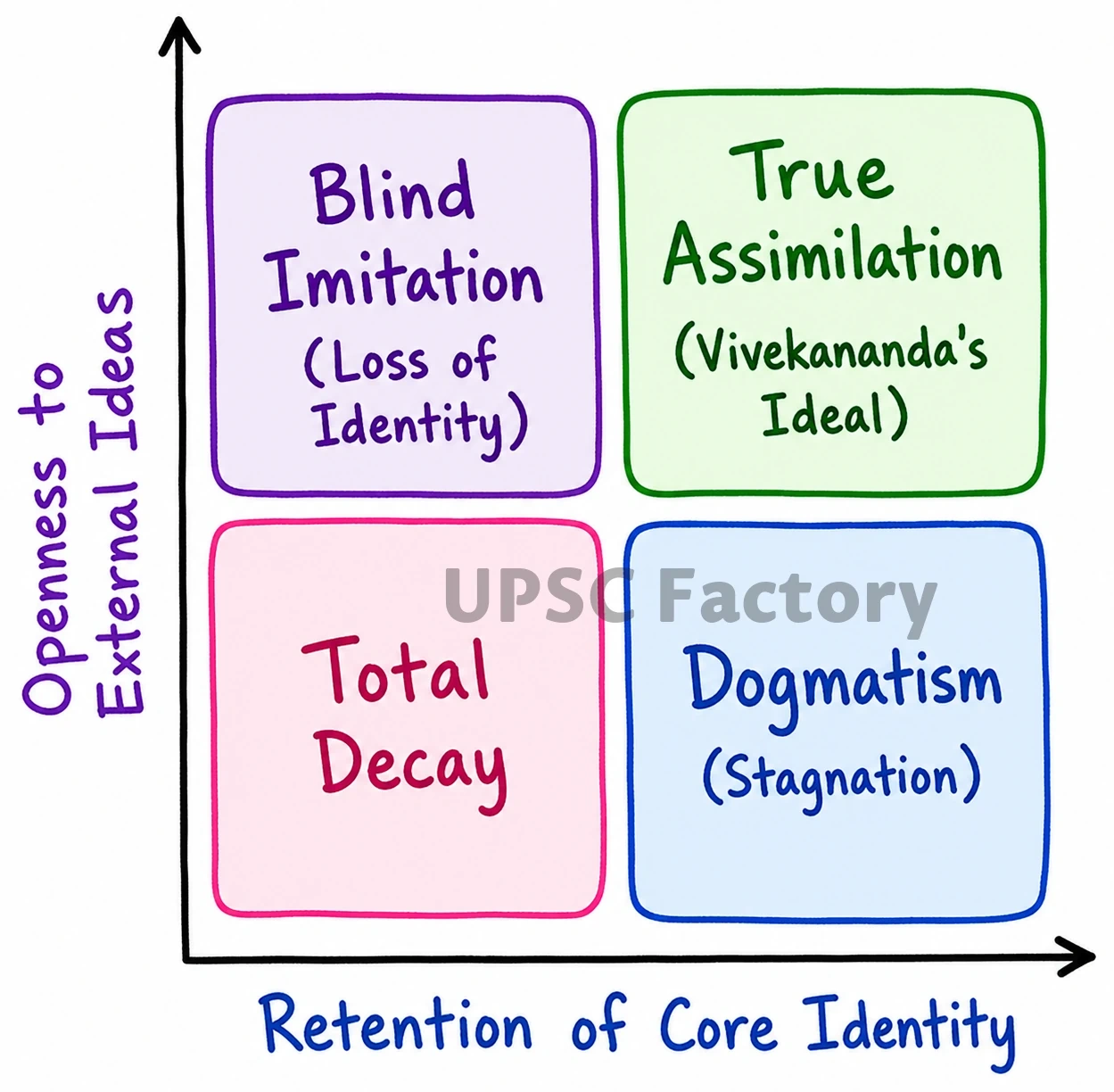
1. Assimilation of Universal Good (Intellectual Openness)
- Cosmopolitan Ethos: Eradicates dogmatism by embracing progressive global ideals (Liberty, Equality from the French Revolution).
- Scientific Temper: Encourages the adoption of universal technological and socio-economic advancements to drive societal progress.
- Ethical Enrichment: Fosters continuous moral evolution by openly integrating diverse philosophical wisdom without prejudice.
2. Preserving Core Identity (Avoiding Blind Imitation)
- Contextual Adaptation: Universal concepts must be tailored to local socio-cultural realities to ensure effectiveness and harmony.
- Safeguarding Autonomy: Blind copying breeds cultural subservience and erodes individual or national self-worth (e.g., Macaulayism).
- Organic Assimilation: External values must enrich, not replace, indigenous ethos (Indian Constitution adapting global democratic features to local realities).
- Authentic Progress: Modernization should not equate to Westernization (Meiji Japan modernizing while strictly retaining traditional ethos).
True progress lies in assimilating global virtues—like a seed absorbing external nutrients from soil and water—to grow organically and authentically into one’s true self.