Model Answer:
Structural unemployment arises from a fundamental mismatch between available jobs and worker skills. In India, it dominates due to rapid technological shifts and systemic educational gaps.
1. Structural Unemployment and Current Computation Methodology
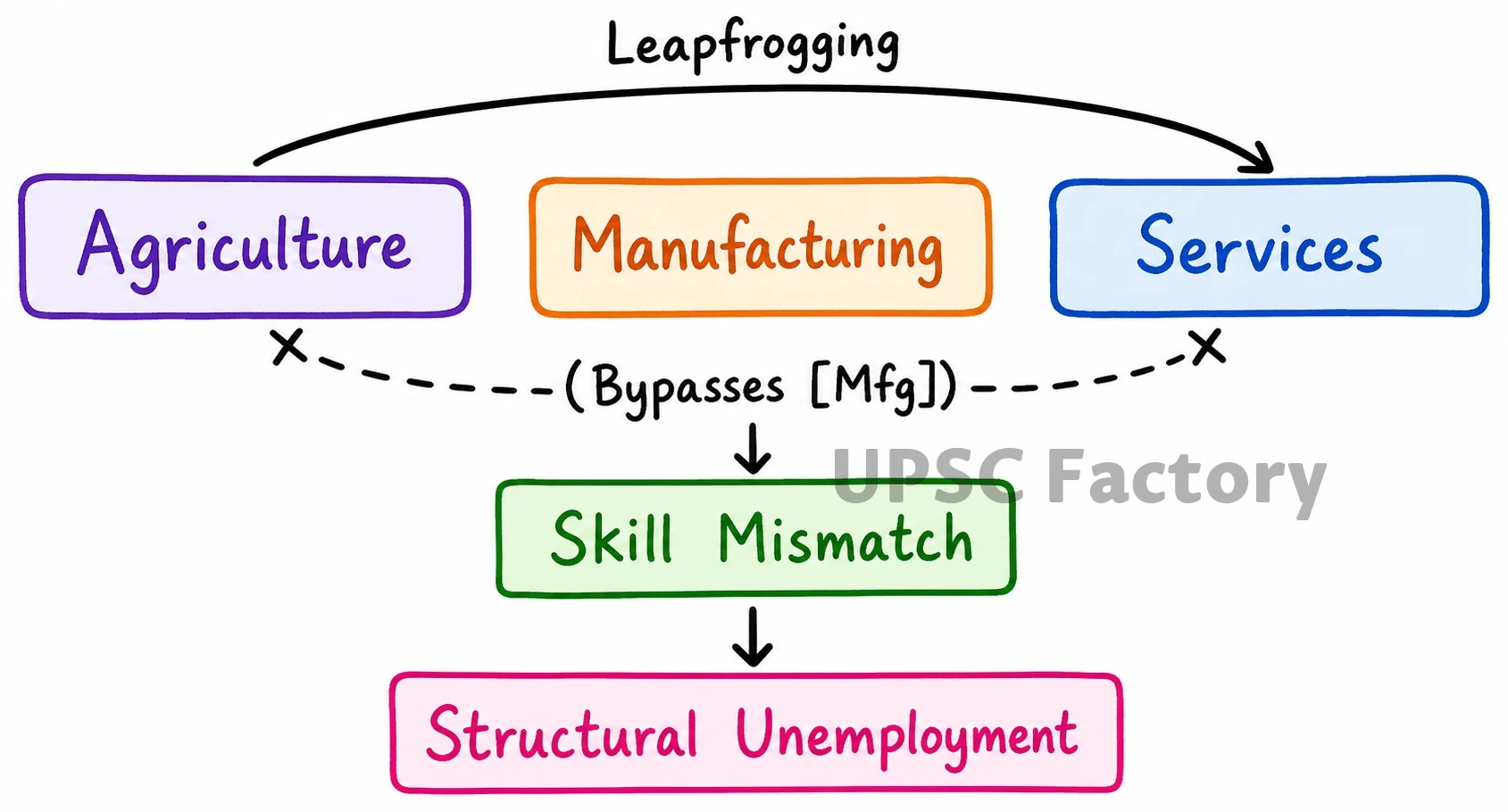
1. The Structural Nature of Indian Unemployment:
- Skill Mismatch: Education systems fail to meet contemporary industry demands (India Skills Report: ~50% graduates employable).
- Sectoral Leapfrogging: Labor transitioned from agriculture directly to services, bypassing job-intensive manufacturing, stranding low-skilled labor.
- Technological Disruption: Automation displaces routine manufacturing and clerical jobs without adequate reskilling frameworks.
2. Current Computation Methodology (PLFS):
- Implementing Agency: Unemployment is currently computed by the NSO via the Periodic Labour Force Survey (PLFS).
- Usual Principal Status (UPS): Measures long-term employment based on major time spent working over a 365-day reference period.
- Current Weekly Status (CWS): Measures short-term labor market fluctuations over a 7-day reference period.
2. Methodological Limitations and Suggested Improvements
1. Limitations in Current Methodology:
- Disguised Unemployment: PLFS inadequately differentiates gainful employment from low-productivity disguised labor (prevalent in agriculture).
- Data Divergence: Significant discrepancies exist between official NSO data and private high-frequency datasets (CMIE).
- Informal & Gig Blindspots: Current frameworks struggle to accurately capture transient gig, platform, and unpaid care workers.
- Urban Bias in Frequency: Quarterly CWS data is primarily restricted to urban areas, ignoring rural volatility.
2. Suggested Improvements:
- Administrative Integration: Synergize PLFS with real-time macro-databases (EPFO, E-Shram, Udyam) for comprehensive formal-informal mapping.
- High-Frequency Rural Data: Expand quarterly CWS metrics to rural areas to capture seasonal agrarian fluctuations accurately.
- Qualitative ILO Metrics: Align with ILO standards by tracking underemployment and income levels to gauge true job quality.
- Gig Economy Parameters: Introduce specific survey identifiers to capture platform workers and fractional employment.
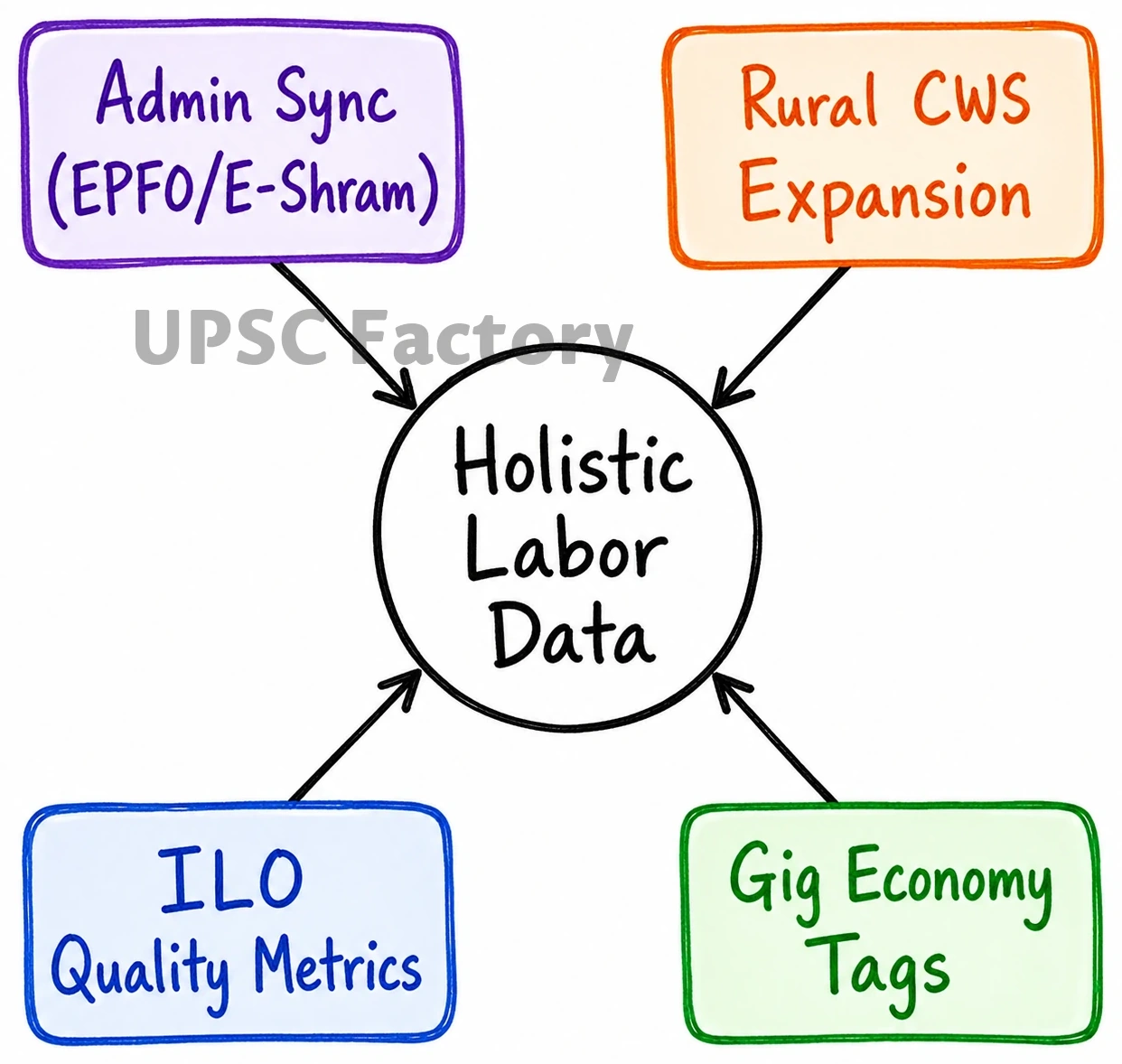
Accurately measuring structural unemployment through integrated, high-frequency data is vital for precision-targeted reskilling, ensuring India effectively harnesses its fleeting demographic dividend.