Model Answer:
Impartiality (merit-based decision-making) and non-partisanship (political neutrality) are foundational public service values recognized by the Nolan Committee to ensure objective governance.
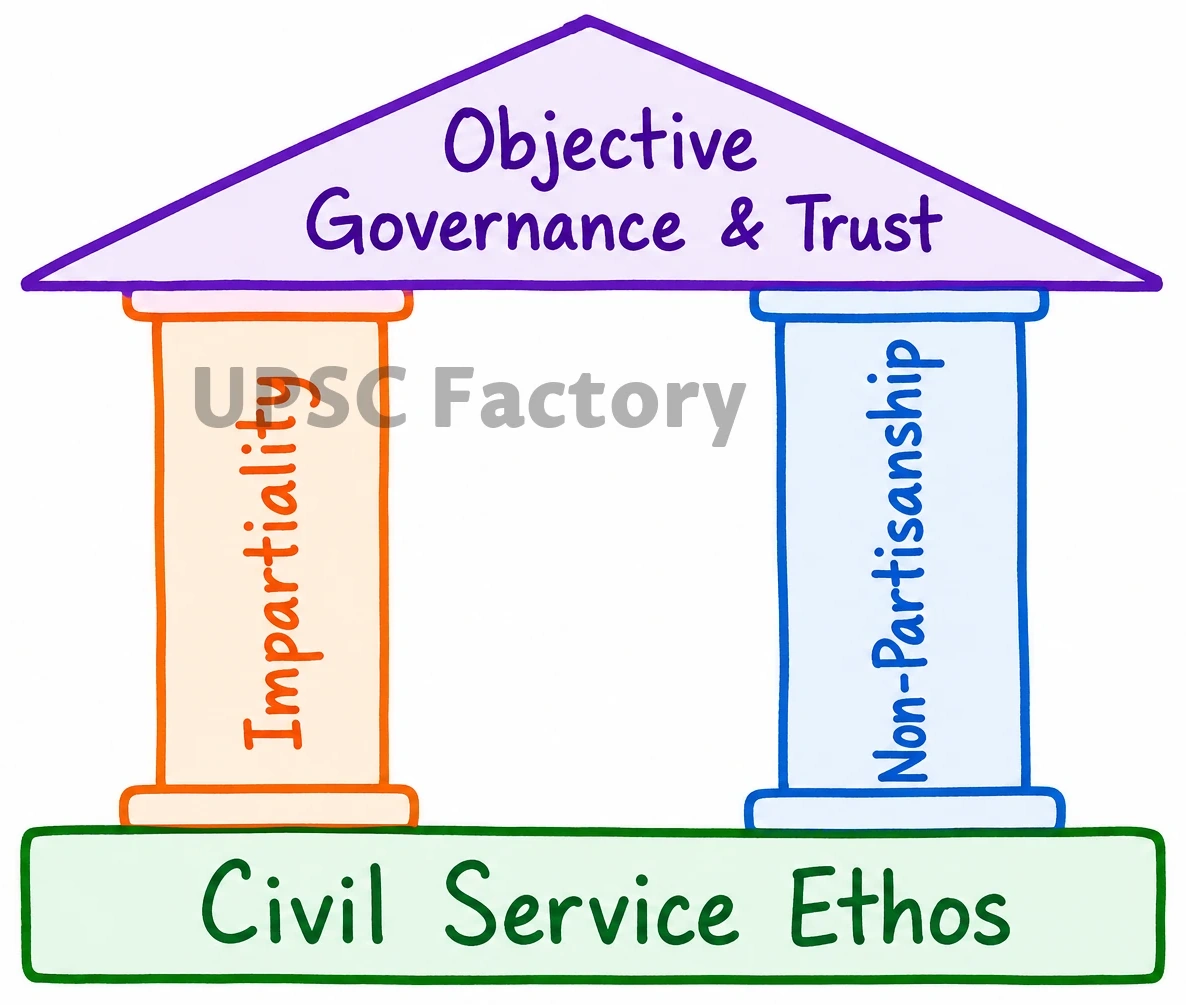
1. Indispensability for a Successful Civil Servant
- Upholding Constitutional Morality: Guarantees equal protection and treatment of all citizens without discrimination (Article 14).
- Administrative Continuity: Ensures seamless policy formulation and execution despite frequent political regime changes.
- Building Public Trust: Enhances state credibility by eliminating socio-religious biases in public service delivery.
- Preventing Corruption: Ensures resource allocation relies on objective criteria rather than political or personal affiliations (All India Services Conduct Rules, 1968).
2. Illustrations Demonstrating Successful Outcomes
- Electoral Integrity: Enforcing rules ruthlessly against all parties restores public faith in democracy (e.g., T.N. Seshan’s non-partisan electoral reforms).
- Equitable Development: Mobilizing cross-community resources impartially without political bias yields inclusive growth (e.g., Armstrong Pame’s crowd-funded ‘Miracle Road’ in Manipur).
- Crisis Management: Allocating life-saving resources based strictly on objective triage protocols, ignoring political dictates (e.g., merit-based COVID-19 oxygen distribution).
Thus, these twin virtues safeguard India’s administrative “steel frame,” ensuring that civil servants remain resilient against partisan pressures and steadfastly dedicated to inclusive public welfare.