Model Answer:
This case involves a direct Conflict of Interest (COI), testing Sneha’s objectivity, professional integrity, and fiduciary duty in healthcare administration.
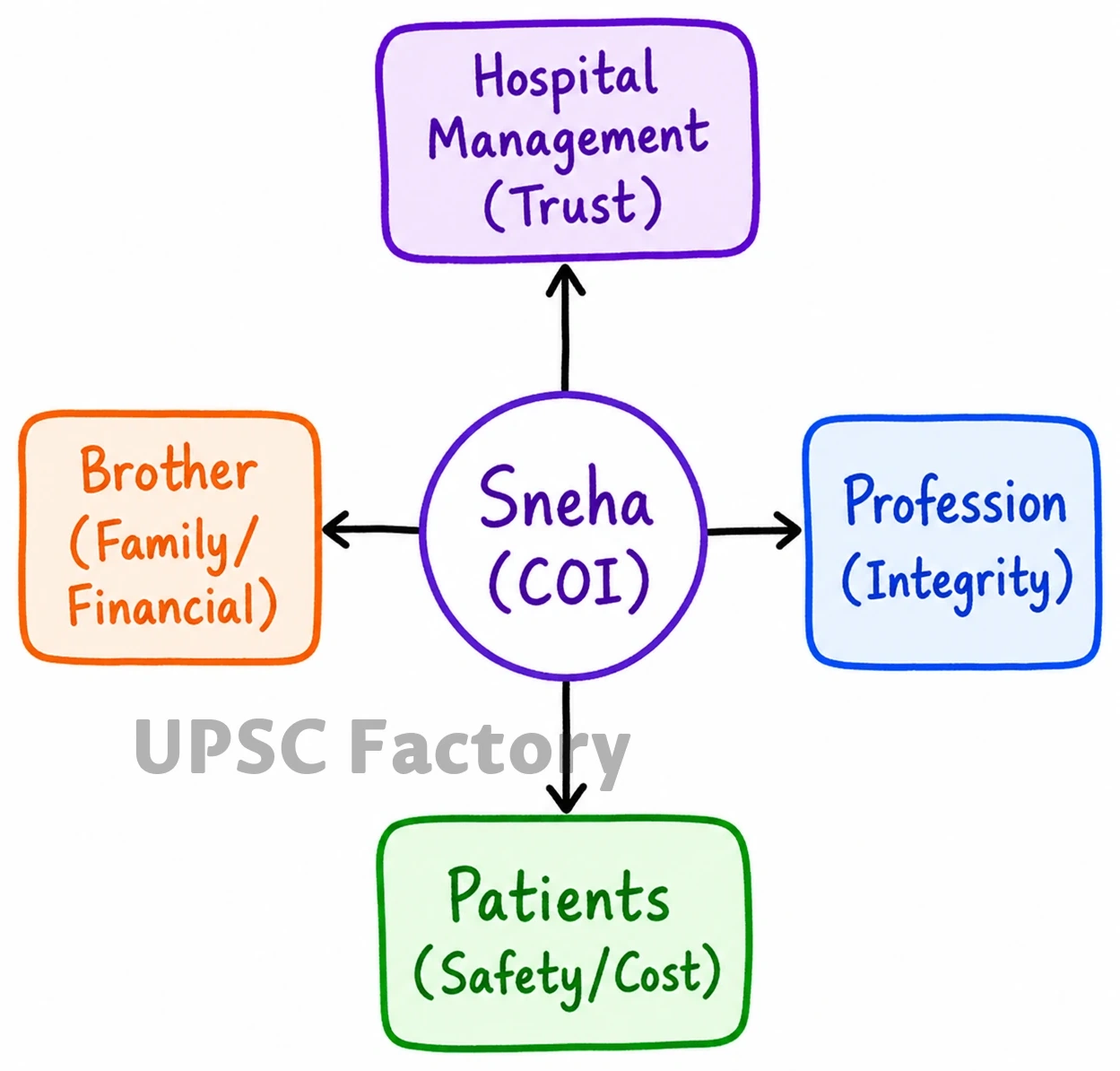
1. Sneha’s Course of Action & Ethical Justification
- Immediate Formal Disclosure: Officially declare her brother’s participation to the hospital management in writing.
- Justification: Upholds Integrity and transparency, preventing future allegations of hidden collusion.
- Voluntary Recusal: Step down as the head of the procurement committee for this specific tender.
- Justification: Ensures Objectivity (Nolan Principles), removes subconscious bias, and prevents a ‘conflict of appearance’.
- Independent Evaluation Setup: Request the management to appoint a neutral, competent alternate head to evaluate the bids.
- Justification: Protects Sneha’s unblemished reputation while honoring the management’s blind trust in her leadership.
- Strict Merit-Based Procurement: Ensure the alternate committee evaluates bids purely on clinical efficacy, warranty, and cost-effectiveness.
- Justification: Private sector flexibility (not mandating L1) should promote superior quality, not justify nepotism.
2. Compromise of Medical Ethics via Vested Interests
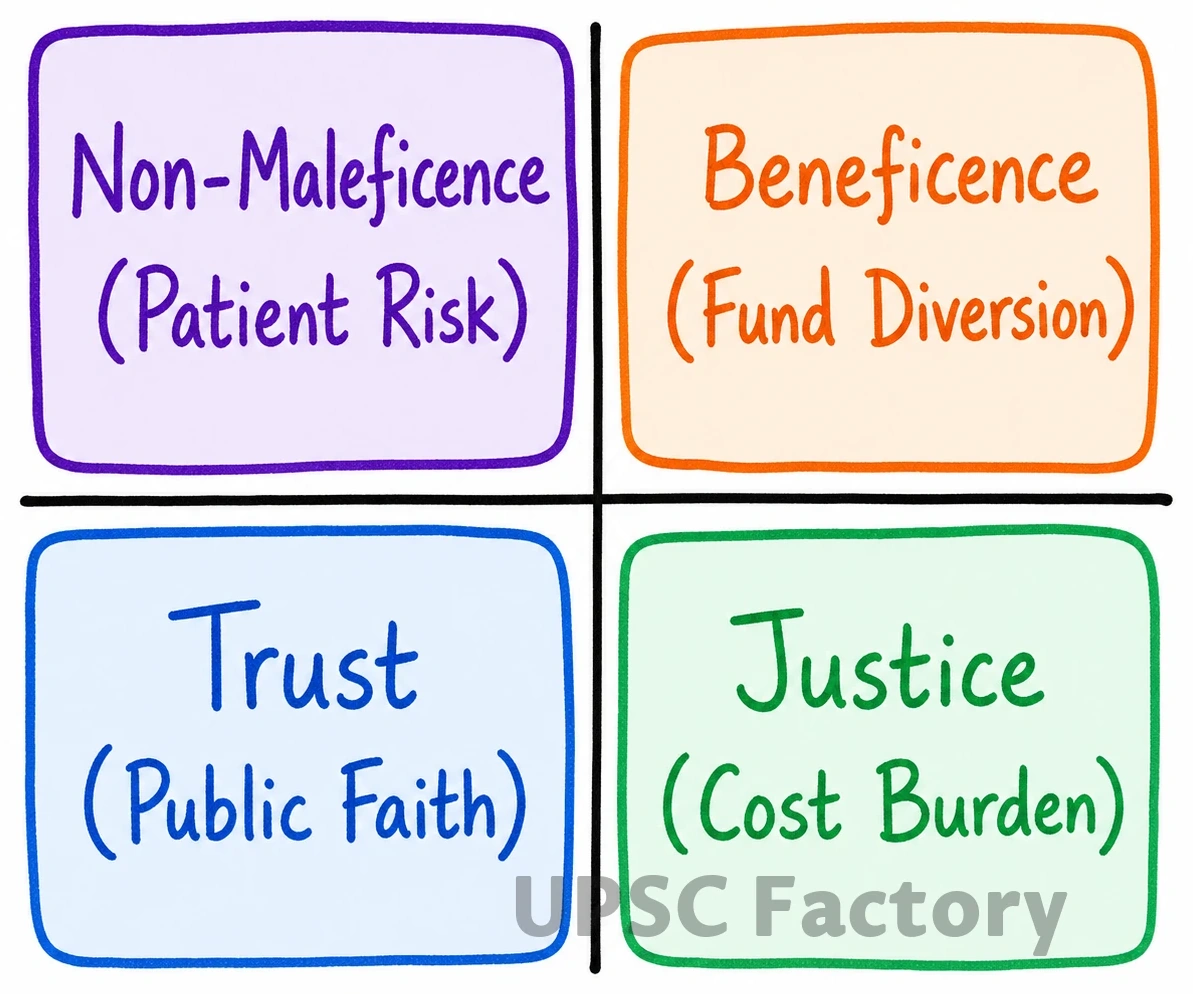
- Violation of Non-Maleficence: Favouring a struggling company might lead to procuring substandard or poorly serviced equipment, directly risking patient safety (Hippocratic Oath).
- Breach of Beneficence: Overpaying a relative diverts critical hospital funds that could otherwise enhance broader patient welfare or subsidize treatments.
- Erosion of Institutional Trust: Favoritism in clinical procurement destroys public faith in the hospital’s credibility and safety protocols (e.g., Fortis healthcare governance failure).
- Compromised Distributive Justice: Unfairly denying contracts to superior vendors inflates operational costs, ultimately burdening the patients with higher medical bills.
Strict adherence to Corporate Governance and Transparency resolves such ethical dilemmas, ensuring that healthcare institutions unequivocally prioritize patient welfare and clinical excellence over personal affiliations.