Model Answer:
This case presents a fundamental ethical decision: balancing immediate personal security against the overall welfare and protection of the broader public. To produce the greatest net benefit for society, administrative action must focus on minimizing systemic harm while protecting human lives.
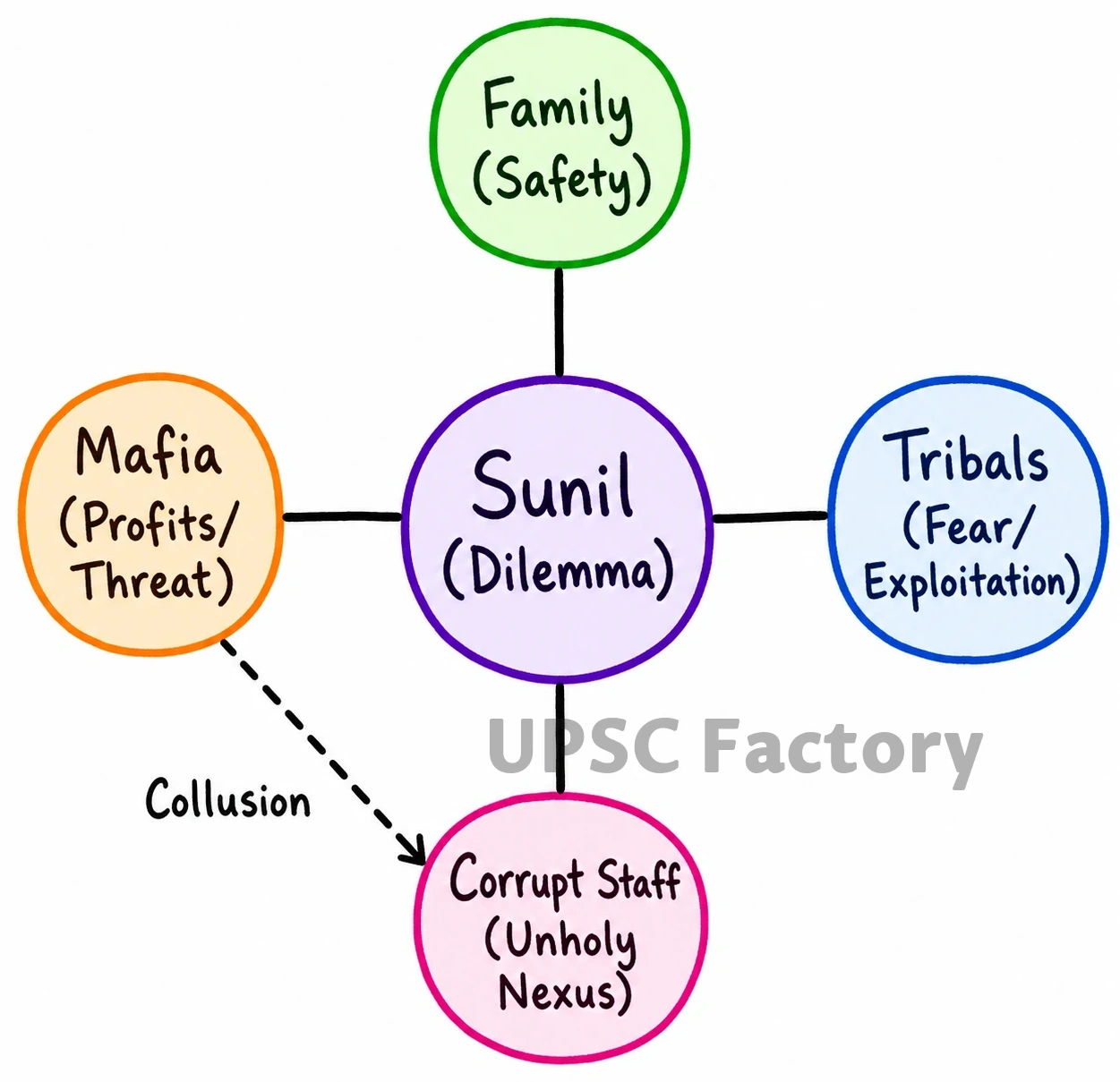
Options Evaluation and Societal Impact
Option 1: Yield to threats and halt raids.
- Merit: Ensures immediate physical and psychological safety for Sunil and his family, avoiding localized distress.
- Demerit: Causes widespread, long-term harm to public infrastructure, surrounding ecosystems, and vulnerable populations by emboldening illegal networks.
Option 2: Request a transfer or proceed on long leave.
- Merit: Removes the immediate family from acute trauma and hostile surveillance.
- Demerit: Fails to address the root cause of exploitation, merely shifting the burden to others while leaving the local tribal population in severe, ongoing distress.
Option 3: Continue operations with enhanced institutional security.
- Merit: Generates the highest overall public utility by restoring legal order, preventing environmental destruction, and protecting exploited communities from long-term harm.
- Demerit: Entails potential security risks and severe family stress, which must be actively mitigated through strategic safeguards.
Optimal Action Plan for Maximum Public Benefit
Continuing operations under enhanced security yields the greatest net positive outcome for society. Sunil must combine administrative firmness with risk-reduction strategies to secure the broader community while protecting his family:
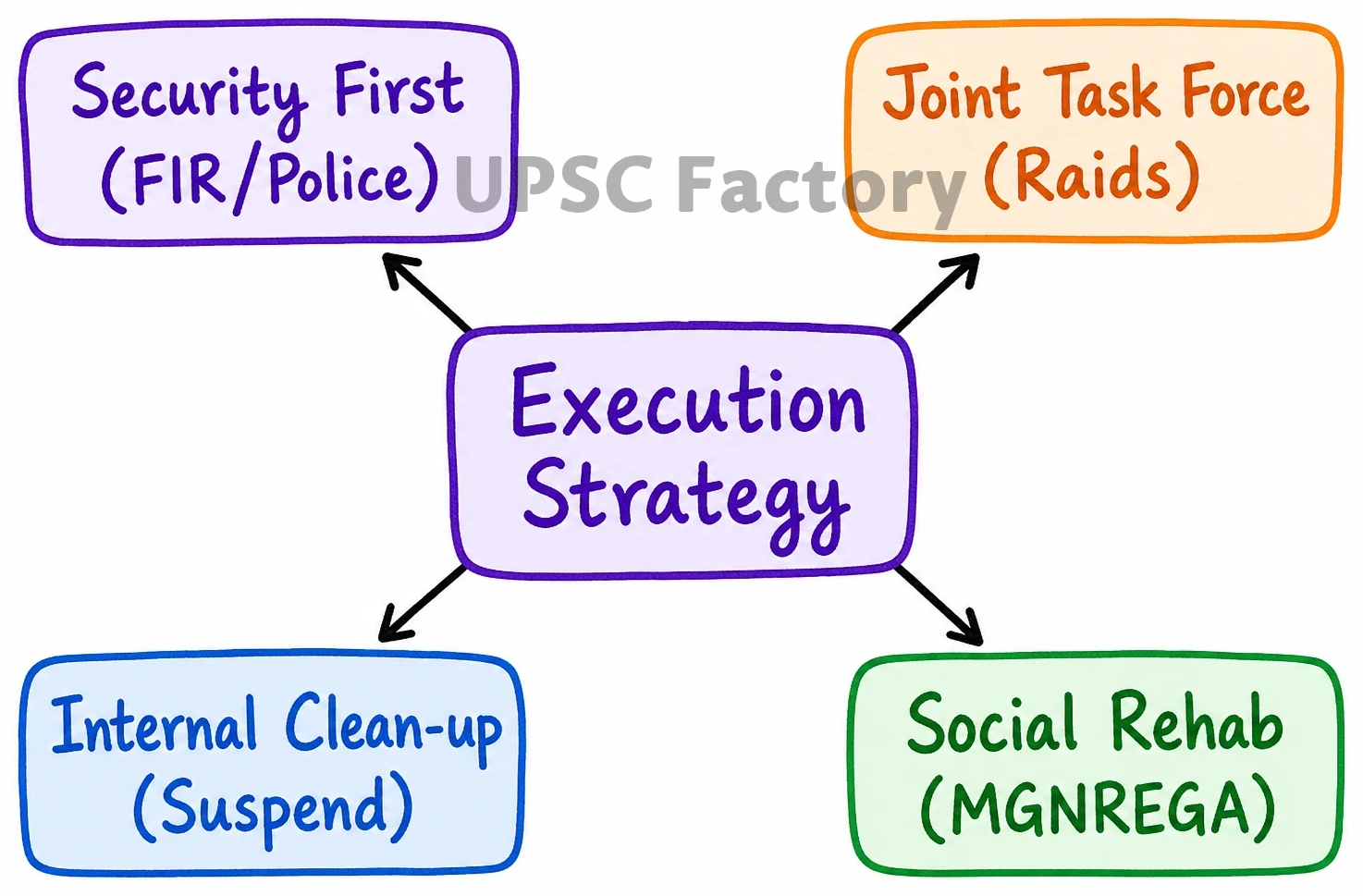
- Family Security First: Immediately file an FIR and secure dedicated armed protection, mitigating personal harm so enforcement actions can proceed safely.
- Inter-Departmental Task Force: Establish a joint operation (Police, Forest, Revenue) to maximize administrative capability and eliminate single-point vulnerabilities.
- Invoke Stringent Laws: Prosecute offenders under the MMDR Act, 1957 and anti-organized crime legislation to deter future harm to the public interest.
- Internal Cleansing: Suspend corrupt officials, restoring institutional efficiency and ensuring public resources serve the greater good.
- Technology Deployment: Implement drone and satellite surveillance to gather evidence efficiently while reducing direct physical risks to enforcement teams.
- Community Engagement: Reintegrate exploited tribals into sustainable livelihood programs (such as MGNREGA), securing long-term economic well-being and dismantling the mafia’s local support base.
By executing a plan that safeguards personal life while systematically dismantling illegal operations, Sunil maximizes overall social welfare, protects vulnerable communities, and achieves the most beneficial outcome for the greatest number of people.