Model Answer:
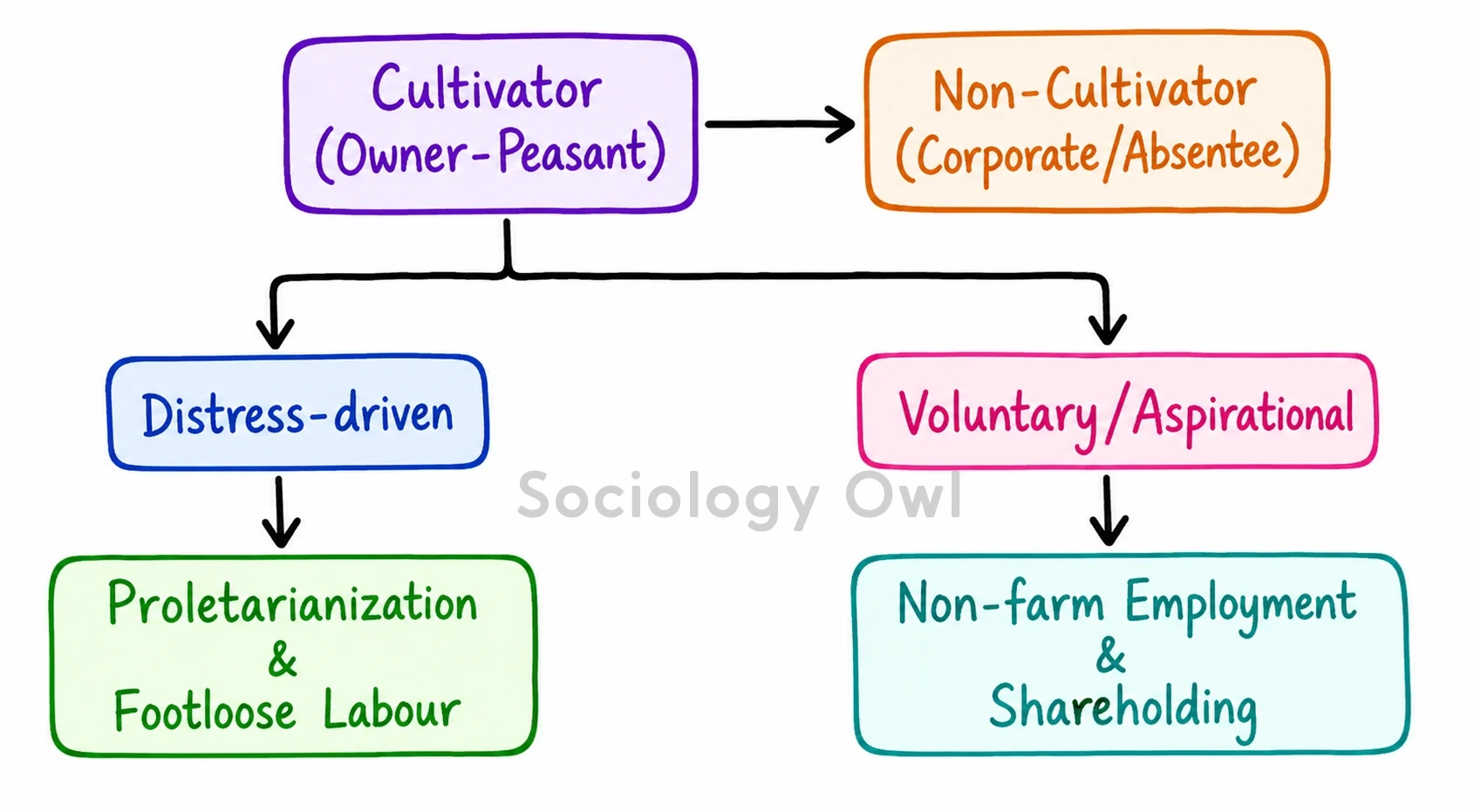
The transfer of land from cultivators to non-cultivators signifies de-peasantization driven by neoliberal agrarian distress. It fundamentally alters the traditional caste-class nexus (Andre Beteille), deeply restructuring rural power dynamics.
Class and Caste Restructuring
- Proletarianization: Daniel Thorner highlights the shift from the independent Kisan (owner-cultivator) to the Mazdur (landless laborer).
- New Landlordism: Utsa Patnaik identifies rising corporate landownership, while traditional Dominant Castes increasingly transition into urban absentee rent-seekers.
Societal Consequences
- Migration and Gender: Dispossessed lower-caste peasants become “footloose labour” (Jan Breman). This triggers the feminization of agriculture (Bina Agarwal), as women are left to toil as laborers on alienated land.
- Voluntary Exit: Nuancing this, Surinder S. Jodhka argues that rural youth often willingly sell land to escape the stigma of agriculture for non-farm employment.
The 2020-2021 Farmers’ Protests reflected profound anxieties over corporate land capture. Conversely, Amaravati’s land-pooling illustrates cultivators voluntarily transitioning into commercial shareholders.
Conclusion
This land transfer shifts rural sociology from traditional patronage to modern resource-contestation, dynamically transforming India by intertwining distress-driven proletarianization with emerging capitalist aspirations.