Model Answer:
The quote highlights that external crises (wars, corruption, inequality) are manifestations of internal ethical deficits. Inner mindfulness is the absolute foundation for societal harmony.
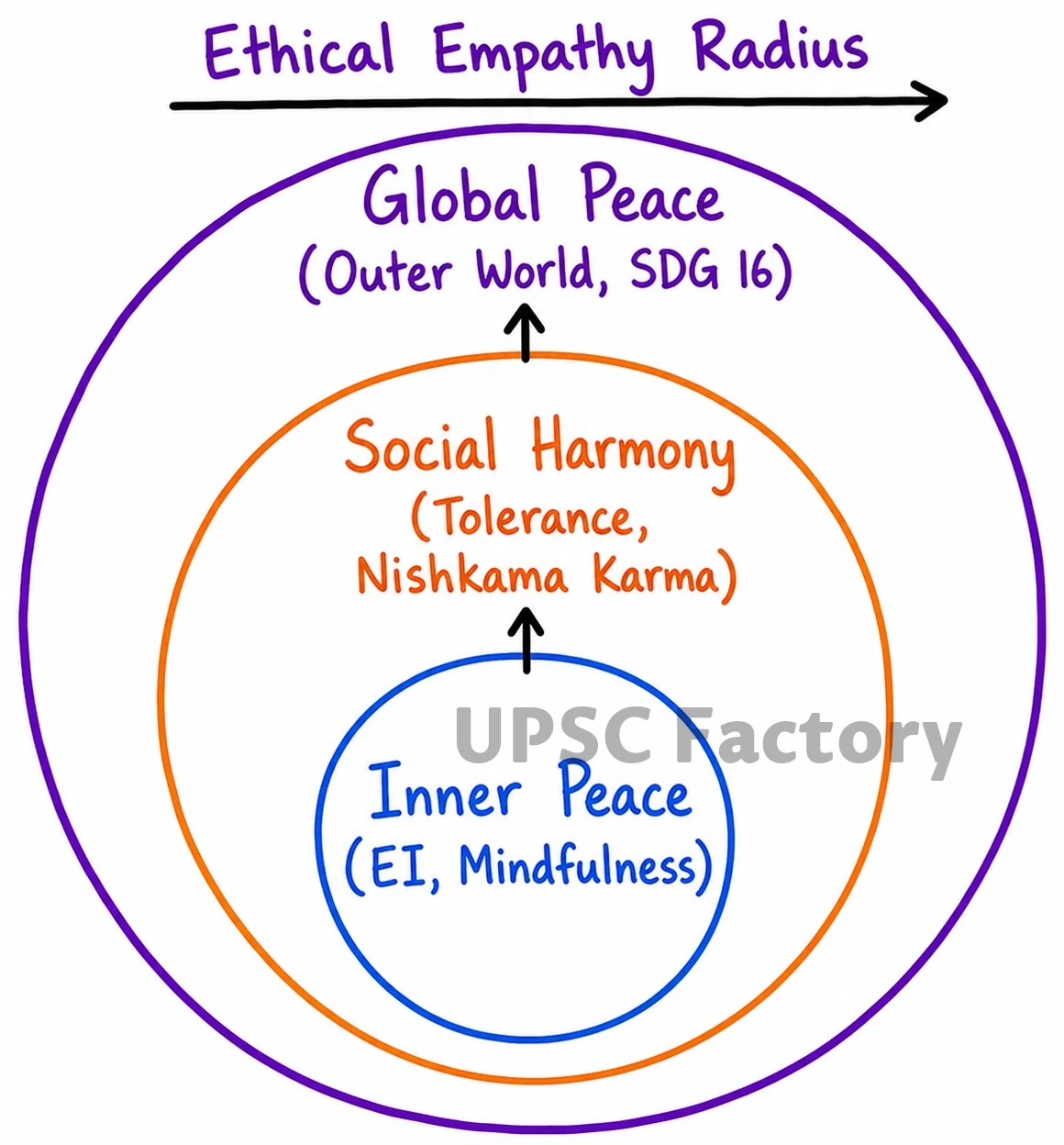
Inner Peace as the Foundation
- Eliminating Greed and Ego: Internal avarice manifests externally as exploitation and conflict (e.g., imperialism driven by resource greed).
- Emotional Intelligence (EI): Inner calm fosters empathy and self-regulation, preventing reactive hostility during crises.
- Resolving Cognitive Dissonance: Inner clarity aligns personal virtues with public actions, establishing unshakable ethical integrity.
- True Self-Mastery: Gandhi’s Swaraj emphasizes that ruling one’s own senses and desires must precede true political freedom.
Application in Governance and Society
- Ethical Administration: Bureaucrats practicing Nishkama Karma (detachment from personal rewards) ensure objective, corruption-free governance.
- Global Diplomacy: Emotionally secure leadership prioritizes dialogue over destruction (e.g., Ashoka’s transformation from Kalinga war to Dhamma).
- Social Cohesion: Cultivating internal tolerance and dismantling personal prejudices directly counters communalism and radicalization.
- Conflict Resolution: Mindfulness enables non-violent, constructive engagement in crisis zones (e.g., Thich Nhat Hanh’s “Engaged Buddhism”).
Global peace (SDG 16) cannot be engineered solely through external treaties or laws; it demands cultivating individual moral compasses, emotional intelligence, and compassion to sustain lasting harmony.