Model Answer:
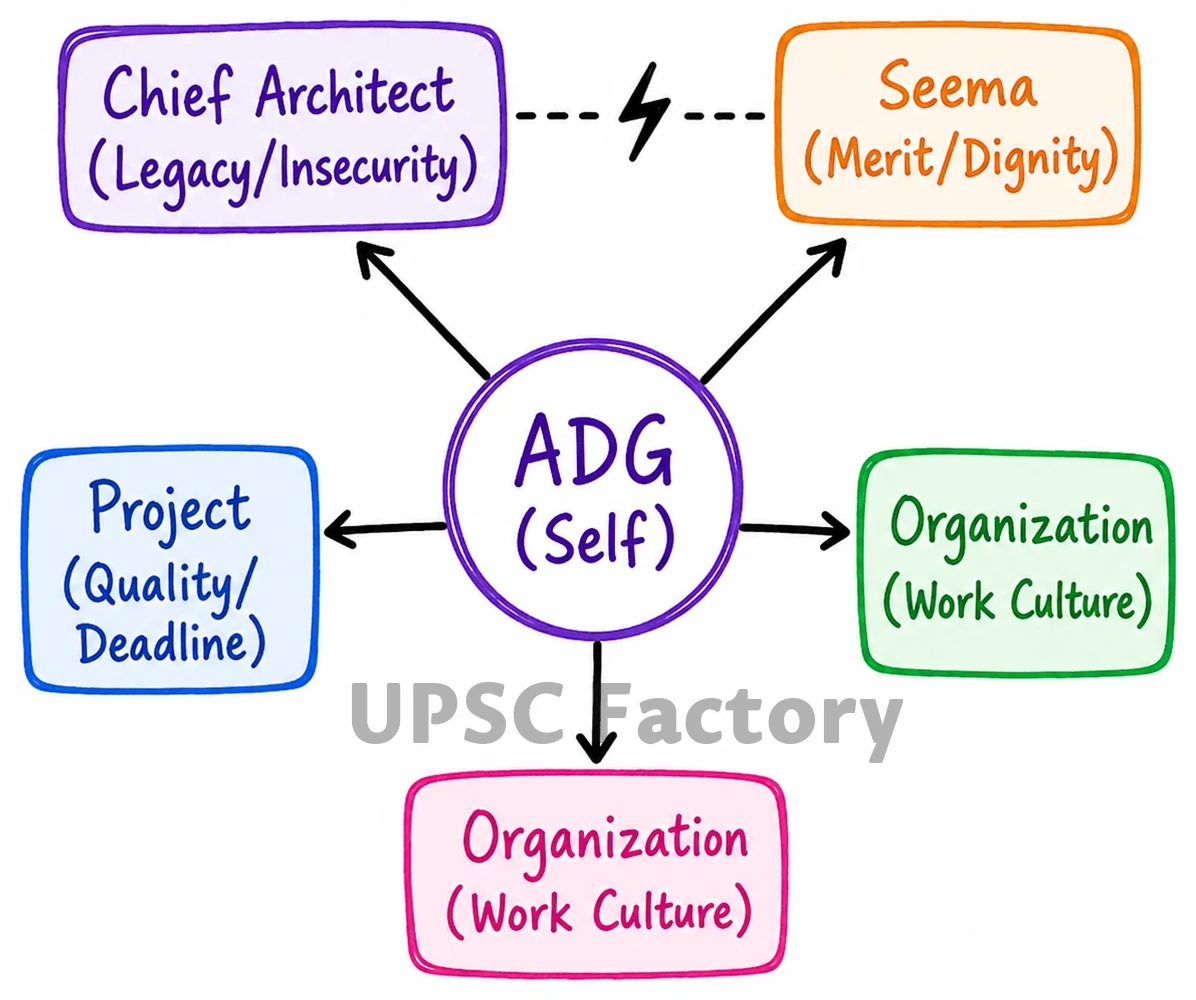
The case highlights a clash between professional ego and meritocracy, creating a toxic work environment that threatens employee dignity (Article 21) and critical organizational efficiency.
1. Ethical Issues Involved
- Professional Ego vs. Merit: The Chief Architect prioritizes personal legacy and insecurities over acknowledging superior, value-adding ideas.
- Violation of Workplace Dignity: Public humiliation creates a hostile work environment, severely compromising Seema’s emotional well-being.
- Misuse of Authority: Exploiting seniority to intimidate a subordinate violates professional integrity and the Nolan principle of ‘Leadership’.
- Gender & Generational Bias: Manifestations of an insecure mindset resisting a young, highly qualified female professional.
2. Options Available
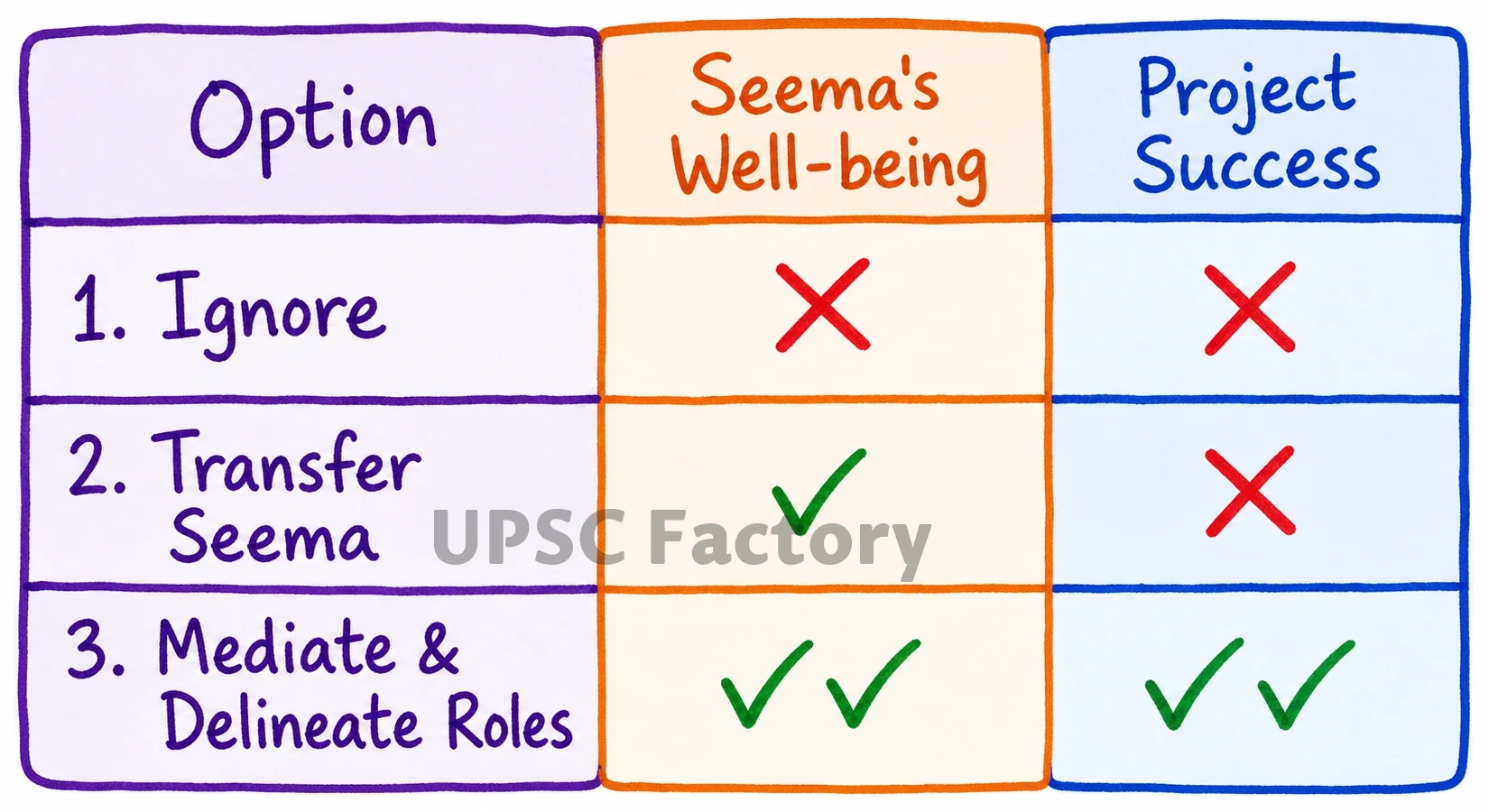
- Ignore the conflict:
- Merits: Avoids immediate confrontation with the retiring architect.
- Demerits: Seema resigns, project quality suffers, toxic culture normalizes.
- Transfer Seema to another project:
- Merits: Immediate relief for Seema’s mental health; prevents resignation.
- Demerits: Deprives the critical project of her expertise; rewards toxic behavior.
- Active Mediation and Role Delineation (Chosen Option):
- Action: Intervene officially. Clearly delineate roles where the Chief Architect oversees the broader vision, while Seema leads specific technical execution.
- Impact: Protects the Chief’s legacy, institutionalizes Seema’s innovations, ensures project success, and retains talent.
3. Response & Systemic Measures
Response to Seema’s Predicament:
- Empathetic Listening: Provide a safe space to discuss her anxieties using active empathy (Emotional Intelligence).
- Reassurance & Validation: Acknowledge her outstanding contributions, restore her self-esteem, and explicitly dissuade her from resigning.
- Actionable Guarantee: Assure immediate administrative intervention to establish a respectful, shielded reporting structure.
Systemic Preventive Measures:
- Robust Grievance Redressal: Institute an empowered cell for general workplace harassment (expanding beyond statutory POSH limits).
- 360-Degree Appraisals: Incorporate subordinate feedback into senior performance evaluations to ensure behavioral accountability.
- Sensitization Workshops: Mandate regular training on emotional intelligence, collaborative leadership, and professional ethics.
- Structured Mentorship Protocols: Create frameworks where retiring seniors officially co-author projects with juniors, aligning legacy-building with institutional grooming.
Balancing institutional targets with employee well-being is the hallmark of effective administrative leadership. Fostering a culture of mutual respect ensures a transition from toxic individualism to collaborative excellence.