Q. You hold a responsible position in a ministry in the government. One day in the morning you received a call from the school of your 11-year-old son that you are required to come and meet the Principal.
You proceed to the school and find your son in the Principal’s office. The Principal informs you that your son had been found wandering aimlessly in the grounds during the time classes were in progress. The class teacher further informs you that your son has lately become a loner and did not respond to questions in the class, he had also been unable to perform well in the football trials held recently. You bring your son back from the school and in the evening, you along with your wife try to find out the reasons for your son’s changed behaviour. After repeated cajoling, your son shares that some children had been making fun of him in the class as well as in the WhatsApp group of the students by calling him stunted, duh and a frog. He tells you the names of a few children who are the main culprits but pleads with you to let the matter rest.
After a few days, during a sporting event, where you and your wife have gone to watch your son play, one of your colleague’s son shows you a video in which students have caricatured your son. Further, he also points out to the perpetrators who were sitting in the stands. You purposefully walk past them with your son and go home. Next day, you find on social media, a video denigrating you, your son and even your wife, stating that you engaged in physical bullying of children on the sports field. The video became viral on social media. Your friends and colleagues began calling you to find out the details. One of your juniors advised you to make a counter video giving the background and explaining that nothing had happened on the field. You, in turn posted a video which you have captured during the sporting event, identifying the likely perpetrators who were responsible for your son’s predicament. You have also narrated what has actually happened in the field and made attempts to bring out the adverse effects of the misuse of social media.
(a) Based on the above case study, discuss the ethical issues involved in the use of social media.
(b) Discuss the pros and cons of using social media by you to put across the facts to counter the fake propaganda against your family.
Question from UPSC Mains 2023 GS4 Paper
Model Answer:
The case highlights the ethical dilemmas of cyberbullying, digital defamation, and the boundaries of reactionary social media use by a public servant involving minors.
Ethical Issues in the Use of Social Media
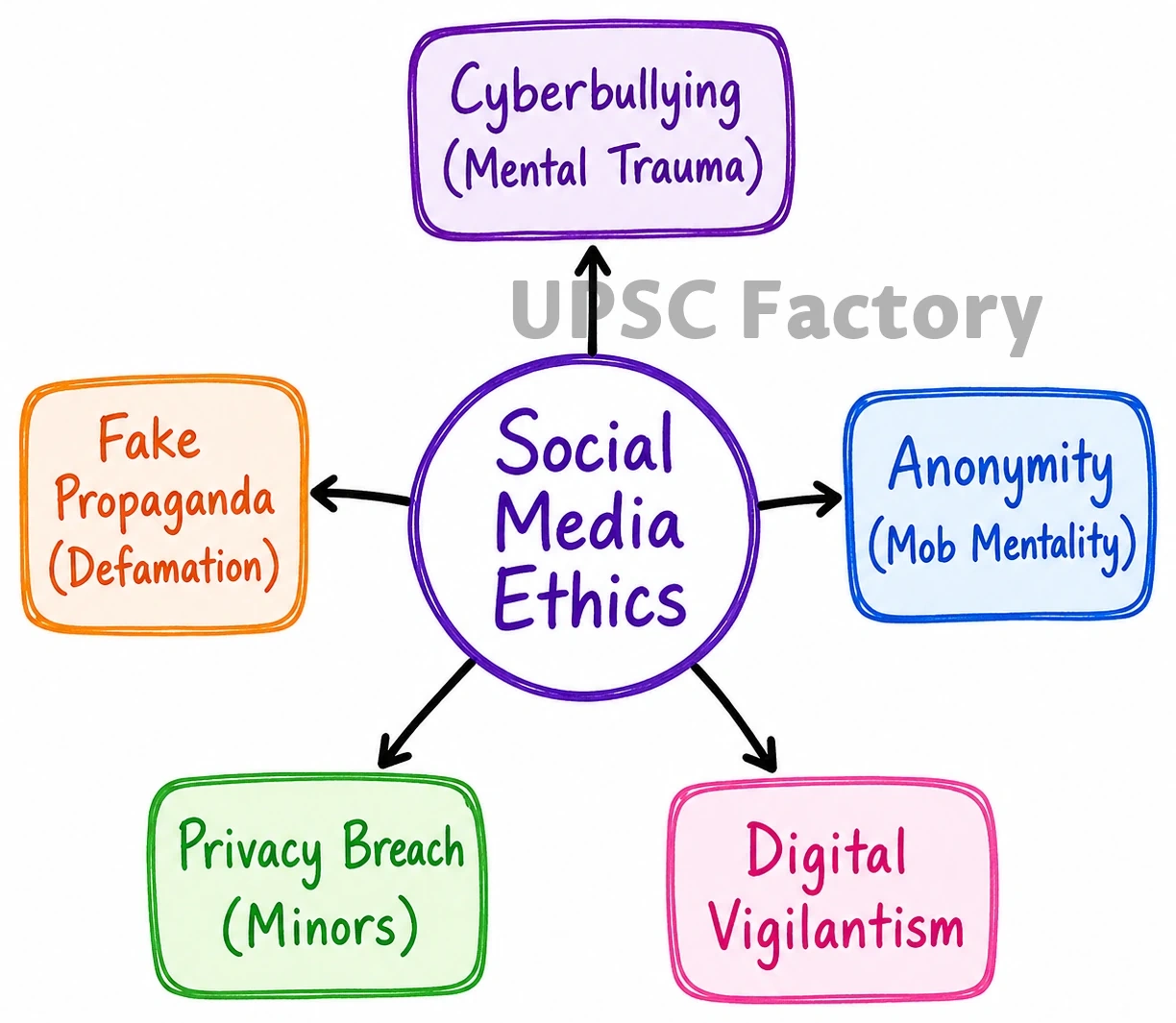
- Cyberbullying & Mental Health: Unchecked digital harassment causes severe psychological trauma to vulnerable minors (e.g., Boys Locker Room case).
- Anonymity & Mob Mentality: The digital veil fosters a lack of accountability, encouraging reckless behavior and coordinated defamation without consequence.
- Weaponization of Misinformation: Viral fake videos destroy reputations rapidly, undermining the right to dignity and privacy.
- Breach of Juvenile Privacy: Publicly identifying and shaming minor perpetrators severely violates juvenile privacy norms (Section 74, Juvenile Justice Act, 2015).
- Digital Vigilantism: Unregulated platforms bypass due process, replacing institutional justice with toxic social media trials.
Pros and Cons of the Counter-Video
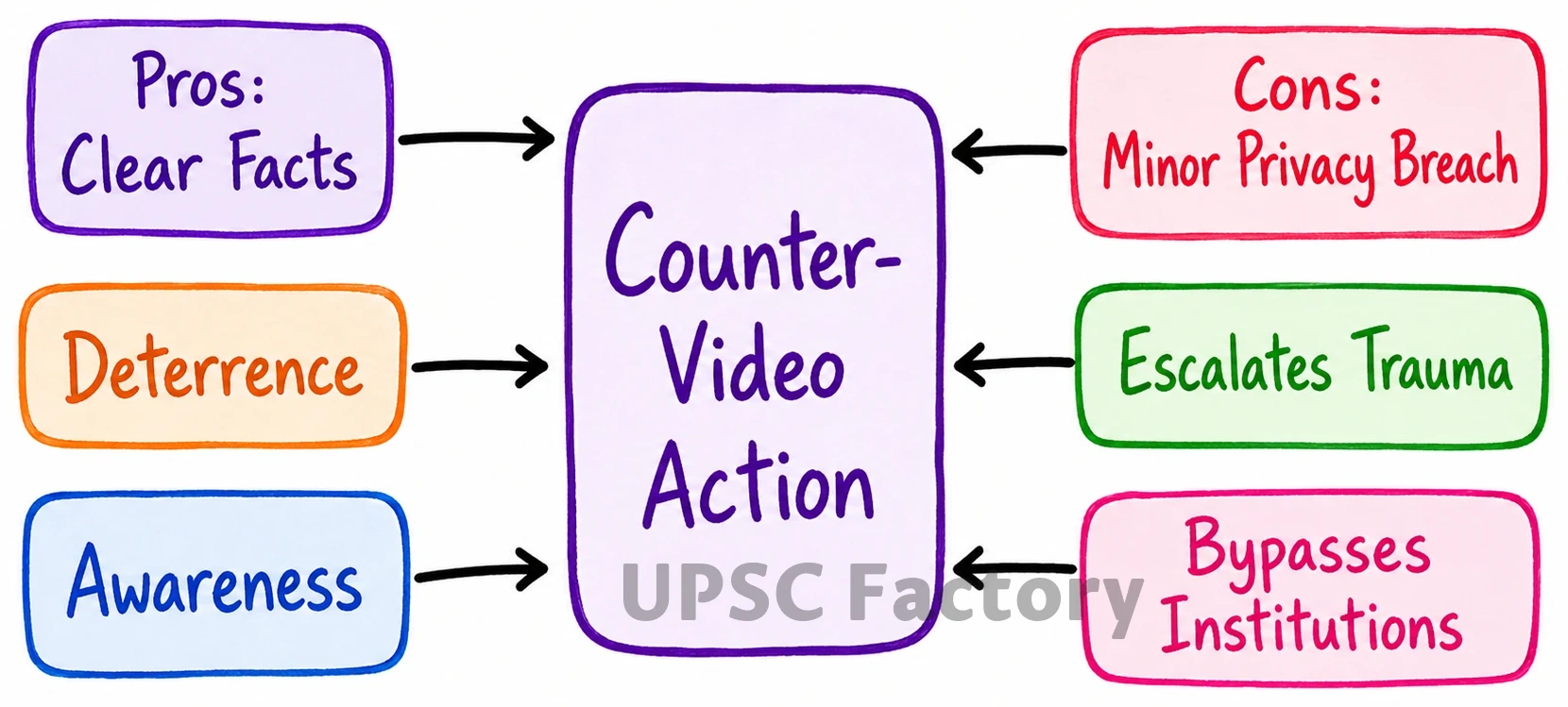
Pros:
- Immediate Clarification: Counters fake propaganda instantly, protecting the officer’s personal and professional reputation from lasting damage.
- Deterrence Effect: Calling out the harassment discourages further bullying and may empower other victimized children to speak up.
- Awareness Generation: Effectively utilizes a public platform to highlight the real-world dangers and psychological impacts of social media misuse.
Cons:
- Legal & Ethical Violations: Exposing minor perpetrators publicly is illegal and demonstrates a lack of emotional intelligence by an adult.
- Escalation of Trauma: A public counter-video subjects the 11-year-old son to further unwanted public scrutiny and emotional distress.
- Institutional Bypass: A civil servant must rely on formal grievance channels (School Authorities, Cyber Police), not digital retaliation.
- Compromised Public Conduct: Reacting impulsively violates the Nolan Principles of Leadership and Objectivity expected of responsible public officials.
True administrative leadership demands high emotional intelligence. The officer must prioritize his child’s psychological rehabilitation and pursue statutory institutional remedies rather than engaging in digital retaliation.