Model Answer:
Despite Indian women excelling globally, deep-rooted patriarchal norms persist (India ranks 127th in WEF Global Gender Gap Report 2023), demanding interventions beyond conventional education and welfare schemes.
1. The Paradox: Excellence vs. Persistent Patriarchy
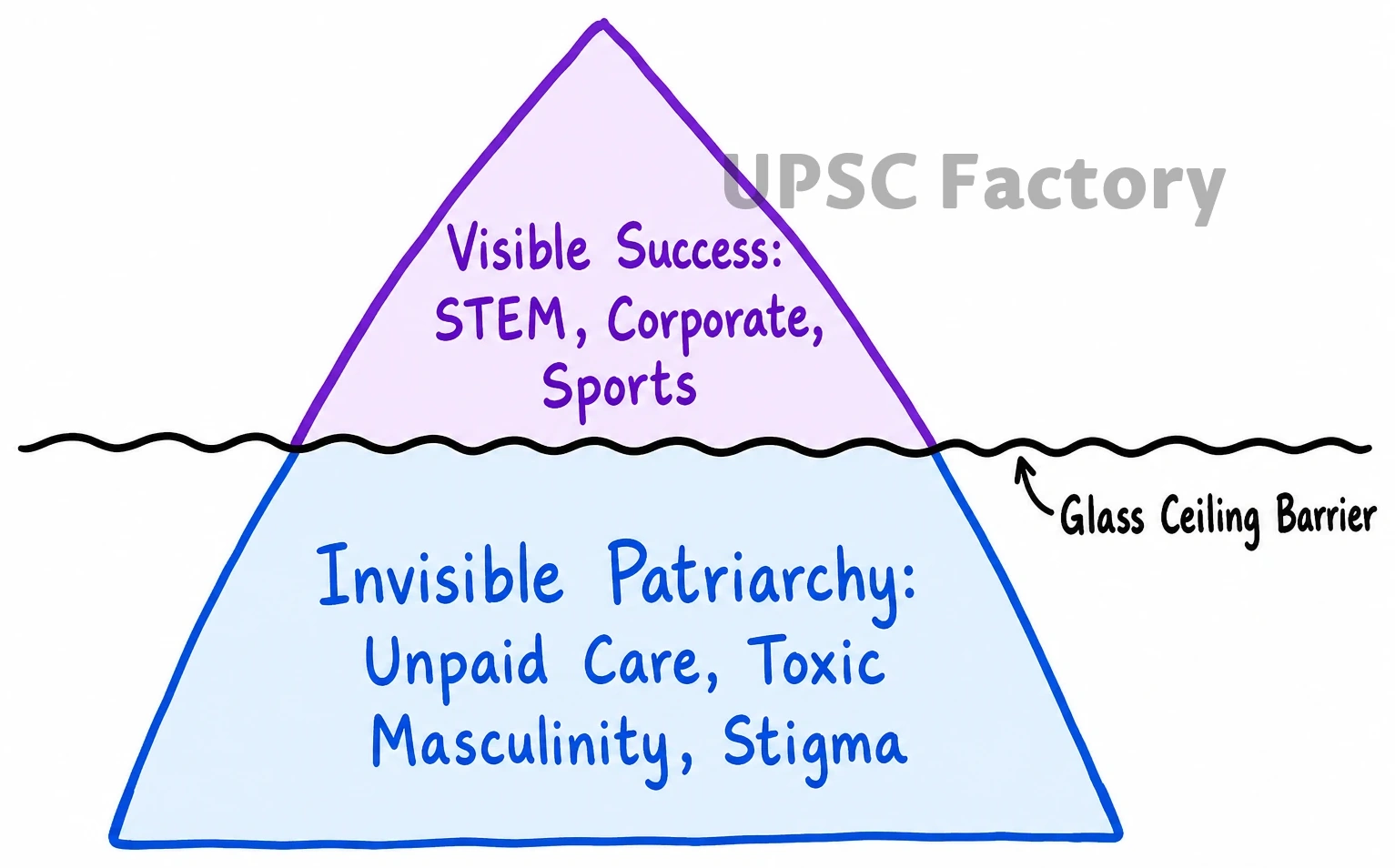
- The “Double Burden”: Professional success is overshadowed by the disproportionate burden of unpaid domestic care work.
- Feminist Stigmatization: Feminist movements are often culturally mischaracterized as “anti-family” or “anti-men” rather than pro-equality.
- Invisible Barriers: Success in STEM or corporate sectors contrasts with high attrition rates and persistent “glass ceilings.”
2. Interventions for Attitudinal Shift
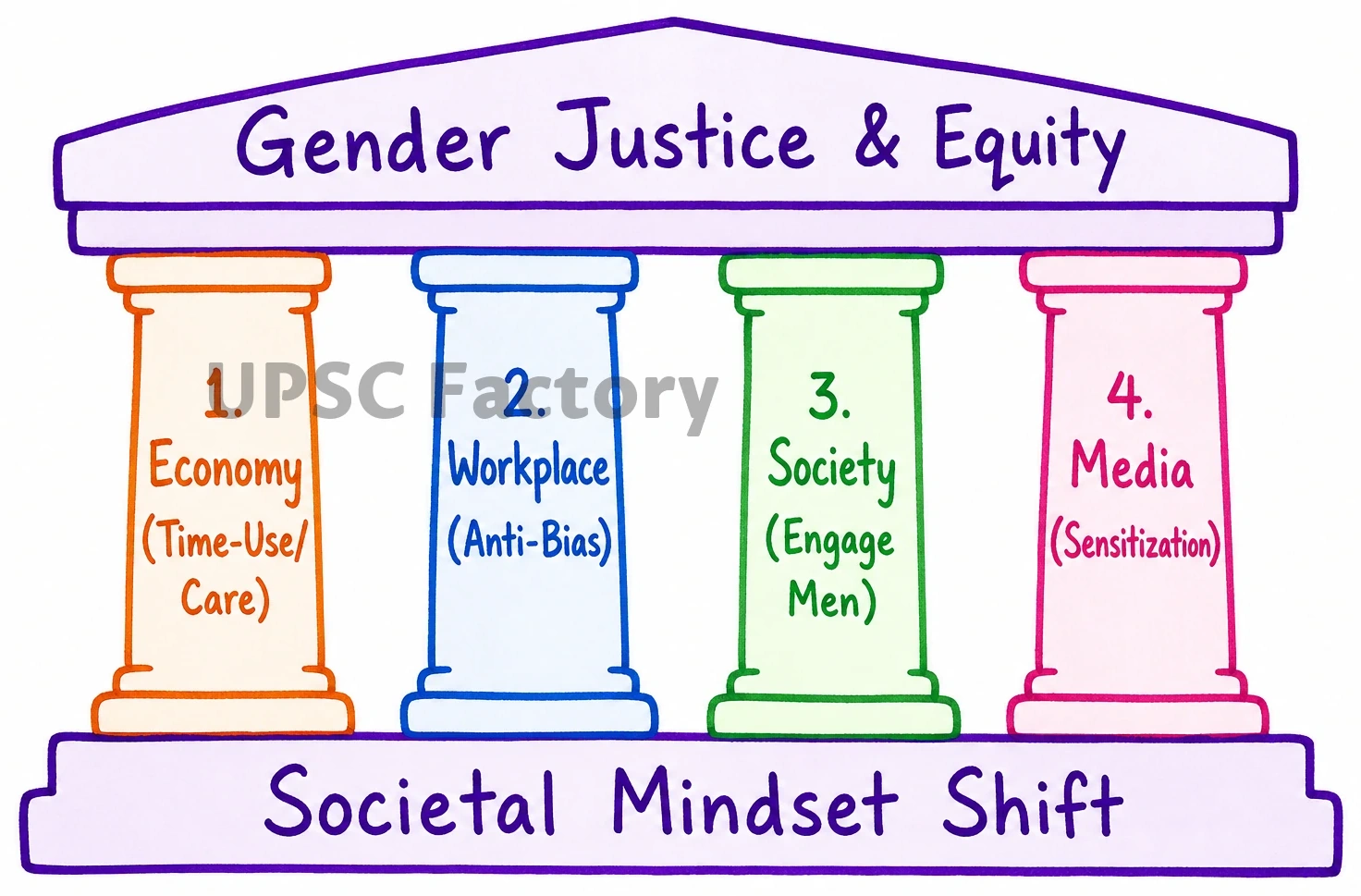
- Behavioral Nudges: Actively engage men and boys in gender dialogues to dismantle toxic masculinity (
Bell Bajao, UNHeForShecampaigns). - Institutionalizing Care Work: Mandate equal, non-transferable paternity leaves to neutralize the “motherhood penalty” and equalize child-rearing (Nordic model).
- Media Sensitization: Enforce strict gender-sensitive broadcast guidelines and popularize metrics like the ‘Bechdel Test’ to curb cultural objectification.
- Macro-Economic Recognition: Formally integrate unpaid domestic labor metrics into national economic frameworks using Time-Use Surveys to build respect for care work.
- Workplace Restructuring: Implement blind recruitment, flexible hours, and mandatory bias-training to combat implicit biases and corporate microaggressions.
- Community Engagement: Leverage local religious and community leaders as progressive change agents to delegitimize regressive customs (son-meta preference, dowry).
- Empowering Jurisprudence: Shift from protective to empowering legal frameworks, ensuring laws reflect egalitarian partnerships rather than patriarchal guardianship (Supreme Court’s Sabarimala verdict).
Achieving true gender justice requires a societal metamorphosis—transitioning from state-driven “women development” to a society-led “women-led development” framework under Article 15(3).