Model Answer:
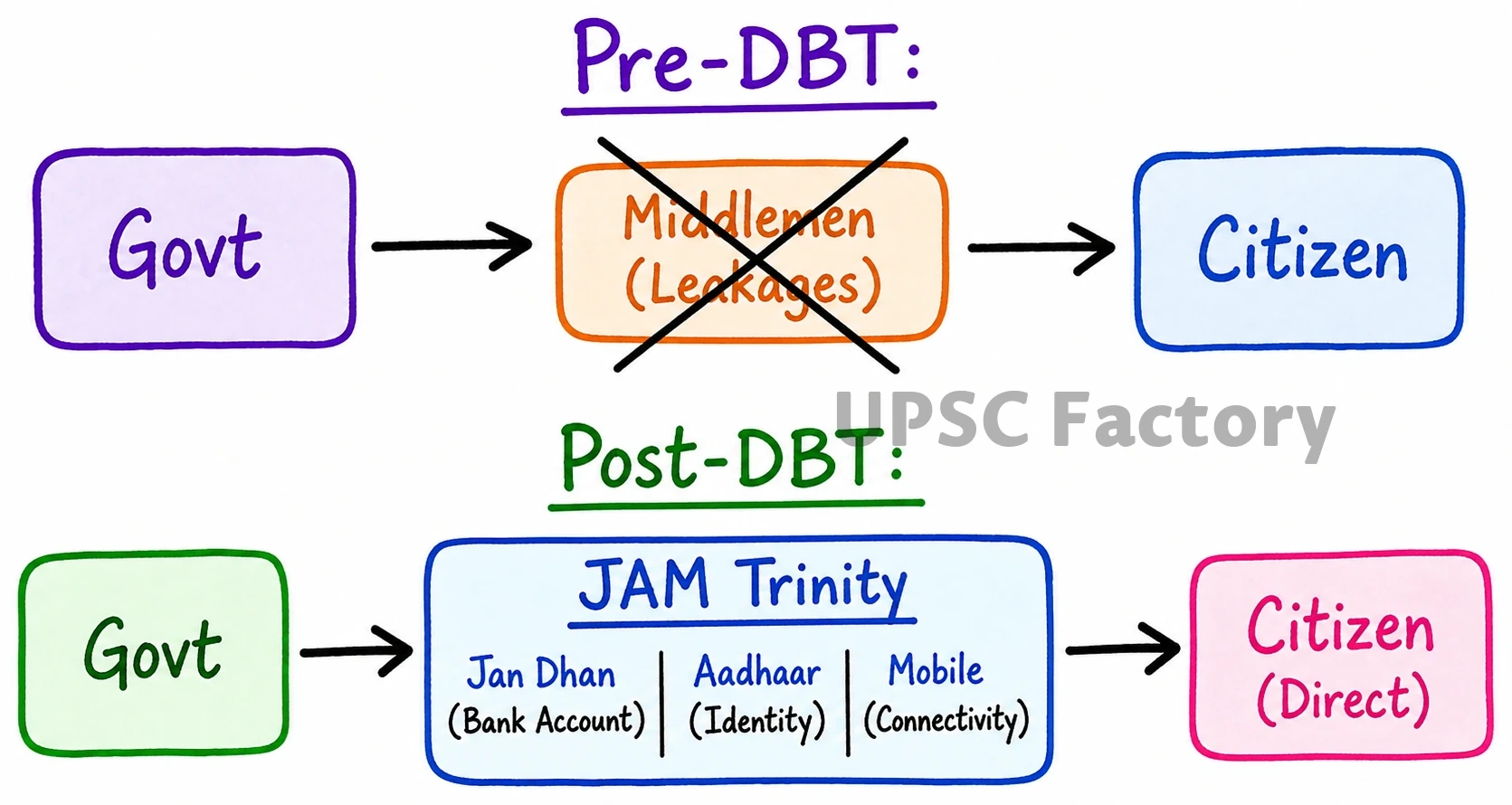
The Direct Benefit Transfer (DBT) scheme, leveraging the JAM Trinity, has progressively transformed India’s welfare delivery paradigm by maximizing transparency.
Progressive Impacts of DBT
- Fiscal Efficiency: Eradicated middlemen and ghost beneficiaries, saving over ₹3.4 lakh crore (DBT Mission Data).
- Targeting Precision: Ensures timely, direct financial support to verified individuals (PM-KISAN, PAHAL).
- Financial Inclusion: Spurred mass banking access, especially empowering rural women (PM Jan Dhan Yojana).
- Crisis Resilience: Enabled immediate, frictionless cash transfers during systemic shocks (COVID-19 PMGKY relief).
Inherent Limitations of DBT
- Exclusion Errors: Aadhaar seeding mismatches and biometric failures deny rightful entitlements (MGNREGA wage delays, PDS denial).
- Digital Divide: Poor network connectivity and distant bank branches plague remote tribal regions (NITI Aayog).
- Financial Illiteracy: Vulnerable populations face dependency on banking correspondents and vulnerability to digital frauds.
- Cash Substitution Risks: Transferred cash might be diverted to non-essentials instead of intended goals (nutrition vs. alcohol).
Strengthening digital infrastructure, providing offline alternatives, and building robust local grievance redressal are essential to fulfill Article 38’s welfare state mandate.