Model Answer:
The Indian Constitution is a “living document” embodying transformative constitutionalism. It dynamically adapts to evolving socio-economic realities through formal amendments (Article 368) and progressive judicial interpretations.
1. The Constitution as a Dynamic and Progressive Instrument
- Transformative Nature: Continuously transitions society from archaic inequalities to modern egalitarianism (e.g., striking down Triple Talaq).
- Organic Adaptability: The “Basic Structure” doctrine allows the Constitution to grow and absorb contemporary ideals without losing its foundational philosophy (Kesavananda Bharati Case).
2. Expanding Horizons of Article 21 (Judicial Innovation)
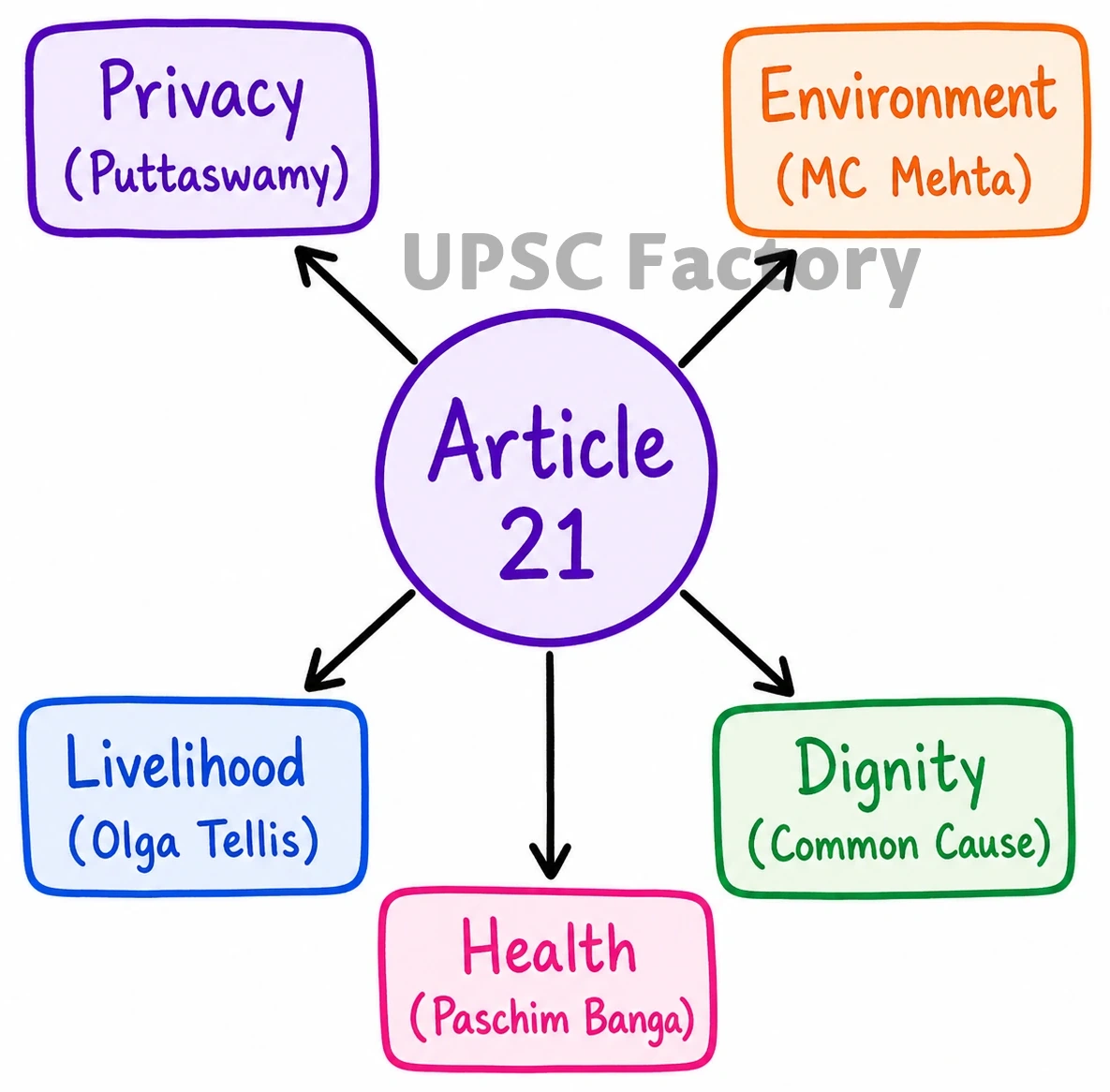
Article 21 (Right to Life and Personal Liberty) has been the primary vessel for this dynamism, expanding continuously to reflect a progressive society:
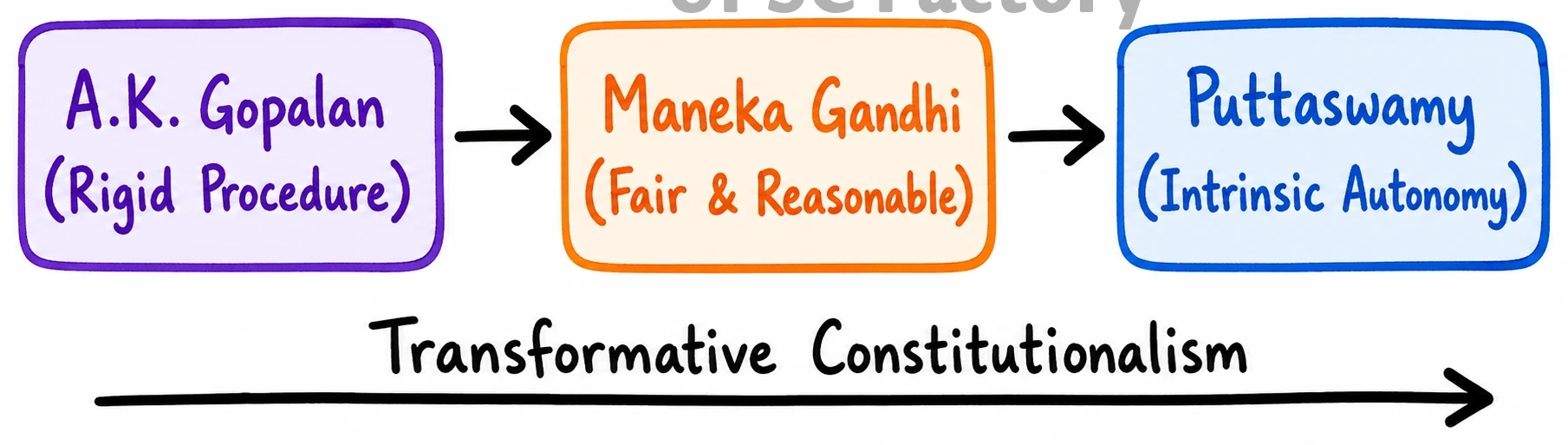
- Substantive Due Process: Shifted from rigid “procedure established by law” to demanding that laws be just, fair, and reasonable (Maneka Gandhi Case, 1978).
- Technological & Physical Autonomy (Privacy): Elevated privacy to an intrinsic fundamental right, safeguarding citizens in the digital age (K.S. Puttaswamy Case, 2017).
- Progressive Social Morality: Decriminalized consensual same-sex relations, championing constitutional morality over Victorian-era norms (Navtej Singh Johar, 2018).
- Bodily Autonomy & Dignity in Death: Legalized passive euthanasia and living wills, affirming that a dignified life includes a dignified death (Common Cause, 2018).
- Socio-Economic Emancipation: Expanded the definition of “life” beyond mere animal existence to include the right to livelihood (Olga Tellis, 1985).
- Environmental Jurisprudence: Recognized a pollution-free environment, clean water, and air as absolute prerequisites for life (M.C. Mehta Cases).
- Access to Justice & Welfare: Embedded implicit rights to a speedy trial, free legal aid (Hussainara Khatoon), and elementary education (Unnikrishnan Case).
Through the continuous, progressive expansion of Article 21, the judiciary ensures the Constitution transcends being a mere legal text, functioning instead as a resilient, ever-evolving charter of human emancipation and dignity.