Model Answer:
The Indian Constitution envisions gender justice through “Transformative Constitutionalism,” striving for absolute substantive empowerment and individual agency rather than mere formal equality.
Constitutional Provisions Guaranteeing Gender Justice
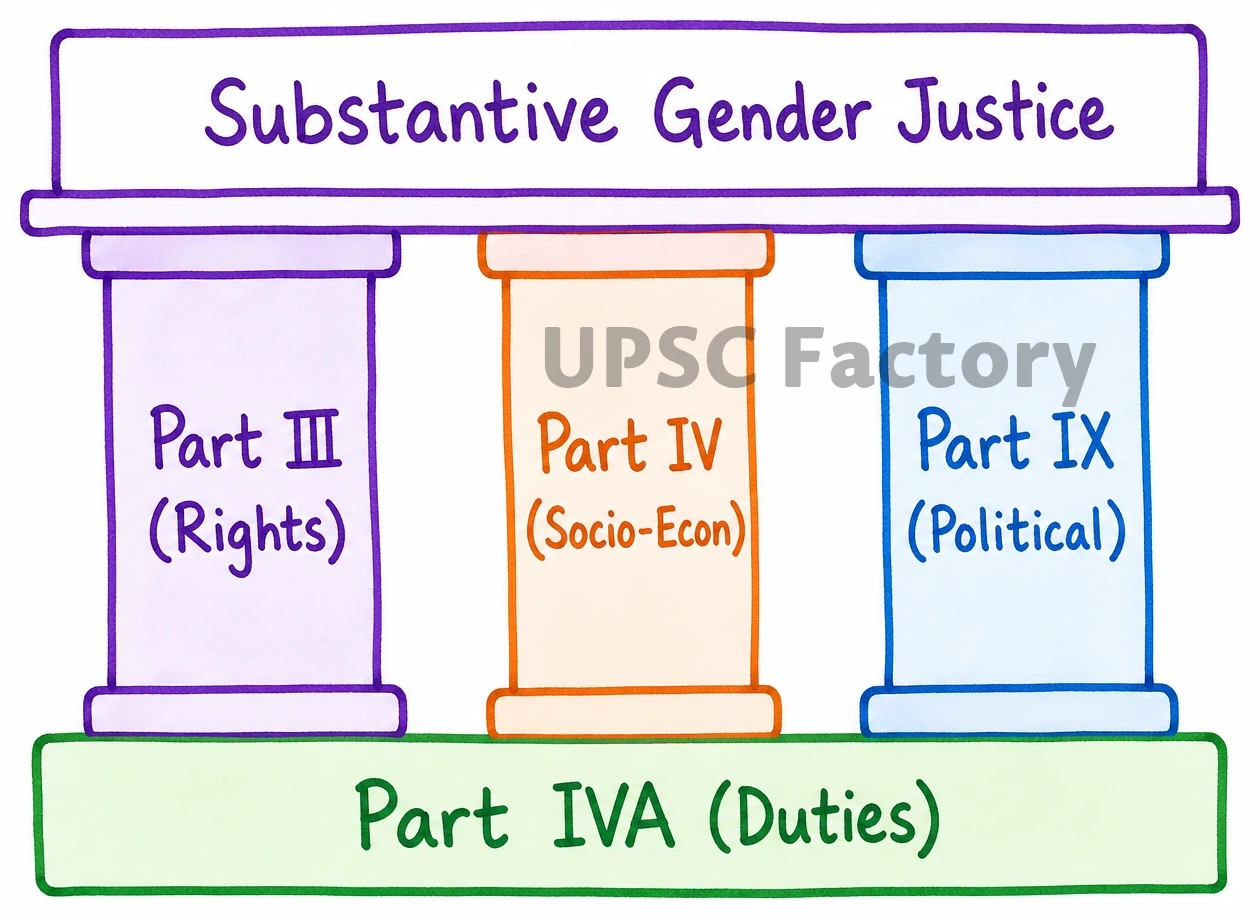
- Fundamental Rights (Part III): Articles 14 and 15(1) mandate absolute equality before the law and explicitly prohibit gender-based discrimination.
- Affirmative Action: Article 15(3) empowers the State to enact specialized, protective provisions for women (e.g., Maternity Benefit Act).
- Dignity & Autonomy: Article 21 guarantees the right to live with dignity, fundamentally encompassing bodily and reproductive autonomy.
- Socio-Economic Directives (Part IV): Article 39(d) ensures equal pay for equal work; Article 42 mandates maternity relief and humane working conditions.
- Civic Duties: Article 51A(e) explicitly compels citizens to renounce practices derogatory to the dignity of women.
- Political Empowerment: Articles 243D and 243T constitutionally mandate one-third reservation for women in Panchayats and Municipalities.
Landmark Case Laws Expanding Gender Equality

- Workplace Safety: Established mandatory anti-harassment guidelines, interpreting workplace safety as a fundamental Article 21 right (Vishaka v. State of Rajasthan).
- Dismantling Patriarchy: Decriminalized adultery, asserting that women possess absolute sexual autonomy and cannot be treated as chattel (Joseph Shine v. UOI).
- Ending Biological Discrimination: Struck down religious customs barring women of menstruating age from temples, prioritizing individual rights (Sabarimala Case).
- Command Roles: Mandated granting Permanent Commission to female officers in the Armed Forces, shattering professional glass ceilings (Babita Puniya Case).
- Equal Coparcenary: Recognized daughters’ retroactive, absolute equal inheritance rights in Hindu Undivided Family properties (Vineeta Sharma v. Rakesh Sharma).
- Reproductive Rights: Extended the fundamental right to safe, legal abortion up to 24 weeks to unmarried women (X v. NCT of Delhi).
Constitutional gender justice is a continually evolving paradigm. Recent systemic milestones like the Nari Shakti Vandan Adhiniyam (106th Amendment) structurally cement India’s transition from historical protectionism to substantive political empowerment.