Model Answer:
The ‘Earn While You Learn’ (EWYL) model integrates academics with paid on-the-job training, acting as a critical catalyst for realizing India’s demographic dividend and NEP 2020 objectives.
1. Significance of EWYL in Vocational Education
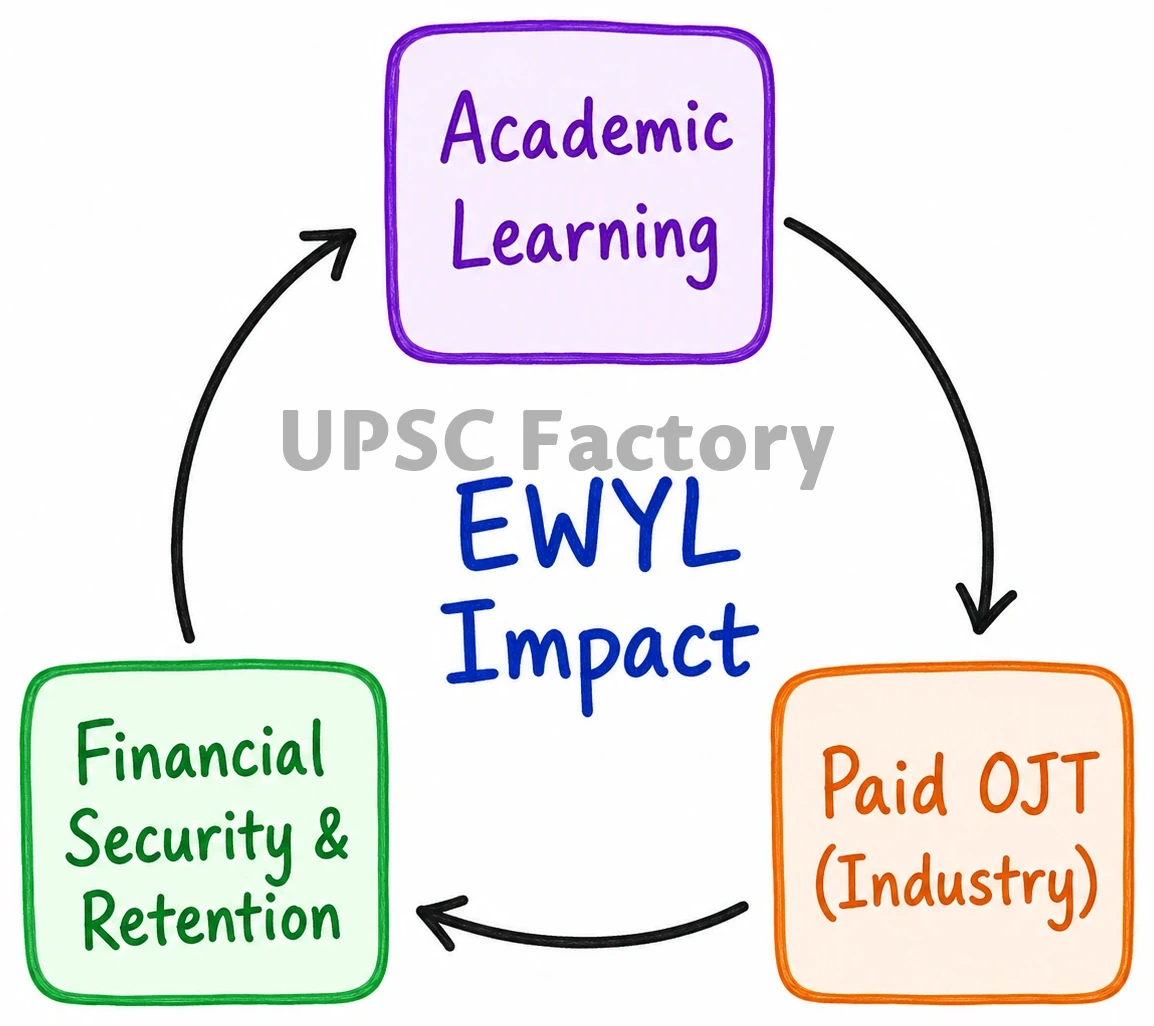
- Arresting Dropouts: Financial incentives prevent economically vulnerable youth from abandoning education prematurely (PLFS highlights high youth unemployment).
- Industry Alignment: Bridges the theory-practice gap, enhancing direct employability by moving beyond rote learning (Germany’s Dual VET system).
- Dignity of Labour: Destigmatizes vocational training, treating apprenticeships as formal, respectable employment pathways rather than fallback options.
2. Current Gaps & Measures to Strengthen EWYL
- Low MSME Adoption: MSMEs often lack resources for stipends. Fix: Increase government reimbursement thresholds under the National Apprenticeship Promotion Scheme (NAPS).
- Informal Sector Exclusion: Over 90% of the workforce remains informal. Fix: Expand the Apprenticeship Act 1961 to recognize traditional artisanal guilds and gig economy skills.
- Meager Remuneration: Current stipends fail to cover basic living costs. Fix: Dynamically peg EWYL stipends to regional minimum wage indexes.
- Academic Silos: Work experience lacks academic weight. Fix: Fully operationalize the National Credit Framework (NCrF) to assign transferable academic credits for EWYL hours (e.g., AICTE’s EWYL framework).
Strengthening EWYL shifts it from a mere welfare initiative to an economic necessity, cultivating a globally competitive “Skilled India” essential for driving a $5 trillion economy.