Model Answer:
The Alma-Ata Declaration recognizes health as a fundamental human right. A robust primary healthcare (PHC) system fulfills both India’s constitutional mandates and its broader socio-economic goals.
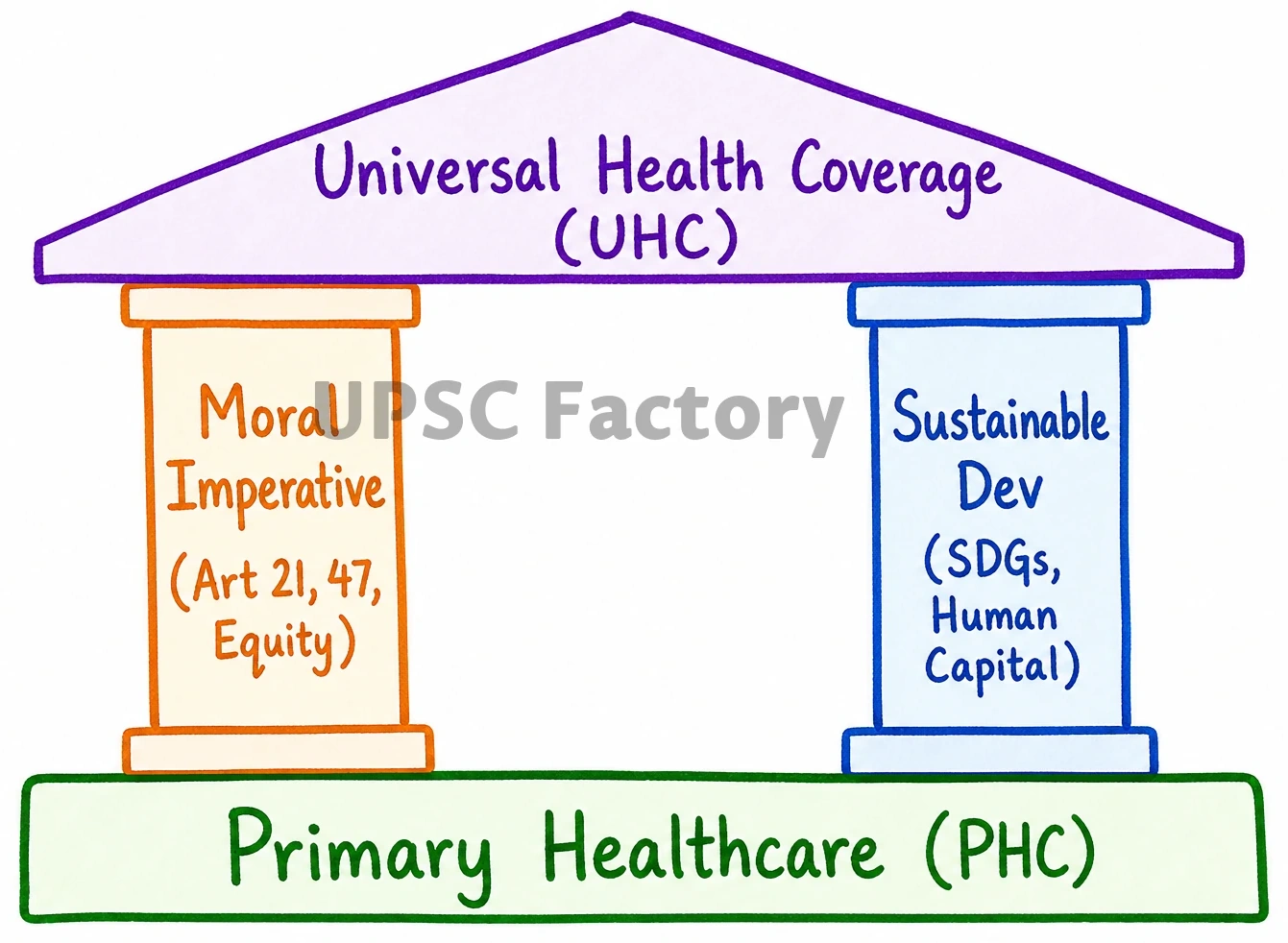
1. Moral Imperative of a Welfare State
- Constitutional Duty: Fulfills the state’s mandate under Article 47 (improving public health) and Article 21 (Right to Life).
- Equity and Justice: Ensures accessible, affordable, and inclusive care for marginalized, rural, and tribal communities.
- Social Contract: Acts as a critical protective shield, upholding human dignity and preventing severe societal distress.
2. Precondition for Sustainable Development
- Poverty Alleviation: Reduces catastrophic Out-of-Pocket Expenditure (OOPE), preventing health-induced cycles of poverty (SDG 1).
- Human Capital Formation: A disease-free workforce enhances cognitive capacity, educational outcomes, and labor productivity, harnessing the demographic dividend.
- Cross-Sectoral Impact: Directly achieves SDG 3 (Good Health) while improving outcomes in education (SDG 4) via reduced absenteeism.
- Grassroots Resilience: Enables localized disease surveillance, preventing localized outbreaks from causing systemic macroeconomic shocks (Kerala’s decentralized health model).
Upgrading traditional PHCs into Ayushman Bharat Health and Wellness Centres (HWCs) is a crucial step toward achieving Universal Health Coverage (UHC) and sustainable, equitable prosperity.