Model Answer:
Artificial Intelligence (AI) refers to the simulation of human cognitive functions—such as learning, reasoning, and pattern recognition—by computer systems.
1. AI in Clinical Diagnosis
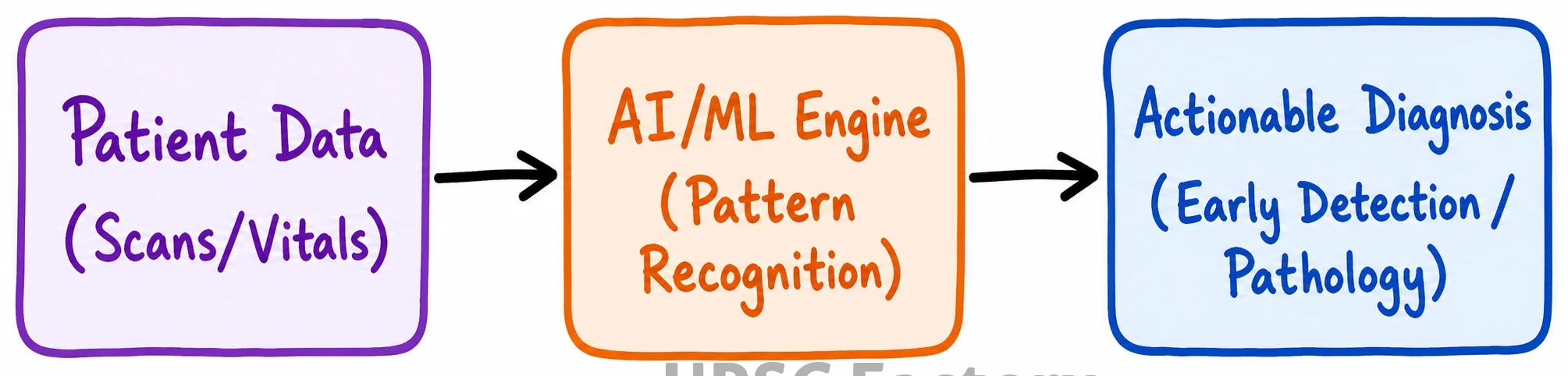
- Medical Imaging: Analyzes MRIs/X-rays rapidly with superior precision (Google DeepMind for diabetic retinopathy).
- Predictive Diagnostics: Machine learning predicts disease onset using patient history and genetics (IBM Watson in oncology).
- Early Detection: Identifies subtle anomalies in ECGs/scans before clinical symptoms visibly manifest.
- Pathology Automation: Rapidly processes blood and tissue samples, minimizing human error and diagnostic turnaround time.
2. Privacy Threats of AI in Healthcare
- Data Breaches: Centralized AI training datasets are lucrative targets for cyberattacks, exposing sensitive health records.
- Unauthorized Profiling: AI can deduce unshared medical conditions, enabling potential discrimination by employers or health insurers.
- Consent Violations: Secondary use of patient data for algorithm training often occurs without explicit, informed consent.
- De-anonymization Risks: Advanced AI can easily re-identify “anonymized” patient data by cross-referencing multiple digital footprints.
Balancing AI’s clinical benefits requires enforcing the Digital Personal Data Protection (DPDP) Act 2023 and ICMR Guidelines, strictly safeguarding data privacy as a fundamental right (Puttaswamy judgment).