Model Answer:
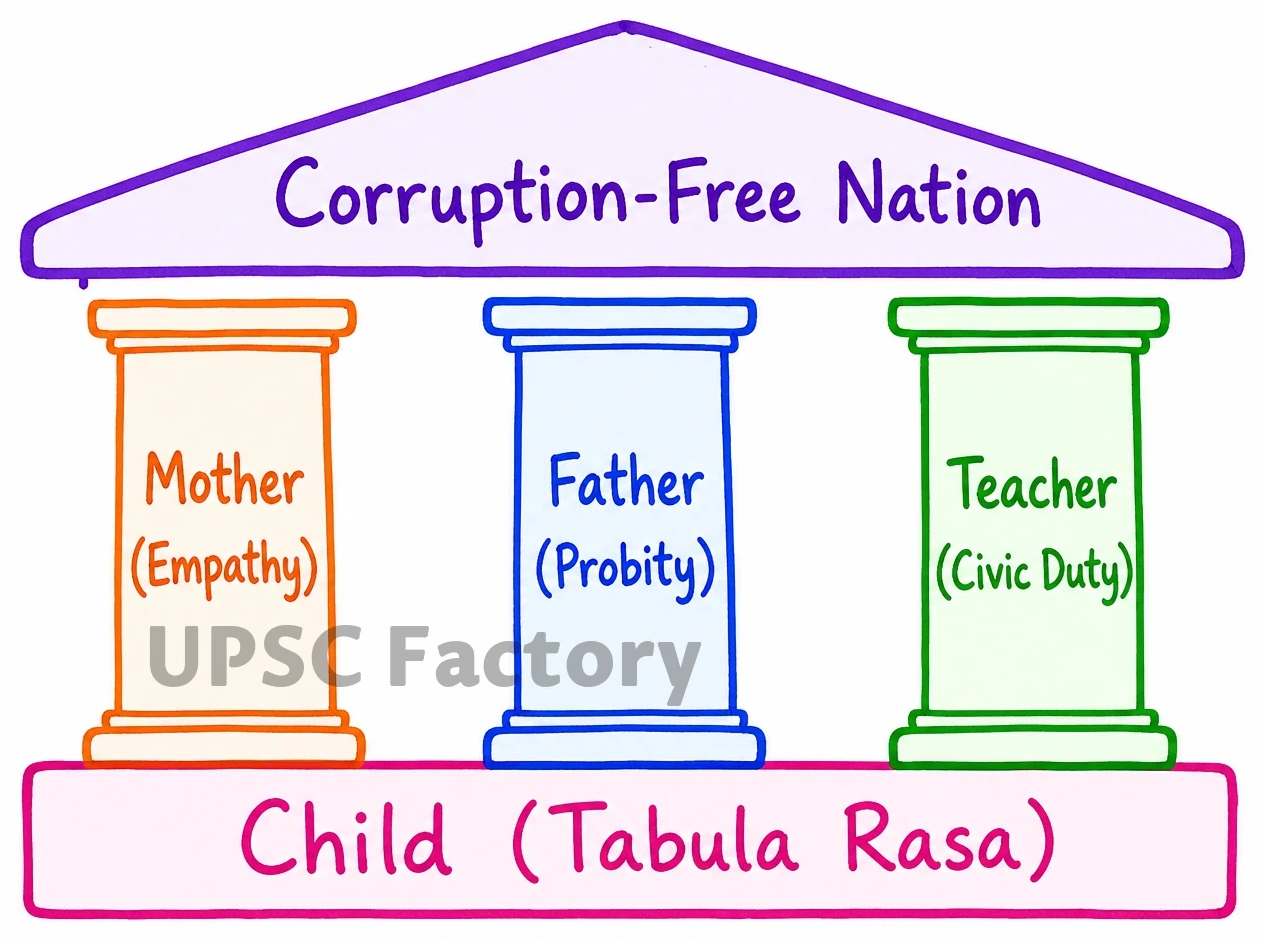
Kalam’s quote underscores that a child’s mind is a tabula rasa. The foundational triad—mother, father, and teacher—drives primary and secondary socialization, inherently shaping a nation’s ethical capital.
1. Parents: Architects of Primary Values
- Foundational Integrity: Children absorb honesty and empathy via observational learning, establishing early anti-corruption attitudes (Bandura’s Social Learning Theory).
- Emotional Intelligence: Mothers instill foundational compassion and selfless care, naturally mitigating greed (e.g., Jijabai shaping Shivaji’s moral righteousness).
- Discipline & Probity: Fathers often anchor austerity, accountability, and financial integrity (e.g., Kalam learning austere honesty from his father).
2. Teachers: Catalysts of Civic Ethics
- Public Morality: Teachers transition children from private family loyalties to universal civic virtues and constitutional ethics.
- Scientific Temper: They cultivate “beautiful minds” by fostering rational inquiry, critical thinking, and intellectual objectivity.
- Resolving Prejudice: Teachers correct cognitive biases by promoting egalitarianism (e.g., Sivasubramania Iyer breaking social barriers for young Kalam).
While statutory laws only deter corruption extrinsically, this triad intrinsically re-engineers human behavior, cultivating a robust conscience essential for building a morally resilient India.