Model Answer:
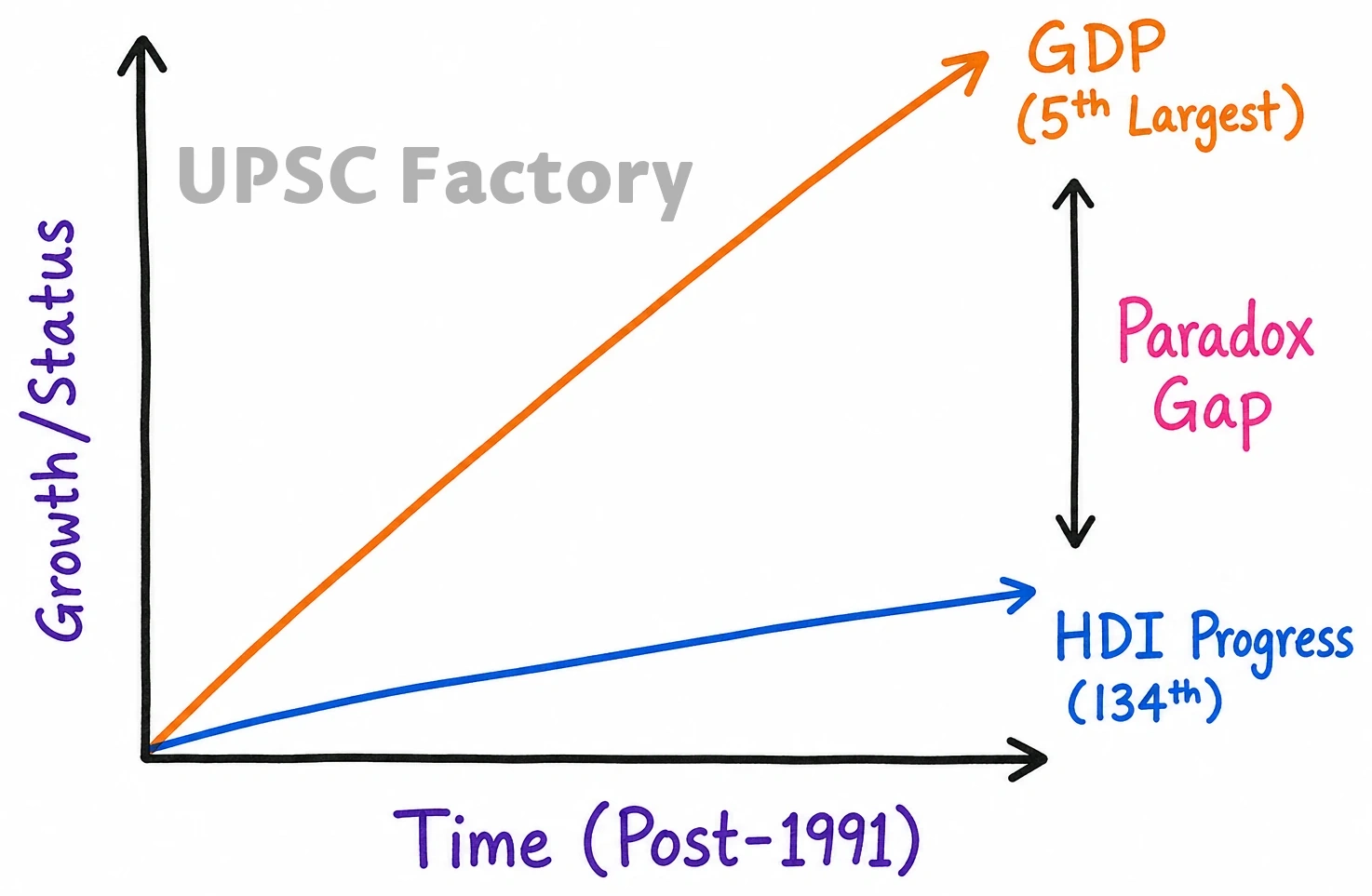
India is the world’s fifth-largest economy, yet this macroeconomic success presents a paradox, as India ranks a dismal 134th out of 193 countries in the UNDP Human Development Index (HDI) 2023-24.
1. Evidence of the Development Paradox
- Income Inequality: The top 1% holds over 40% of national wealth (World Inequality Report), reflecting highly skewed economic growth.
- Multidimensional Deprivation: Despite absolute poverty reduction, millions suffer overlapping deprivations in health and living standards (National MPI).
- Quality of Capital Lag: High malnutrition (Global Hunger Index rank 111) and severe “learning poverty” persist despite rising literacy (ASER Report).
2. Root Causes for Lagging Human Development
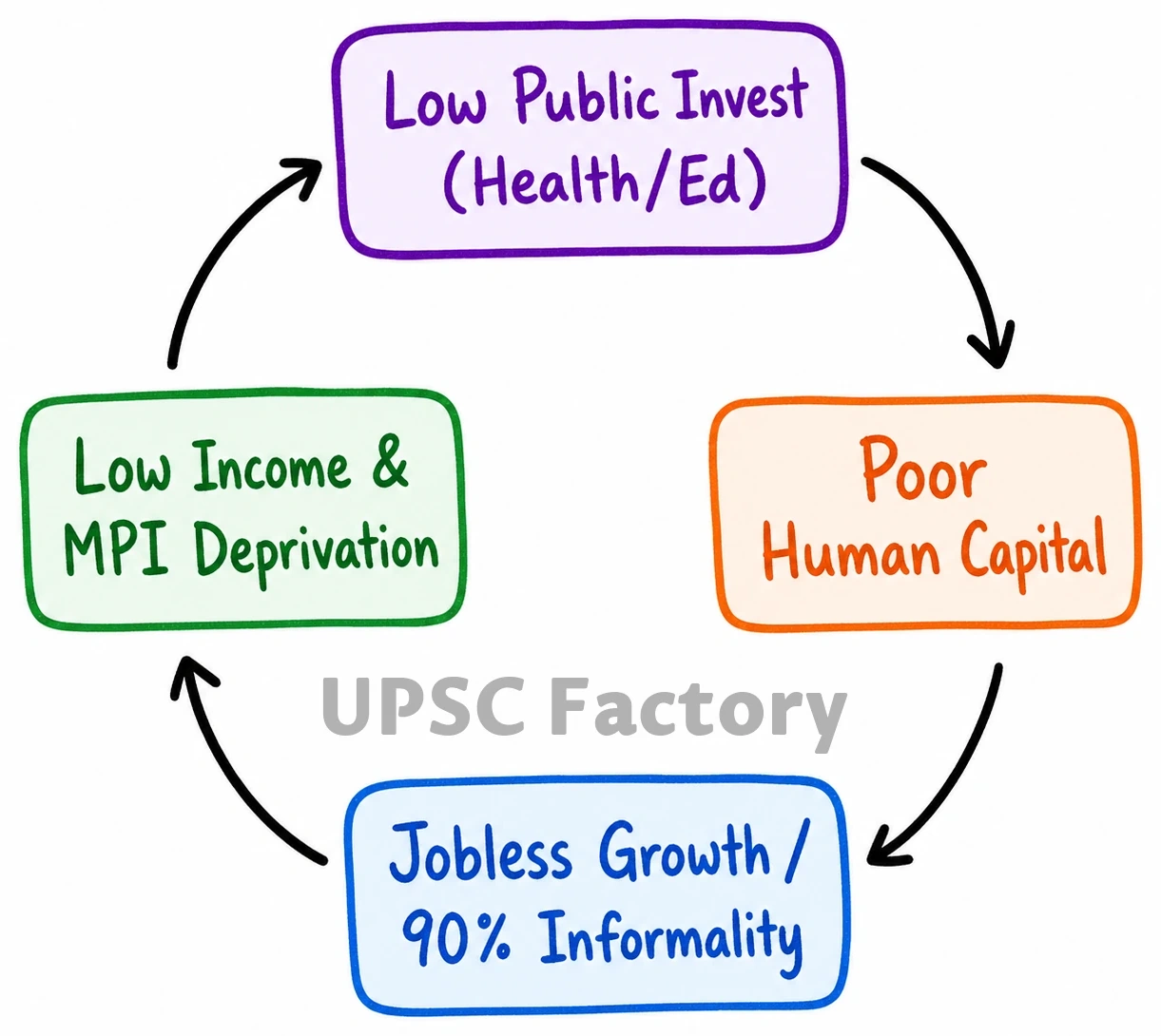
- Jobless Growth: Post-1991 services-led economic expansion bypassed labor-intensive manufacturing, failing to absorb surplus unskilled rural labor.
- Informal Economy Dominance: Over 90% of the workforce remains in the informal sector, lacking social security, insurance, and stable wages (e-Shram data).
- Inadequate Public Expenditure: Chronic underfunding restricts human capital formation (Health expenditure is ~2.1% of GDP; Education is ~2.9% of GDP).
- Agrarian Distress: Agriculture employs ~45% of the workforce but contributes only ~18% to GDP, heavily suppressing rural per capita incomes.
- Social Stratification: Caste-based spatial segregation and occupational rigidities restrict Dalit and Adivasi communities from accessing modern economic opportunities.
- Gender Disparities: Patriarchal norms and high unpaid care burdens keep Female Labor Force Participation historically low (~37.0% in 2023).
- Implementation Bottlenecks: Systemic inefficiencies, corruption, and exclusion errors plague welfare delivery systems, limiting the impact of anti-poverty schemes.
- Misplaced Development Focus: Economic policies historically prioritized infrastructure and corporate growth over building foundational human capabilities.
Achieving the “Viksit Bharat 2047” vision requires shifting from GDP-centric expansion toward Amartya Sen’s “capability approach,” prioritizing targeted investments in health, foundational education, and equitable job creation.