Model Answer:
The Bharatiya Nyaya Sanhita (BNS) replaces the colonial Indian Penal Code (IPC), marking a paradigm shift from imperial subjugation (Danda) to restorative righteousness (Nyaya).
1. BNS & Indian Ethos (Justice, Equality, Impartiality)
- Restorative Justice (Nyaya): Replaces the colonial master-subject punitive framework with a citizen-centric system rooted in Dharma.
- Impartiality: Removes imperial biases and state-centric protections to treat citizens fairly (Repeal of Section 124A Sedition).
- Egalitarianism: Upholds Article 14 by ensuring equal protection for vulnerable groups (Specific, stringent penalties for mob lynching).
2. Paradigm Shift: Punishment to Justice
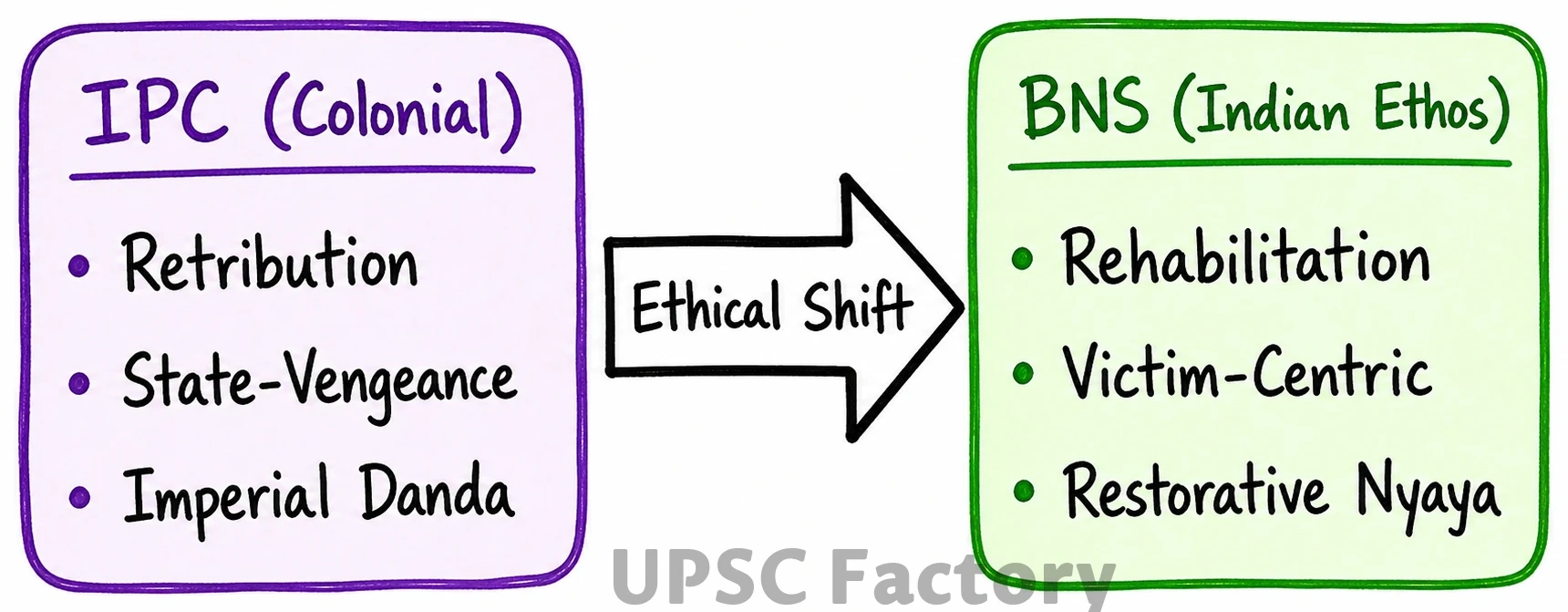
- Rehabilitation over Retribution: Integrates community service for petty crimes (Section 4 BNS), fostering moral reform rather than mere incarceration.
- Victim-Centric Healing: Prioritizes restorative closure and trauma mitigation over mechanical state vengeance (Mandatory Zero FIRs, time-bound trials).
- Ethical Proportionality: Balances empathy with deterrence, ensuring penalties match the moral gravity of the offence.
- Protecting Human Dignity: Shifts focus from mere penal deterrence to upholding intrinsic human worth and corrective justice (Article 21).
BNS represents a civilizational reset, aligning India’s criminal justice system with the ethical tenets of Constitutional Dharma, empathy, and transformative justice.