Model Answer:
The case involves balancing the fundamental Right to Water (Article 21) with agricultural livelihoods, industrial employment, and restoring administrative credibility amidst severe scarcity.
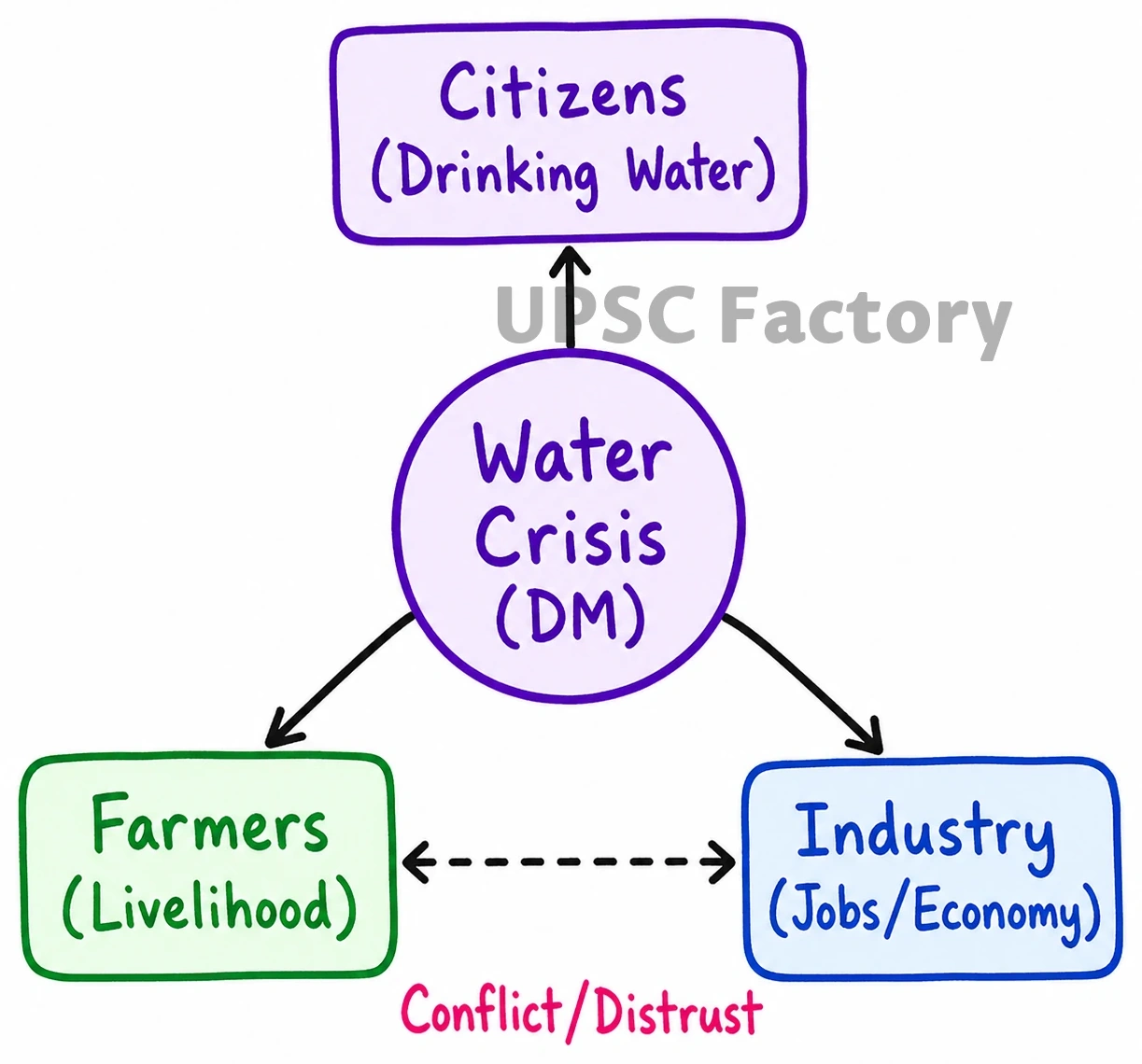
1. Options Available to the District Collector (Part a)
- Ban all non-drinking extraction: Stops both farming and industry. (Saves drinking water; causes mass unemployment and agrarian ruin).
- Allow agricultural extraction, halt industry: Placates protesting farmers. (Leads to industrial shutdowns, major worker job losses, and economic strain).
- Proportionate rationing for both: Enforce strict quotas based on survival needs. (Optimal choice; balances competing livelihoods and drinking water security).
2. Suitable Actions for Stakeholder Balance (Part b)
- Prioritize Drinking Water: Enforce National Water Policy mandates, reserving reservoirs strictly for human survival.
- Industrial Regulation: Mandate recycled wastewater usage, audit borewell meters, and enforce strict Central Ground Water Authority (CGWA) guidelines.
- Agricultural Relief: Release minimal sustenance water for standing crops and provide immediate micro-irrigation subsidies (PM-KSY).
- Participatory Transparency: Form a Joint Task Force (farmer representatives, administration, industry officials) to monitor industrial extraction, dispelling corruption allegations.
- Alternative Livelihoods: Scale up MGNREGA for drought-proofing and watershed development (e.g., Paani Foundation model) to offset agrarian income loss.
3. Administrative and Ethical Dilemmas (Part c)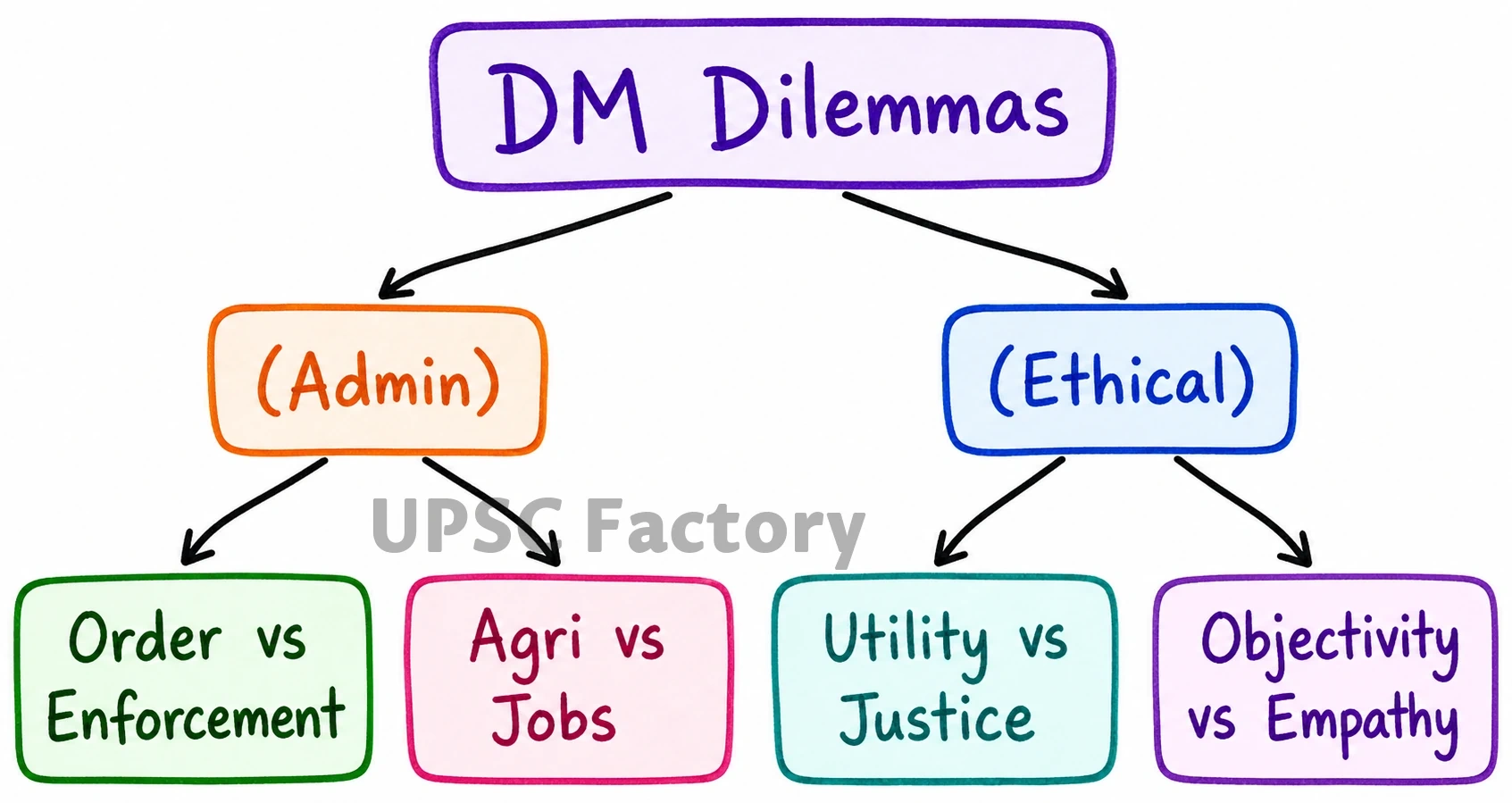
- Administrative Dilemmas:
- Law & Order vs. Enforcement: Preventing farmer protests while strictly enforcing unpopular water conservation mandates.
- Livelihood vs. Employment: Protecting agrarian incomes without triggering mass industrial unemployment.
- Ethical Dilemmas:
- Utilitarianism vs. Distributive Justice: Saving water for the larger public good vs. protecting the vulnerable, marginalized farmers.
- Objectivity vs. Compassion: Strict, blind adherence to conservation rules vs. empathy for farmers facing financial ruin.
- Public Trust vs. Perceived Bias: Dispelling allegations of bribery while legitimately allowing industries to operate for worker welfare.
The District Collector must demonstrate high emotional intelligence and transparency, ensuring distributive justice and community-driven resource management to navigate this crisis compassionately and objectively.