Model Answer:
Akbar’s religious syncretism marked a paradigm shift from medieval orthodox statecraft to an inclusive administration, driven by profound philosophical curiosity and political pragmatism.
1. Institutional Measures and Policy Reforms
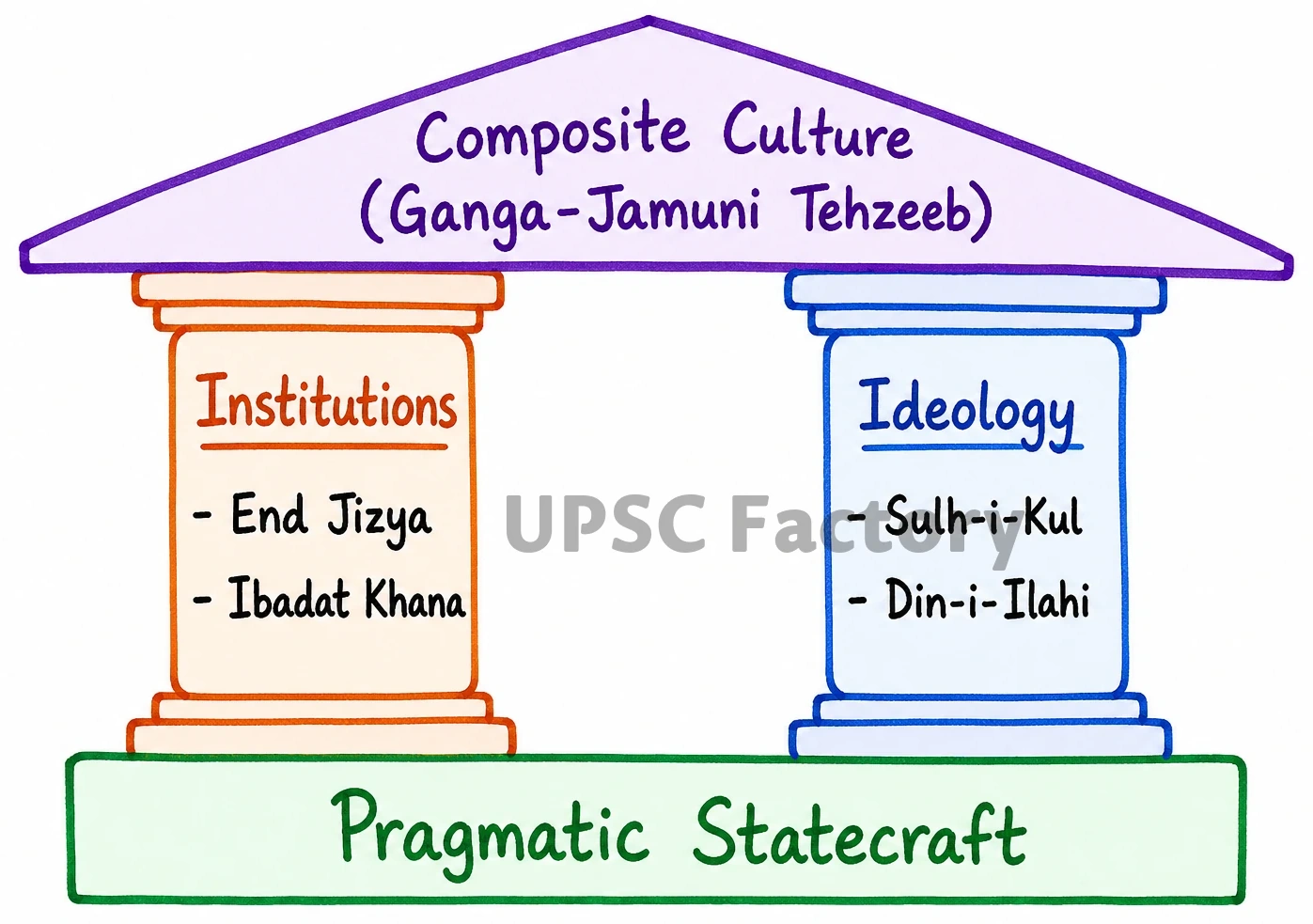
- Tax Emancipation: Abolished the discriminatory Jizya (1564) and pilgrim taxes, granting non-Muslims socio-economic and religious parity.
- Inter-faith Dialogue: Established the Ibadat Khana (Fatehpur Sikri) hosting philosophical debates among Hindu, Jain, Christian, and Zoroastrian scholars.
- Mahzarnama (1579): Issued the ‘Infallibility Decree’ establishing the Emperor as the supreme arbiter in religious disputes, curbing orthodox Ulema.
- Cultural Integration: Created the Maktab Khana (translation bureau) to translate Sanskrit epics into Persian (e.g., Mahabharata as Razmnama).
2. Core Ideological Pillars
- Sulh-i-Kul (Universal Peace): Institutionalized a guiding state policy of absolute religious tolerance and non-discrimination in civil governance.
- Din-i-Ilahi (1582): Propounded a new syncretic ethical code (Tauhid-i-Ilahi), merging moral virtues and rationalism from major world religions.
- Secular Administration: Elevated non-Muslims to high-ranking Mansabdar positions based purely on merit (e.g., Raja Todar Mal, Man Singh).
Conclusion
Akbar’s visionary syncretism laid the foundational bedrock for India’s composite culture (Ganga-Jamuni Tehzeeb), fostering enduring socio-political stability and unity.