Model Answer:
Guided by “Common but Differentiated Responsibilities,” India has progressively scaled its climate ambition from the 2015 Paris Agreement to the legally upgraded 2022 Nationally Determined Contributions (NDCs).
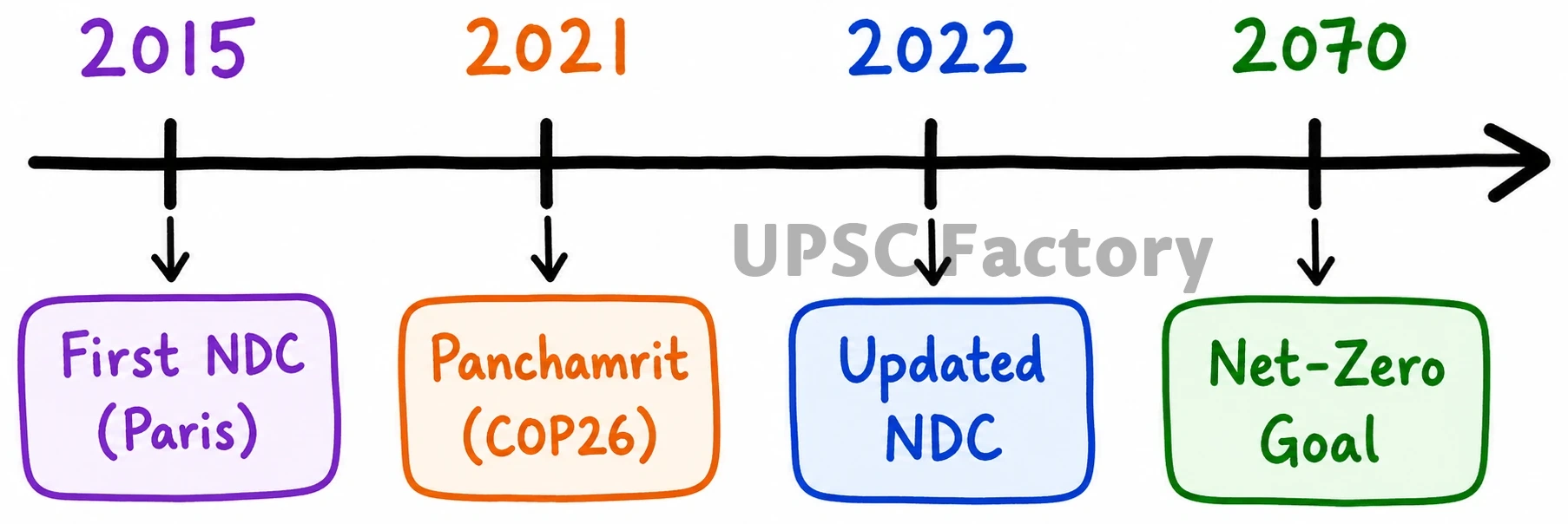
1. India’s Initial 2015 Paris Commitments (First NDC)
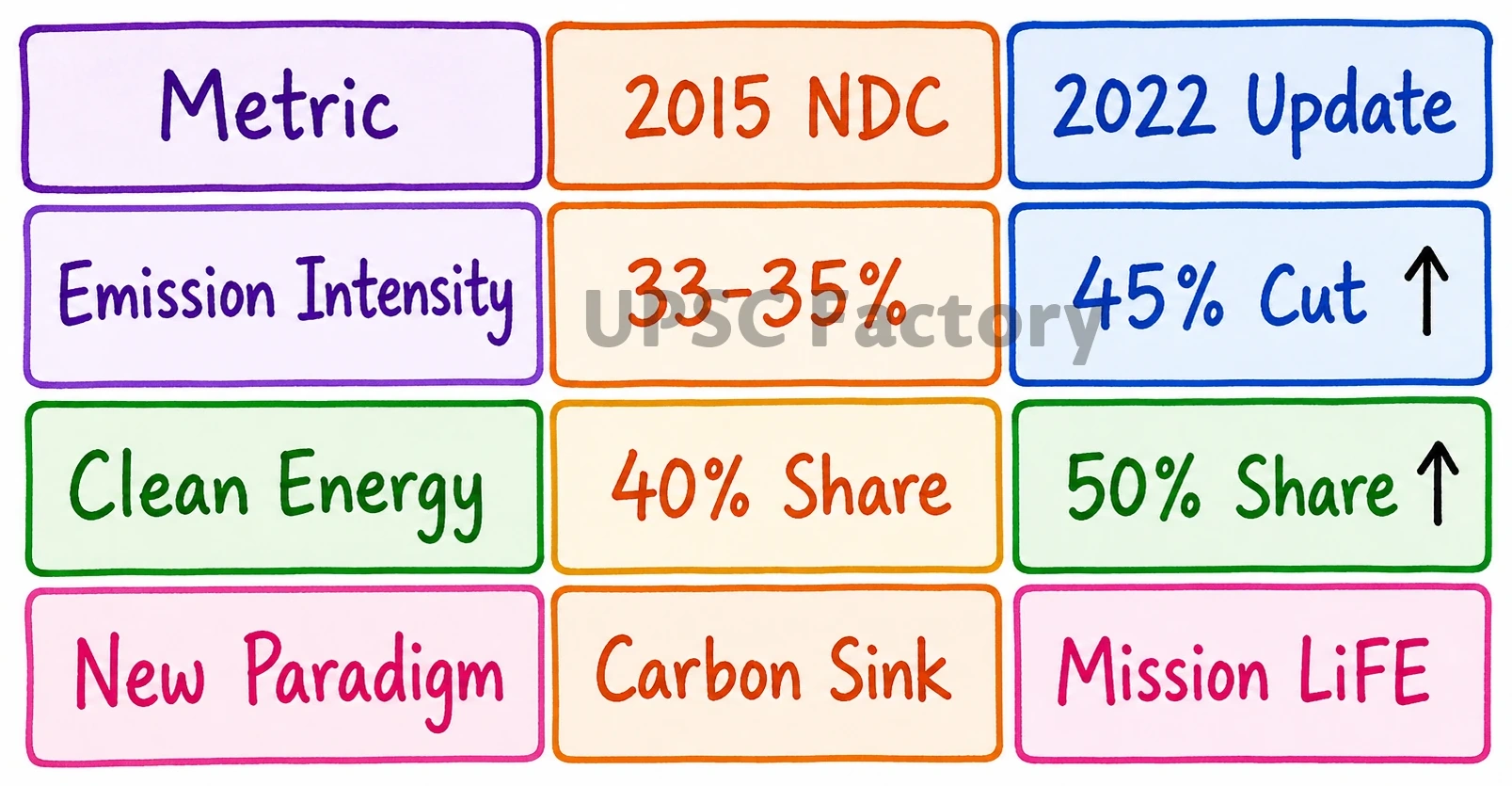
- Emission Intensity: Target to reduce GDP emission intensity by 33-35% by 2030 (relative to 2005 levels).
- Non-Fossil Capacity: Ensure 40% of cumulative electric power installed capacity stems from non-fossil fuel sources.
- Carbon Sink: Create an additional 2.5-3 billion tonnes of CO2e sink through enhanced forest and tree cover.
- Adaptation Mobilization: Enhance climate adaptation via targeted domestic investments in vulnerable sectors (National Adaptation Fund).
2. Strengthening Pledges: COP26 (2021) ‘Panchamrit’ Goals
- Net-Zero Target: Historic commitment to achieving Net-Zero carbon emissions by 2070.
- Absolute Emission Cuts: Pledge to reduce projected carbon emissions by 1 billion tonnes between 2021 and 2030.
- Enhanced Capacity Target: Reach 500 GW of non-fossil energy capacity by 2030.
- Renewable Energy Share: Meet 50% of overall national energy requirements from renewable sources by 2030.
- Carbon Intensity Reduction: Lower the overall carbon intensity of the economy to under 45% by 2030.
3. The 2022 Updated NDC (UNFCCC Article 4)
- Formalized Intensity Cut: Officially notified the upgraded benchmark of a 45% reduction in GDP emission intensity by 2030.
- Upgraded Energy Mix: Legally formalized the pledge of 50% cumulative electric power capacity from non-fossil sources.
- Mission LiFE Inclusion: Integrated ‘Lifestyle for Environment’ as a core NDC metric to drive mass behavioral climate action.
- Implementation Mechanisms: Accelerated execution via robust domestic policy realignments (Perform Achieve Trade (PAT), Sovereign Green Bonds, PM-KUSUM).
By aligning high-ambition targets like Net-Zero 2070 with robust localization strategies (Mission LiFE, National Green Hydrogen Mission), India exemplifies proactive global climate leadership without compromising equitable national development.