Model Answer:
Nanotechnology manipulates materials at the nanoscale (1-100 nm) to revolutionize agriculture through precision interventions, drastically enhancing resource efficiency, sustainability, and crop resilience.
1. Advancements of Nanotechnology in Agriculture
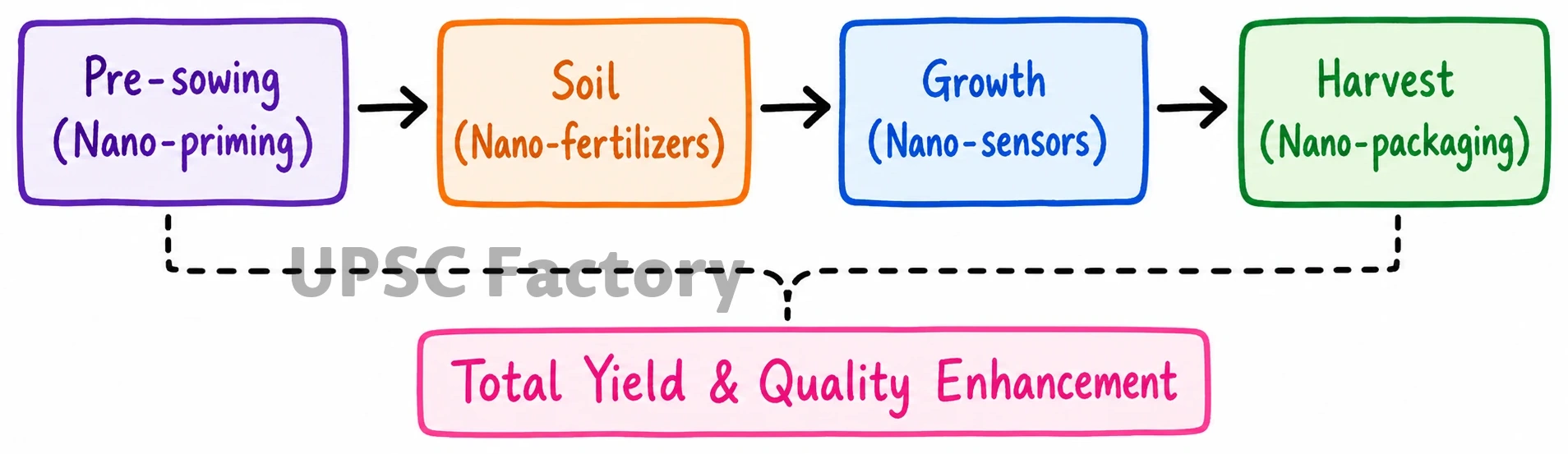
- Nutrient Use Efficiency (NUE): Nano-fertilizers deliver >80% absorption rates compared to mere 30% in conventional bulk fertilizers (IFFCO Nano Urea/DAP).
- Targeted Agrochemical Delivery: Nano-encapsulation ensures controlled, site-specific release of pesticides, drastically minimizing soil leaching and ecological toxicity.
- Precision Monitoring: Field-deployed nano-biosensors provide real-time data on soil moisture, nutrient deficiencies, and early pathogen detection for swift intervention.
- Enhanced Seed Vigor: Treating seeds with carbon nanotubes (nano-priming) effortlessly penetrates hard seed coats, accelerating germination and root growth.
- Post-Harvest Preservation: Anti-microbial nano-coatings and smart nano-packaging detect spoilage gases, significantly extending the shelf-life of perishable farm produce.
- Water Remediation: Nano-filters and magnetic nanoparticles efficiently remove heavy metals and pesticide residues from irrigation water sources.
2. Socio-Economic Upliftment of Farmers
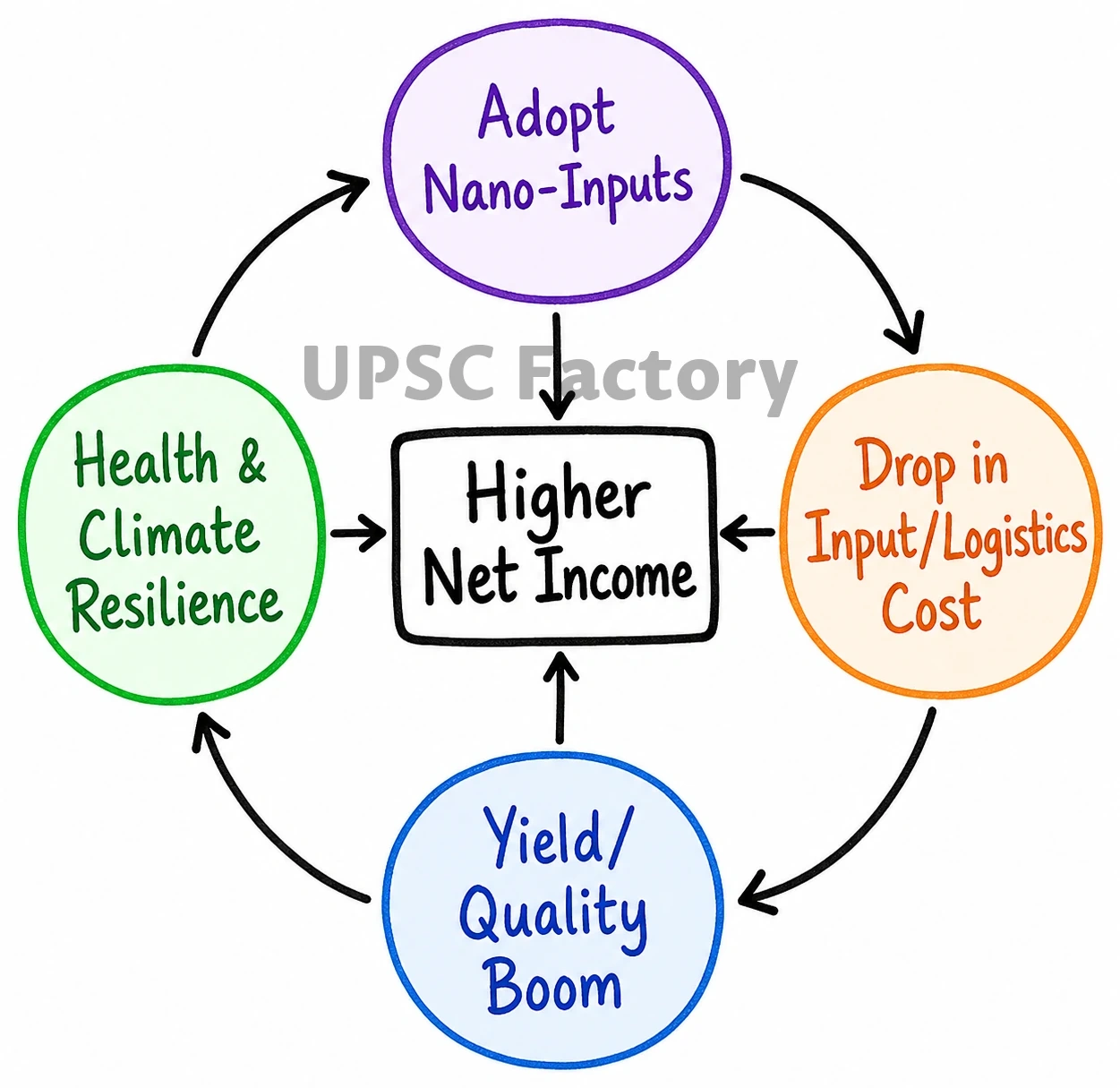
- Drastic Cost Reduction: Concentrated inputs slash logistical burdens; one 500ml bottle of Nano Urea replaces a 45kg bag, eliminating transport and storage costs.
- Income Augmentation: Higher crop yields, superior grain quality, and reduced post-harvest spoilage directly multiply farmers’ net profit margins.
- Occupational Health & Safety: Minimized manual handling of bulk toxic chemicals protects farmers and laborers from respiratory and dermatological hazards.
- Financial & Climate Resilience: Nano-enabled stress-tolerant crops mitigate extreme weather impacts (drought/salinity), preventing debt-traps caused by sudden climate-induced crop failures.
- Macro-Economic Welfare Redirect: Scaling nano-inputs cuts the massive national fertilizer subsidy burden, allowing fiscal redirection into rural infrastructure and credit schemes.
By adopting robust regulatory frameworks like DBT’s Guidelines for Evaluation of Nano-Agri Inputs, India can leverage nanotechnology to transition from a Green Revolution to an “Evergreen Revolution,” ensuring lasting agrarian prosperity.