Model Answer:
Pluralist democracy relies on intermediate associations (Articles 19(1)(a) and 19(1)(c)) to aggregate diverse public interests, balancing state authority through competitive advocacy and participatory governance.
Representing Excluded Interests: Deepening vs. Distorting Pluralism
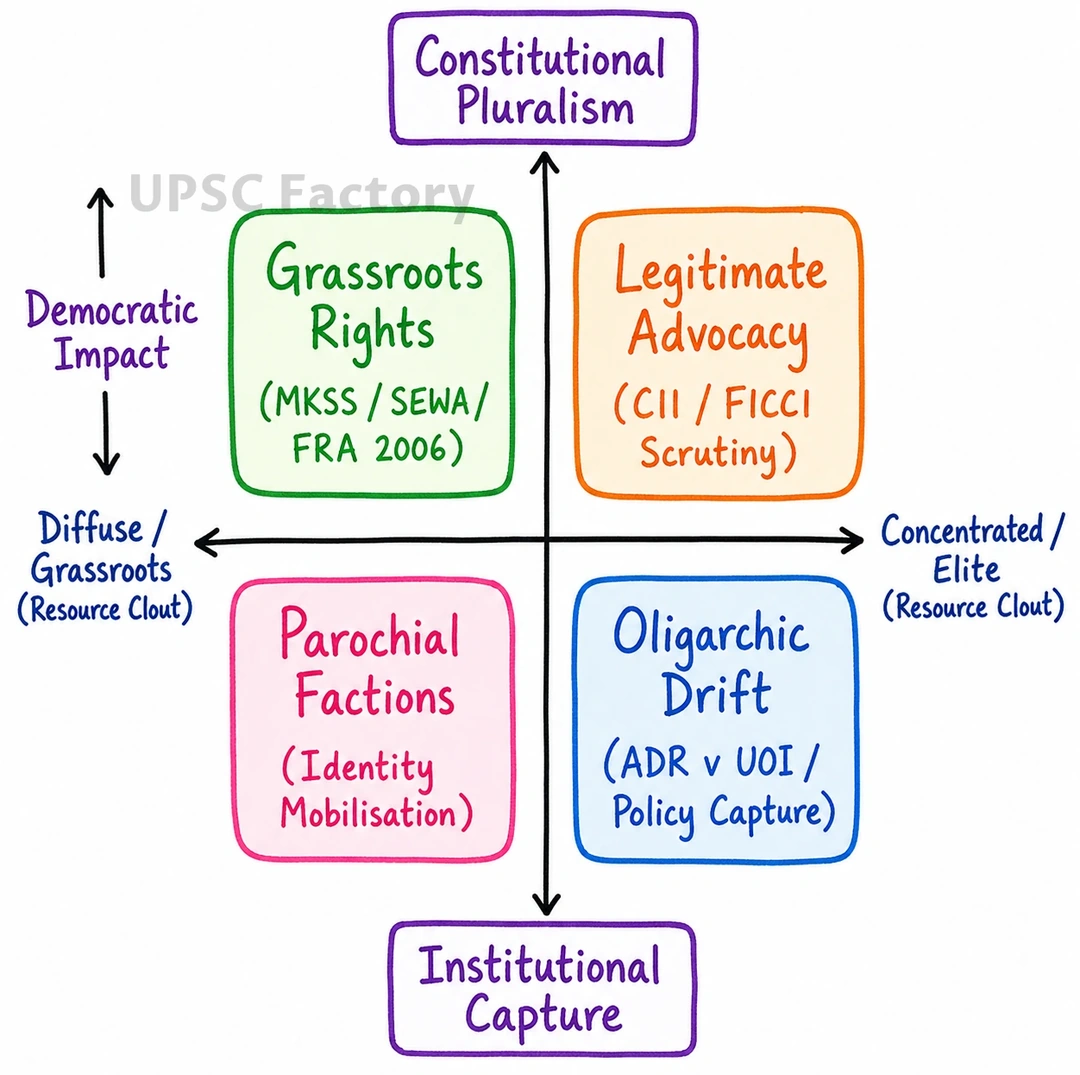
- Rights-Based Grassroots Enfranchisement: Social movements empower marginalized groups to institutionalize critical rights (e.g., MKSS driving the RTI Act; Mazdoor Kisan Sangharsh).
- Subaltern & Resource Mobilization: Tribal and informal labor collectives assert constitutional claims over natural resources and welfare (e.g., Niyamgiri Gram Sabha under FRA 2006; SEWA).
- Asymmetric Access of Elite Lobbies: Corporate lobbies (CII, FICCI) possess structural proximity to policy corridors, marginalizing diffuse, unorganized sector interests.
- Parochial Fragmentation: Identity-based pressure groups frequently pursue narrow sectarian concessions, aggravating social polarization over systemic enfranchisement.
Corporate-Political Convergence & Threats to Institutional Autonomy
- Electoral & Legislative Capture: Opaque political finance skews policymaking toward rent-seeking oligarchs (ADR v. UOI, 2024 striking down Electoral Bonds).
- Regulatory Subversion: Corporate influence weakens statutory oversight, eroding environmental, labor, and anti-trust safeguards (e.g., diluted Environmental Impact Assessment drafts).
- Compromised Watchdog Neutrality: Nexus-driven appointments and lobbying undermine the enforcement autonomy of bodies like the Competition Commission of India (CCI) and investigative agencies.
- Fourth Estate Co-optation: Corporate consolidation of media networks compromises objective journalism, manufacturing consent and muting genuine public grievances.
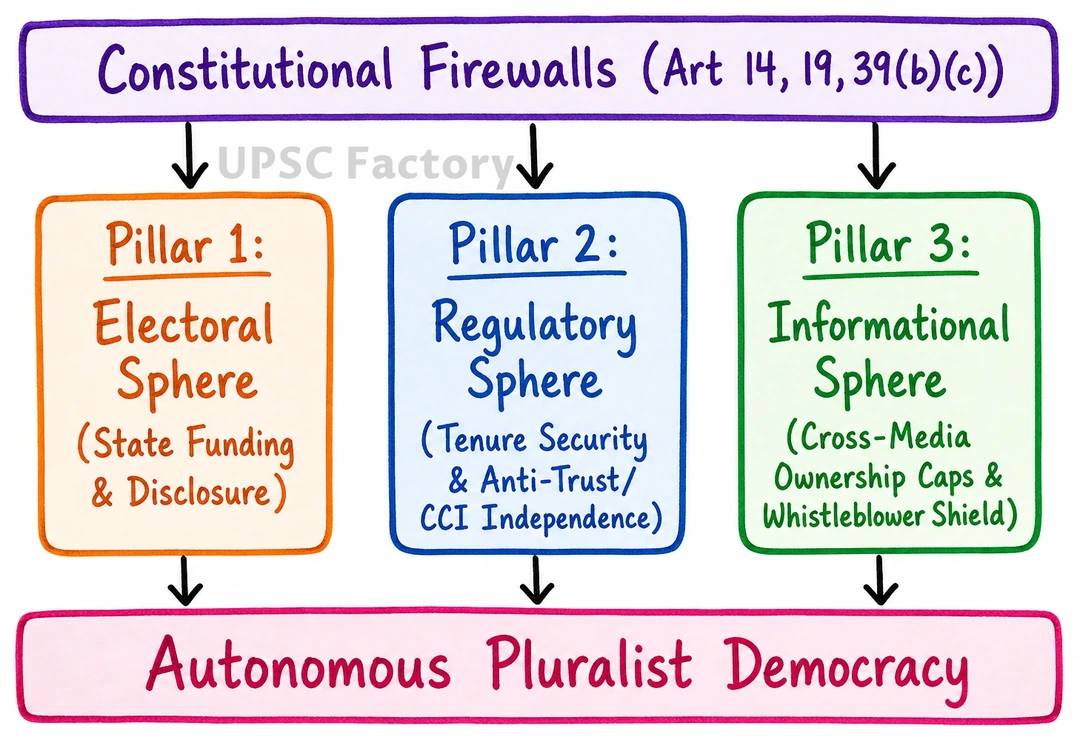
Safeguarding democracy requires statutory lobbying disclosures, state-monitored campaign finance reforms, and robust institutional firewalls to prevent constitutional pluralism from devolving into oligarchic governance.