Model Answer:
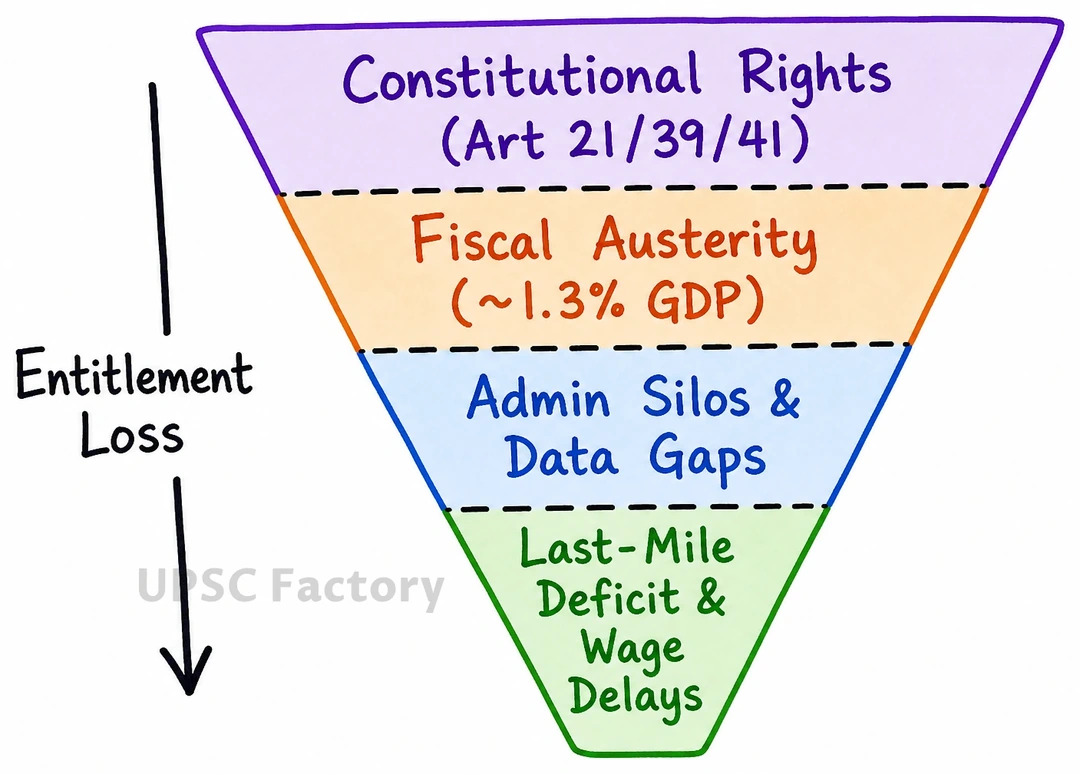
The constitutional transition from patron-state benevolence to a justiciable rights-based welfare paradigm (Articles 21, 39, 41) remains severely compromised by administrative departmentalism and chronic social-sector underfunding.
Structural Bottlenecks Undermining Rights-Based Welfare
- Inter-Departmental Silos: Fragmented execution dilutes multi-sectoral outcomes across interdependent indicators (e.g., POSHAN Abhiyaan convergence gaps between MoWCD, MoHFW, and Jal Jeevan Mission).
- Chronic Fiscal Deprivation: Inadequate public spending forces the rationing of basic rights rather than universal coverage (e.g., Public health expenditure at ~1.3% GDP vs. 2.5% target under NHP 2017).
- Exclusion via Data Fragmentation: Unintegrated beneficiary databases cause high targeting errors and arbitrary denials (e.g., Static 2011 Census quotas under NFSA excluding over 100 million eligible citizens).
- Compromised Statutory Justiciability: Fiscal constraints directly violate legally mandated operational timelines (e.g., Repeated MGNREGA wage delays violating Section 3 due to Ministry of Finance budget-clearing bottlenecks).
- Administrative Overhead & Duplication: Parallel delivery channels create institutional friction and squander scarce budgetary resources (e.g., Multiple overlapping maternity benefit guidelines across state and central schemes).
Strategic Imperatives for Integrated Delivery & Fiscal Expansion
- Whole-of-Government Architecture: Institutionalize unified social security delivery systems to dismantle administrative silos (e.g., 2nd ARC’s single-window delivery mechanism; PM GatiShakti-style social registry).
- Fiscal Ring-Fencing: Protect welfare allocations through dedicated, non-lapsable statutory funding mechanisms (e.g., Replicating Madhyamik and Uchchatara Shiksha Kosh for healthcare and social security).
- Dynamic Social Registries: Deploy interoperable, API-linked public digital infrastructure to automate inclusion and enable portable entitlements (e.g., Madhya Pradesh’s Samagra portal; One Nation One Ration Card).
- Decentralized Convergence (3Fs): Devolve Funds, Functions, and Functionaries to Panchayati Raj Institutions for integrated bottom-up planning (Article 243G; 15th Finance Commission tied grants).
- Institutionalized Social Accountability: Mandate independent social audits to enforce justiciable rights and rectify last-mile delivery leakages (e.g., Statutory framework under the Meghalaya Social Audit Act).
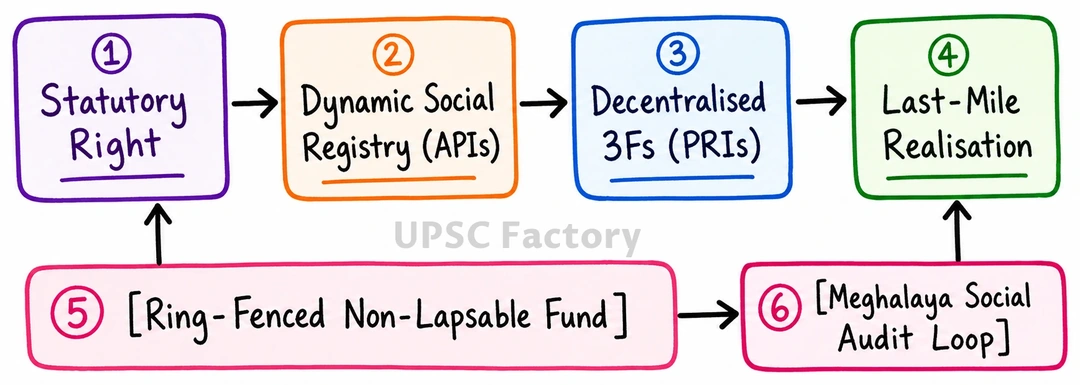
Transforming abstract constitutional mandates into lived entitlements requires transitioning from schematic fragmentation and fiscal austerity toward an integrated, well-resourced state capacity grounded in constitutional morality.