Model Answer:
India generates ~1.6 lakh tonnes of municipal solid waste daily (CPCB), but only ~50% is scientifically treated, creating severe public health, urban governance, and ecological crises.
Challenges to Solid Waste Management in India
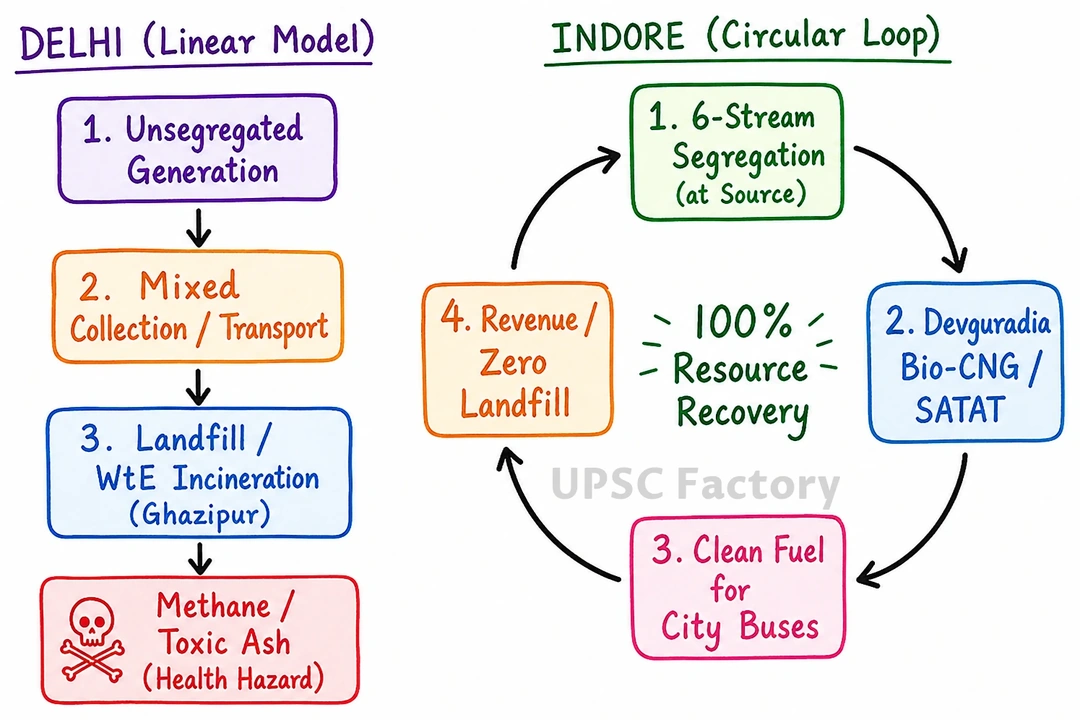
- Low Source Segregation: Minimal citizen compliance and inadequate multi-stream collection infrastructure at the generation level.
- Informal Sector Marginalization: Failure to formally integrate ~4 million informal waste-pickers into municipal collection systems.
- ULB Capacity Deficits: Severe fiscal stress and technical incapacity among Urban Local Bodies for automated processing.
- Legacy Waste Hazards: Massive unscientific open dumping causing leachate percolation and groundwater contamination (e.g., Deonar landfill).
- Inefficient WtE Infrastructure: High moisture and low calorific value of unsegregated waste cause Waste-to-Energy operational failures.
Governmental Policy Framework
- SWM Rules, 2016: Mandates 3-stream segregation (Wet, Dry, Hazardous) and institutionalizes bulk waste generator accountability.
- Swachh Bharat Mission-Urban 2.0: Focuses on 100% scientific processing, remediation of all legacy dumpsites, and “Garbage Free Cities”.
- Extended Producer Responsibility (EPR): Legally binds brand owners and producers to collect and recycle plastic packaging.
- GOBARdhan & SATAT Initiatives: Incentivizes conversion of organic municipal solid waste into commercial Bio-CNG.
Comparative Case Studies: Indore vs Delhi
Indore (Success Model)
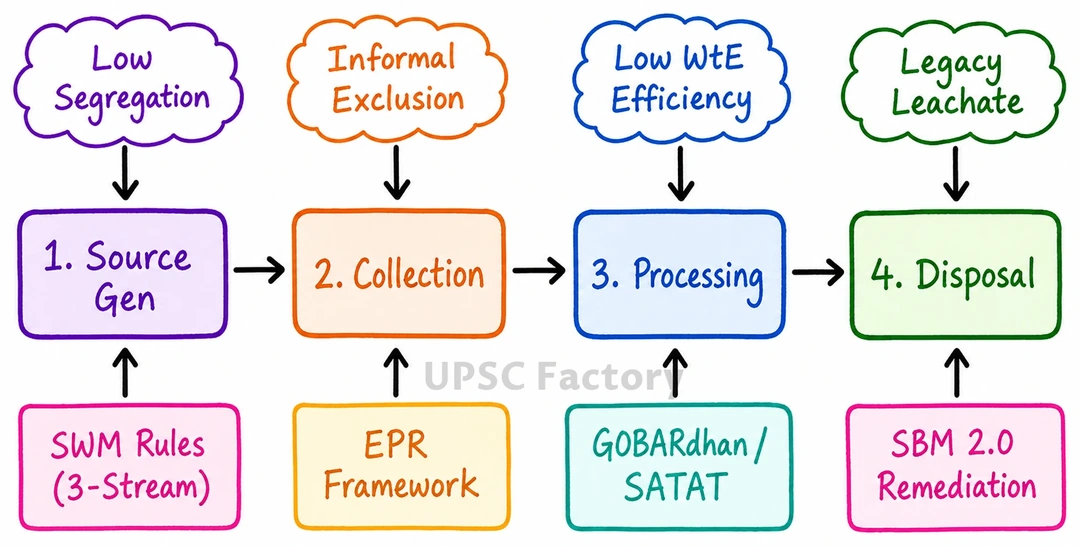
- 6-Stream Segregation: 100% door-to-door segregated collection (wet, dry, sanitary, domestic hazardous, e-waste, plastic).
- Circular Revenue Generation: Asia’s largest Bio-CNG plant (Devguradia) fuels city buses from wet waste.
- Zero-Landfill City: Eliminated open garbage bins (kachra ghar) and fully remediated 100 acres of legacy dumpsites.
Delhi (Structural Bottlenecks)
- Legacy Dumpsite Crisis: Overburdened landfills (Ghazipur, Bhalswa) prone to continuous methane fires and toxic air pollution.
- Fragmented Governance: Overlapping jurisdictions among civic agencies (MCD, DDA, PWD) impede unified waste monitoring.
- Unsegregated Incineration: Heavy reliance on WtE incinerators burning unsegregated, low-calorie waste generates toxic emissions.
Transitioning from Delhi’s centralized disposal model to Indore’s decentralized, circular, and citizen-led source-segregation architecture is critical for achieving SBM-U 2.0’s zero-landfill target.