Model Answer:
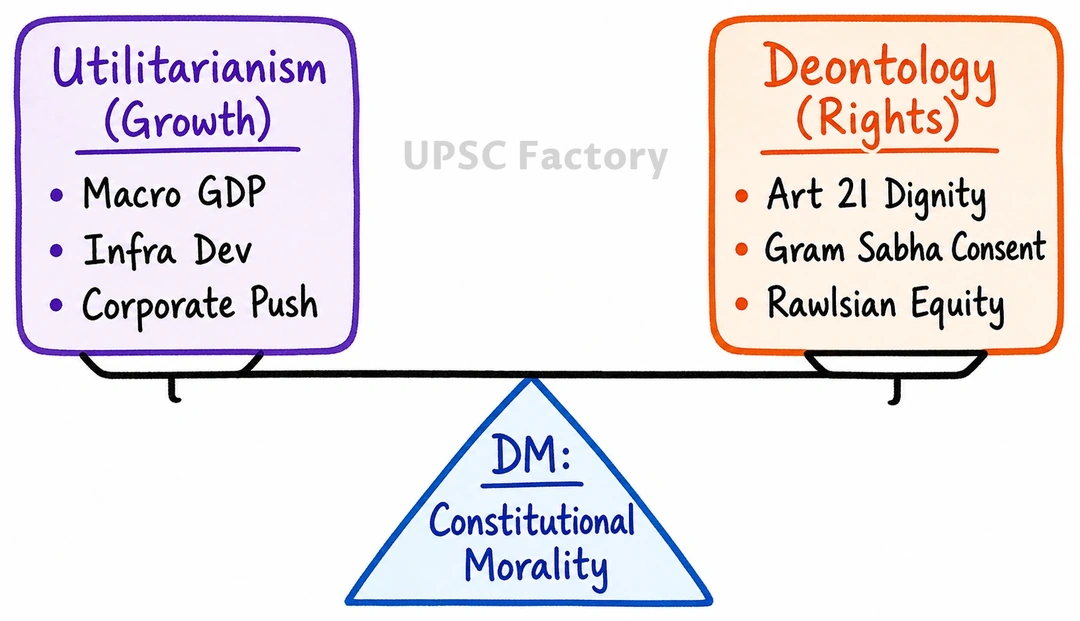
Balancing industrial-led economic growth with indigenous welfare presents a profound ethical conflict between utilitarian progress and constitutional morality (Article 21).
Socio-Ethical Dilemmas: Rights vs. Growth
- Utilitarianism vs. Deontology: Balancing aggregated macroeconomic gains against the inalienable human rights of vulnerable tribal communities (Rawls’ Difference Principle).
- Cultural Preservation vs. Modernity: Risking irreplaceable indigenous heritage, sacred ecologies, and traditional knowledge for capital-intensive infrastructure (Niyamgiri Dongria Kondh case).
- Procedural Justice vs. Tokenism: Ensuring genuine, informed Gram Sabha consent versus coerced, procedural approvals under administrative momentum (FRA 2006, PESA).
Administrative Integrity & Governance Challenges
- Impartiality vs. External Pressures: Resisting corporate-political lobbying to neutrally uphold statutory environmental and rehabilitation mandates.
- Eminent Domain vs. Compassion: Reconciling the state’s legal right of land acquisition with administrative empathy toward marginalized forest dwellers.
- Distributive Justice in R&R: Preventing displacement-induced pauperization by ensuring holistic socio-economic restitution over superficial cash compensation.
An administrator must act as an ethical trustee (Gandhian Trusteeship), ensuring sustainable development never compromises indigenous dignity or constitutional safeguards.