Model Answer:
This case presents a volatile intersection of ethnic conflict, institutional bias, humanitarian crisis, and external security vulnerabilities, requiring an administrative response anchored in impartiality, constitutional morality, and restorative justice.
1. Ethical Issues in the Crisis
- Erosion of Administrative Neutrality: Partisan conduct of local police violates the Nolan Principles of Objectivity and Impartiality, destroying public trust.
- Denial of Basic Human Rights: Highway blockades and segregated camps jeopardize access to food, healthcare, and life (Article 21).
- National Security vs. Democratic Policing: Risk of foreign-backed insurgency necessitates firm state authority while avoiding disproportionate civilian repression.
- Distributive Injustice: Perceived historical inequities in land, representation, and resource allocation fueling deep moral alienation.
- Utilitarian Dilemma in Restoring Order: Balancing the immediate risk of collateral harm during highway clearance against the broader public good of life-saving supply restoration.
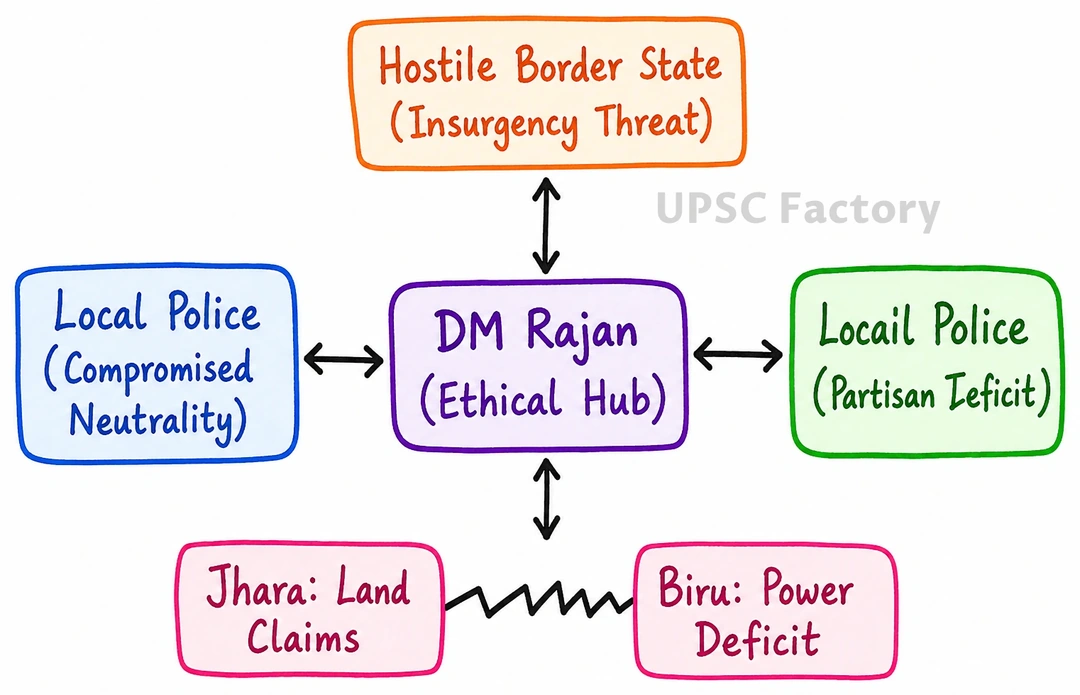
2. Evaluation of Options Open to Rajan
| Option | Merits | Demerits / Ethical Risks |
|---|---|---|
| 1. Rely solely on local police & immediate political mediation | Avoids external friction; utilizes local knowledge. | Compromised neutrality fuels bias; high risk of failure. |
| 2. Total coercive clampdown via exclusive CRPF deployment | Swift deterrence; secures border & highway immediately. | Deepens alienation; fails to resolve structural roots. |
| 3. Tripartite Strategy: Neutral CAPF + Institutional Purge + Dialogue | Restores public trust; clears supplies; ensures fair peace. | Demands high coordination and sustained engagement. |
3. Optimal Course of Action to Ensure Non-Partisanship
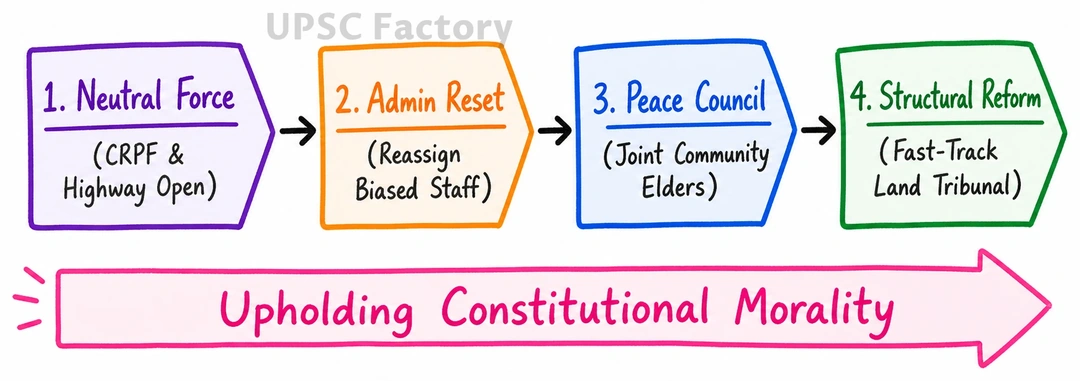
- Immediate Neutral Enforcement & Logistics:
- Deploy CRPF/CAPF units to secure the highway and sensitive zones (Section 163 BNSS), projecting visible institutional neutrality.
- Temporarily reassign biased local personnel to non-sensitive administrative roles to eliminate operational partiality.
- Equitable Relief Administration:
- Establish joint, transparent supply corridors with standard operating procedures to deliver aid equally across all camps.
- Deploy neutral third-party observers (e.g., Red Cross, central officers) to oversee resource distribution.
- Institutionalized Peace-Building:
- Constitute a District Peace Council comprising neutral civil society elders, women representatives, and youth leaders from both Jhara and Biru communities (e.g., Kiphire Peace Model).
- Lead direct negotiations personally to eliminate political intermediaries and demonstrate administrative objectivity.
- Structural & Long-Term Grievance Redressal:
- Form an independent Fast-Track Land Dispute Tribunal to adjudicate claims objectively.
- Institute a transparent, algorithmic framework for local resource allocation and welfare delivery.
By decoupling enforcement from partisan local machinery and addressing structural grievances through institutional objectivity, Rajan upholds constitutional morality, repairs the fractured social fabric, and neutralizes border vulnerabilities.