Q. “The USA is facing an existential threat in the form of a China, that is much more challenging than the erstwhile Soviet Union.” Explain.
Question from UPSC Mains 2021 GS2 Paper
Model Answer:
The US-China rivalry represents a classic “Thucydides Trap,” where China poses a comprehensive systemic challenge, unlike the uni-dimensional threat of the erstwhile USSR.
Limitations of the Erstwhile Soviet Threat
Uni-dimensional power: The USSR relied almost exclusively on military-ideological parity, lacking robust, sustainable economic foundations.
Economic isolation: The Soviet bloc operated a closed system lacking US trade integration, making traditional “containment” policies highly effective.
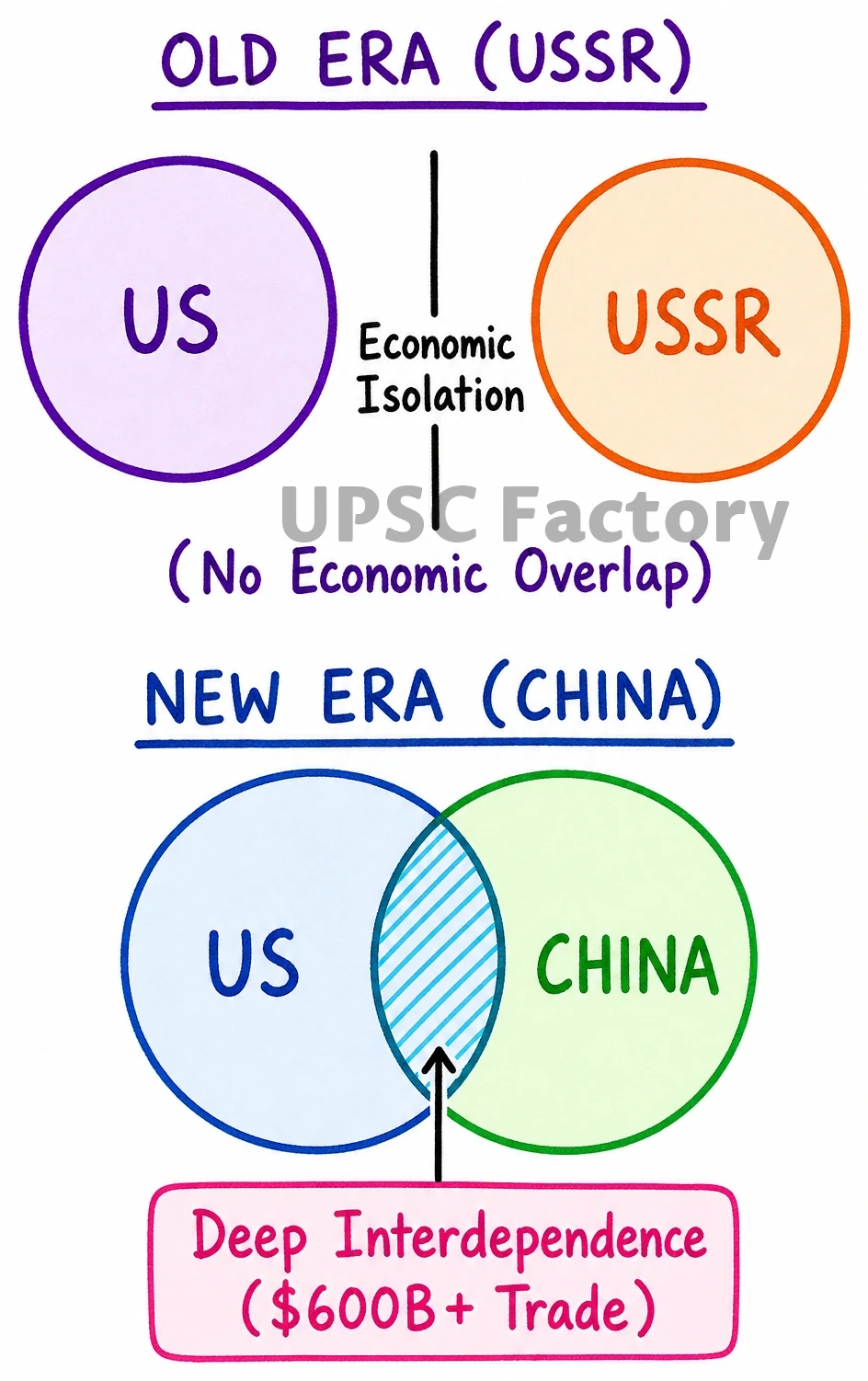
Why China is a More Formidable Challenge
Deep Interdependence: Massive US-China bilateral trade ($600B+) makes USSR-style containment or total decoupling economically ruinous for Washington.
Technological Parity: China aggressively rivals the US in emerging foundational domains (AI, quantum computing, Huawei/5G network dominance).
Supply Chain Weaponization: Chinese dominance in global manufacturing and critical rare earth minerals offers immense, unprecedented geopolitical leverage.
Geo-economic Expansion: Through the Belt and Road Initiative (BRI) and “Sharp Power,” China organically builds global dependencies without relying solely on military coercion.
Strategic Resilience: China’s “Dual-Circulation” policy strengthens domestic consumption while maintaining export dominance, limiting its vulnerability to Western sanctions.
Consequently, the traditional Cold War playbook is obsolete; countering China requires the US to pivot toward “competitive coexistence” alongside strategic coalitions like the Quad.
Q. “If the last few decades were of Asia’s growth story, the next few are expected to be of Africa’s.” In the light of this statement, examine India’s influence in Africa in recent years.
Question from UPSC Mains 2021 GS2 Paper
Model Answer:
Africa’s demographic dividend and the AfCFTA make it the next global growth engine. India’s multi-dimensional engagement is strategically guided by the 10 “Kampala Principles”.
1. Dimensions of India’s Influence in Africa
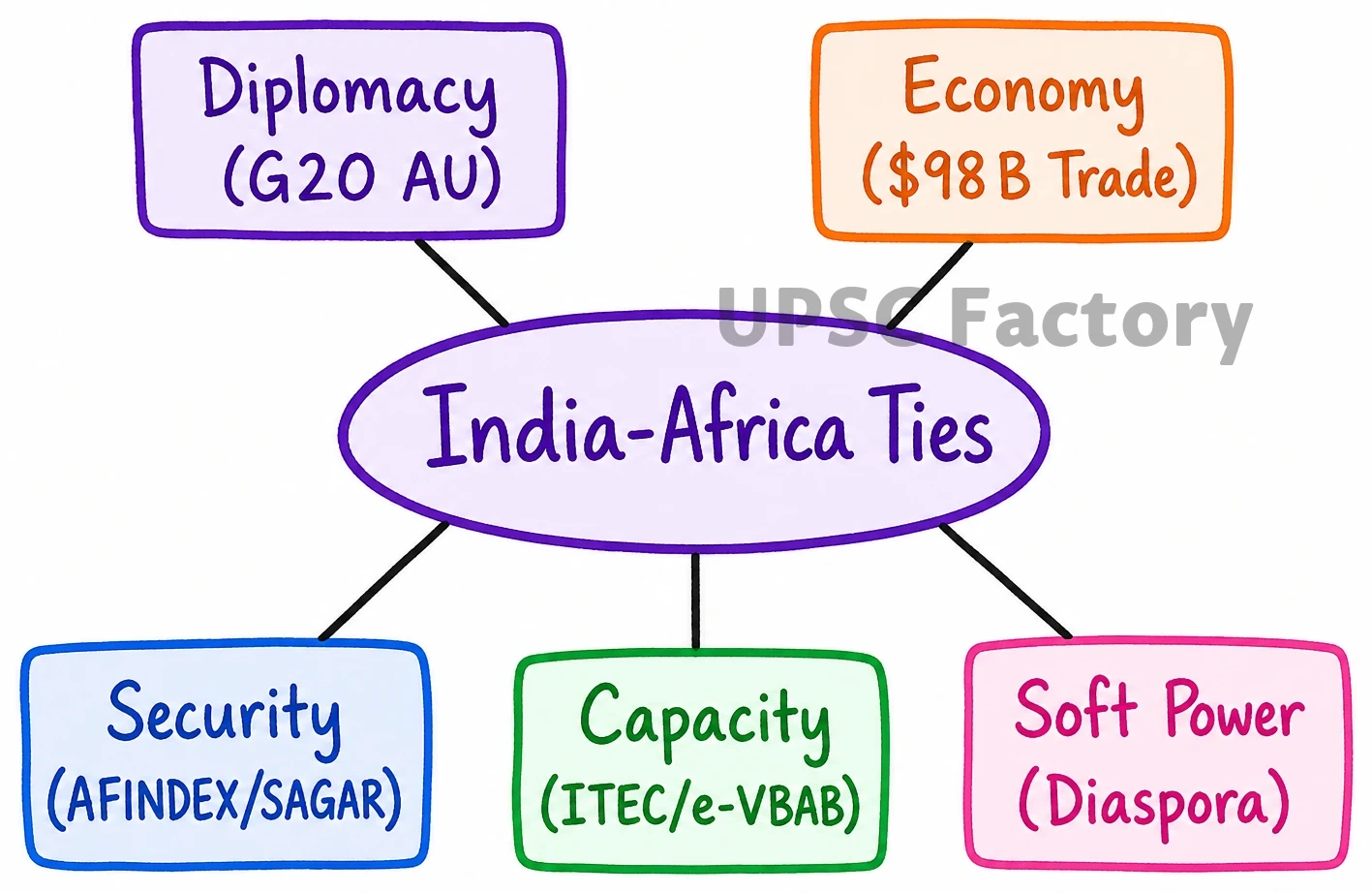
Diplomatic Leadership: India successfully championed the African Union’s permanent membership in the G20 (New Delhi Summit 2023).
Economic Partnership: Bilateral trade crossed ~$98 billion (2022-23), making India the fourth-largest investor (focusing on energy and agriculture).
Capacity Building: Human capital development through ITEC scholarships and the Pan-African e-VBAB network (tele-education and tele-medicine).
Security Cooperation: Expanding defense ties via joint military exercises (AFINDEX), UN Peacekeeping forces, and anti-piracy patrols under the SAGAR vision.
Soft Power: Delivery of essential medicines (Vaccine Maitri) and strong historical diaspora linkages enhance grassroots goodwill.
Implementation Delays: Bureaucratic hurdles frequently slow down the execution of India’s Lines of Credit (LoC) projects.
Regional Instability: Recurrent coups and insurgencies (e.g., Sahel region) threaten Indian investments and diaspora safety.
By shifting from mere “capacity building” to “joint capacity creation”, India can effectively leverage its Global South leadership to co-author Africa’s economic resurgence.
Q. Can the vicious cycle of gender inequality, poverty and malnutrition be broken through microfinancing of women SHGs? Explain with examples.
Question from UPSC Mains 2021 GS2 Paper
Model Answer:
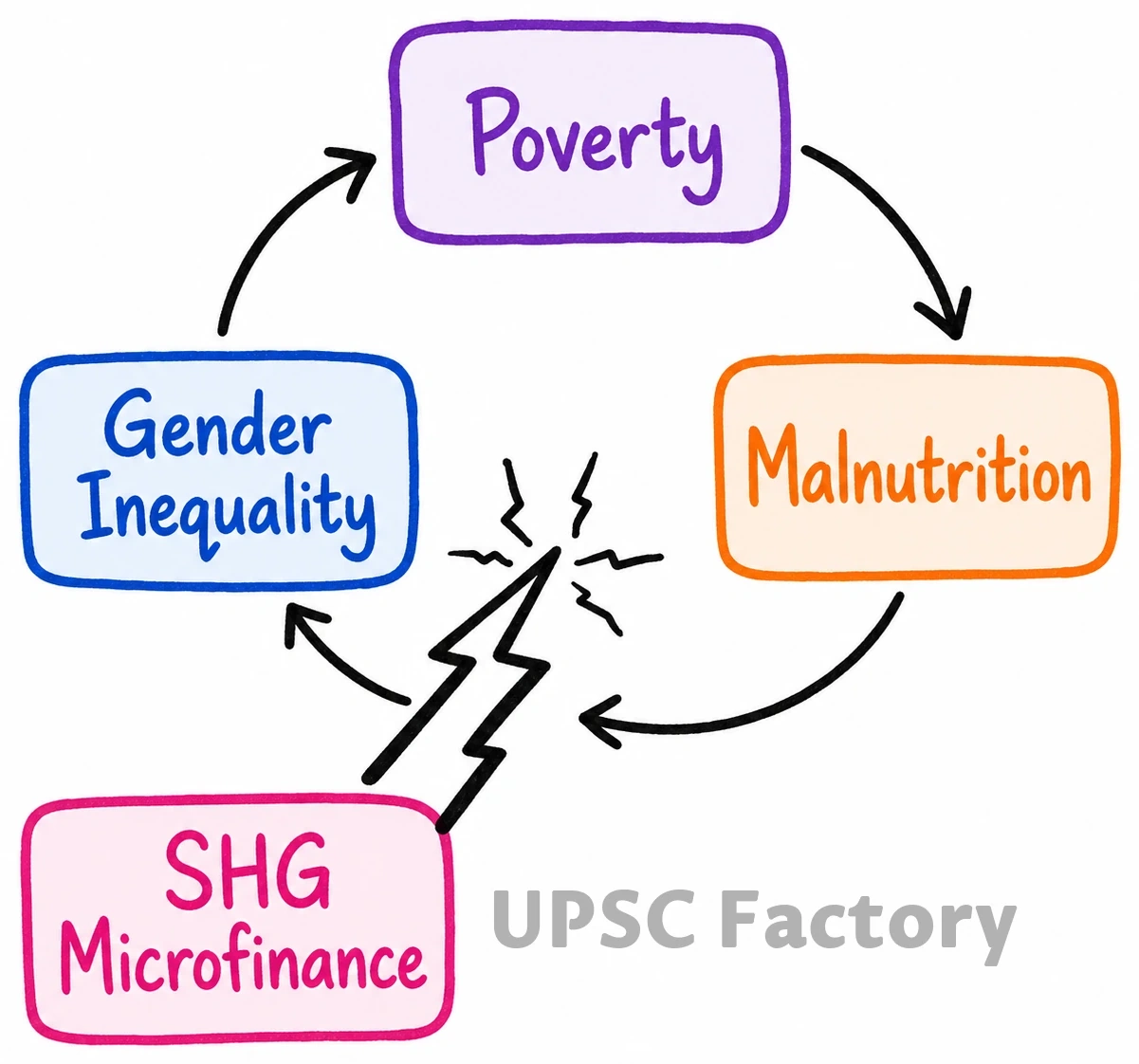
Gender inequality, poverty, and malnutrition form a self-reinforcing triad. Microfinancing women’s Self-Help Groups (SHGs) under frameworks like the NABARD SHG-Bank Linkage Programme effectively disrupts this vicious cycle.
1. Breaking the Triad: SHG-Microfinance Mechanism
Poverty Alleviation: Micro-credit enables asset creation and micro-enterprise development, diversifying rural income streams (Kudumbashree, Kerala).
Nutritional Security: Increased female financial control directly boosts household dietary diversity and maternal health spending (JEEViKA, Bihar).
Gender Empowerment: Economic independence elevates women’s household bargaining power, reduces domestic violence, and fosters political participation.
Financial Inclusion: Institutional credit eliminates reliance on exploitative rural moneylenders, securing savings for health and education.
2. Limitations & Necessary State Support
Patriarchal Hijacking: Male relatives often control the deployed capital, reducing women to nominal borrowers.
Debt Traps: Micro-loans are frequently diverted to daily consumption or debt repayment rather than sustainable livelihood creation.
Policy Convergence: True disruption requires integrating microfinance with dedicated skill-building (DAY-NRLM) and nutritional schemes (Poshan Abhiyan).
While SHG microfinance is a powerful catalyst, permanently shattering this triad requires coupling credit access with holistic structural reforms, ultimately realizing Amartya Sen’s Capability Approach.
Q. “‘Earn while you learn’ scheme needs to be strengthened to make vocational education and skill training meaningful.” Comment.
Question from UPSC Mains 2021 GS2 Paper
Model Answer:
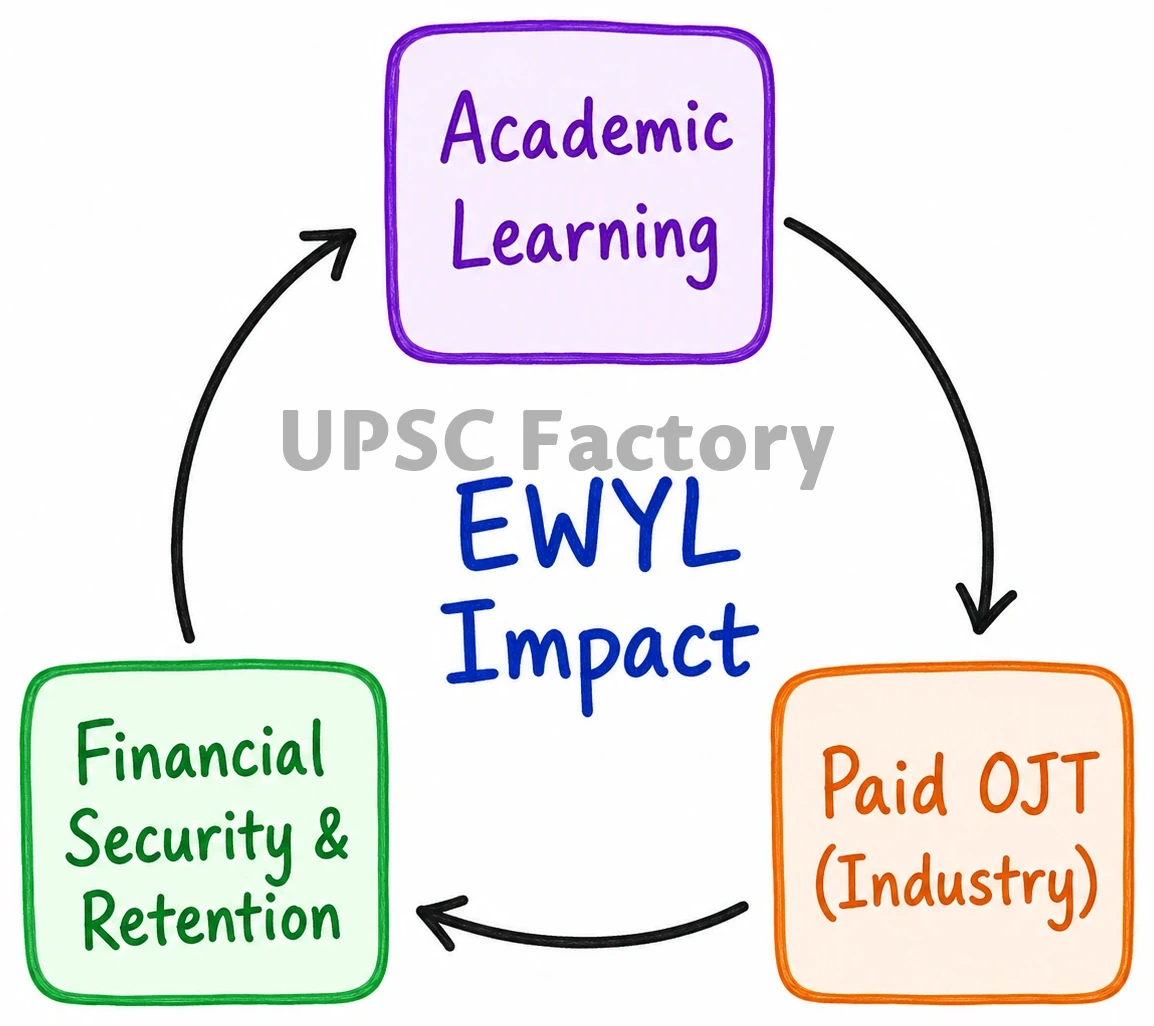
The ‘Earn While You Learn’ (EWYL) model integrates academics with paid on-the-job training, acting as a critical catalyst for realizing India’s demographic dividend and NEP 2020 objectives.
1. Significance of EWYL in Vocational Education
Arresting Dropouts: Financial incentives prevent economically vulnerable youth from abandoning education prematurely (PLFS highlights high youth unemployment).
Industry Alignment: Bridges the theory-practice gap, enhancing direct employability by moving beyond rote learning (Germany’s Dual VET system).
Dignity of Labour: Destigmatizes vocational training, treating apprenticeships as formal, respectable employment pathways rather than fallback options.
2. Current Gaps & Measures to Strengthen EWYL
Low MSME Adoption: MSMEs often lack resources for stipends. Fix: Increase government reimbursement thresholds under the National Apprenticeship Promotion Scheme (NAPS).
Informal Sector Exclusion: Over 90% of the workforce remains informal. Fix: Expand the Apprenticeship Act 1961 to recognize traditional artisanal guilds and gig economy skills.
Meager Remuneration: Current stipends fail to cover basic living costs. Fix: Dynamically peg EWYL stipends to regional minimum wage indexes.
Academic Silos: Work experience lacks academic weight. Fix: Fully operationalize the National Credit Framework (NCrF) to assign transferable academic credits for EWYL hours (e.g., AICTE’s EWYL framework).
Strengthening EWYL shifts it from a mere welfare initiative to an economic necessity, cultivating a globally competitive “Skilled India” essential for driving a $5 trillion economy.
Q. “Besides being a moral imperative of Welfare State, primary health structure is a necessary pre-condition for sustainable development.” Analyze.
Question from UPSC Mains 2021 GS2 Paper
Model Answer:
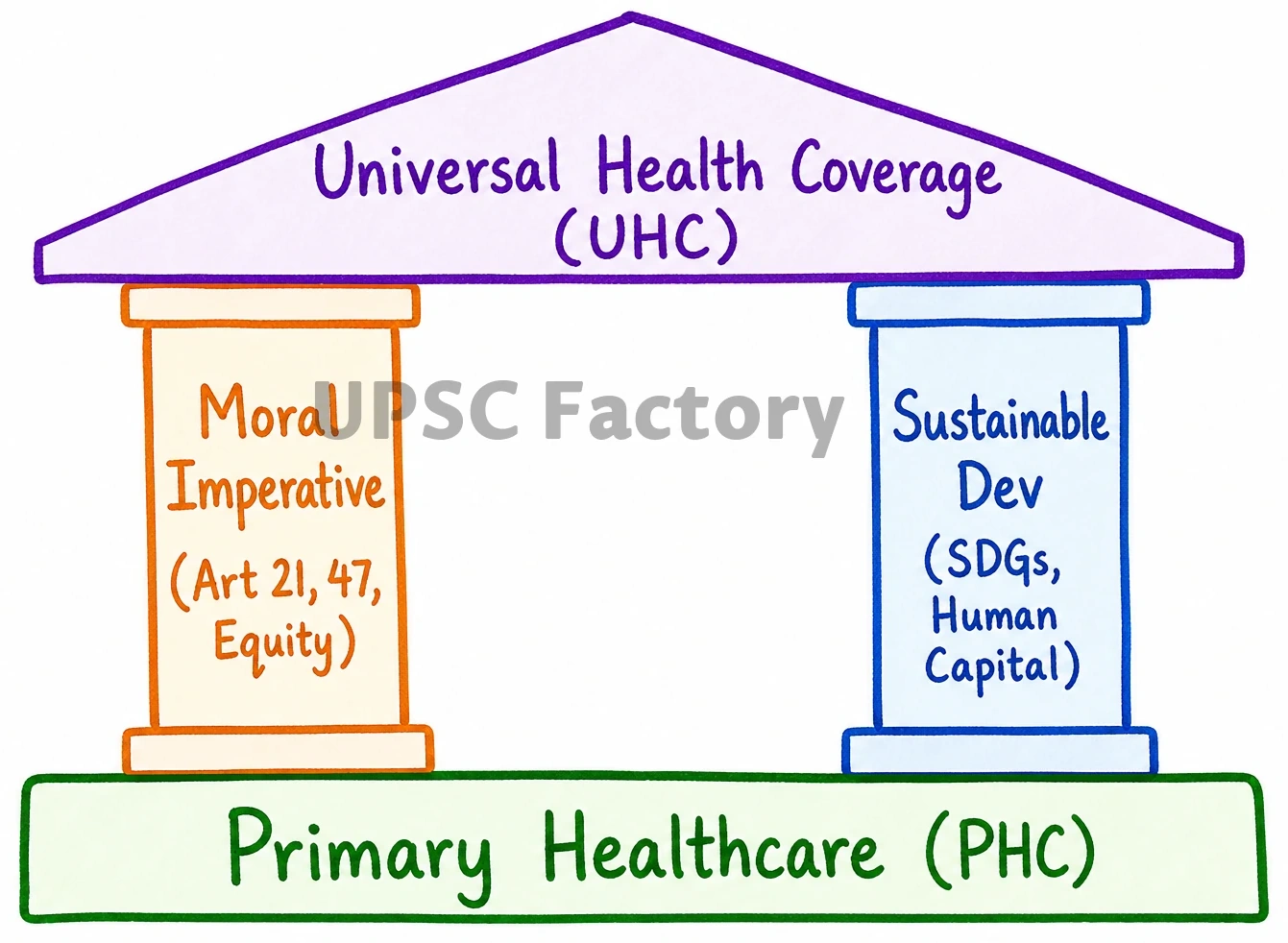
The Alma-Ata Declaration recognizes health as a fundamental human right. A robust primary healthcare (PHC) system fulfills both India’s constitutional mandates and its broader socio-economic goals.
1. Moral Imperative of a Welfare State
Constitutional Duty: Fulfills the state’s mandate under Article 47 (improving public health) and Article 21 (Right to Life).
Equity and Justice: Ensures accessible, affordable, and inclusive care for marginalized, rural, and tribal communities.
Social Contract: Acts as a critical protective shield, upholding human dignity and preventing severe societal distress.
Human Capital Formation: A disease-free workforce enhances cognitive capacity, educational outcomes, and labor productivity, harnessing the demographic dividend.
Cross-Sectoral Impact: Directly achieves SDG 3 (Good Health) while improving outcomes in education (SDG 4) via reduced absenteeism.
Grassroots Resilience: Enables localized disease surveillance, preventing localized outbreaks from causing systemic macroeconomic shocks (Kerala’s decentralized health model).
Upgrading traditional PHCs into Ayushman Bharat Health and Wellness Centres (HWCs) is a crucial step toward achieving Universal Health Coverage (UHC) and sustainable, equitable prosperity.
Q. “Pressure groups play a vital role in influencing public policy making in India.” Explain how the business associations contribute to public policies.
Question from UPSC Mains 2021 GS2 Paper
Model Answer:
Pressure groups are organized bodies that advocate for specific interests, acting as critical feedback loops bridging the state and citizens.
1. Role of Pressure Groups in Policy Making
Expertise Provision: Supplying data-driven insights for evidence-based legislation.
Consensus Building: Aligning diverse stakeholder demands before policy rollout.
Feedback Mechanism: Highlighting implementation bottlenecks in existing laws.
2. Contributions of Business Associations to Public Policies
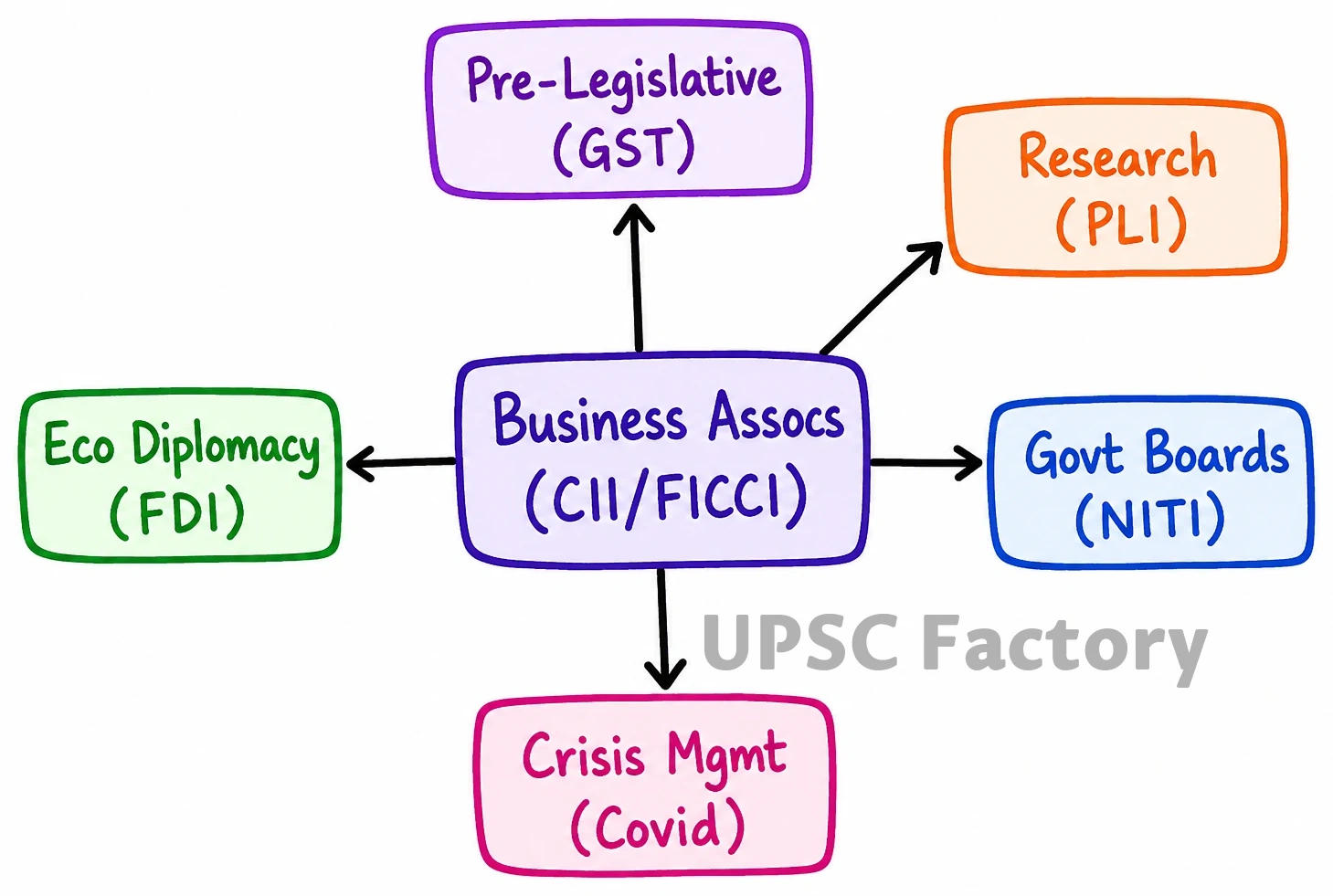
Business associations (like CII, FICCI, ASSOCHAM) utilize institutionalized channels to shape economic governance:
Pre-legislative Consultation: Providing technical inputs and sectoral data to parliamentary committees (e.g., CII’s crucial role in shaping the GST framework).
Institutional Representation: Serving on official government boards and task forces (e.g., NITI Aayog expert panels).
Policy Advocacy & Research: Publishing white papers to influence future economic roadmaps (e.g., FICCI’s advocacy shaping PLI schemes and MSME policy revisions).
Economic Diplomacy: Assisting the state in global trade negotiations through track-two diplomacy (e.g., ASSOCHAM advising on FDI guidelines).
Crisis Management: Collaborating with the government to formulate targeted relief strategies during disruptions (e.g., interventions for Covid-19 economic stimulus packages).
While business associations are indispensable for pragmatic economic policymaking, institutionalizing formal lobbying regulations in India is necessary to ensure equitable representation and complete transparency.
Q. To what extent, in your view, the Parliament is able to ensure accountability of the executive in India?
Question from UPSC Mains 2021 GS2 Paper
Model Answer:
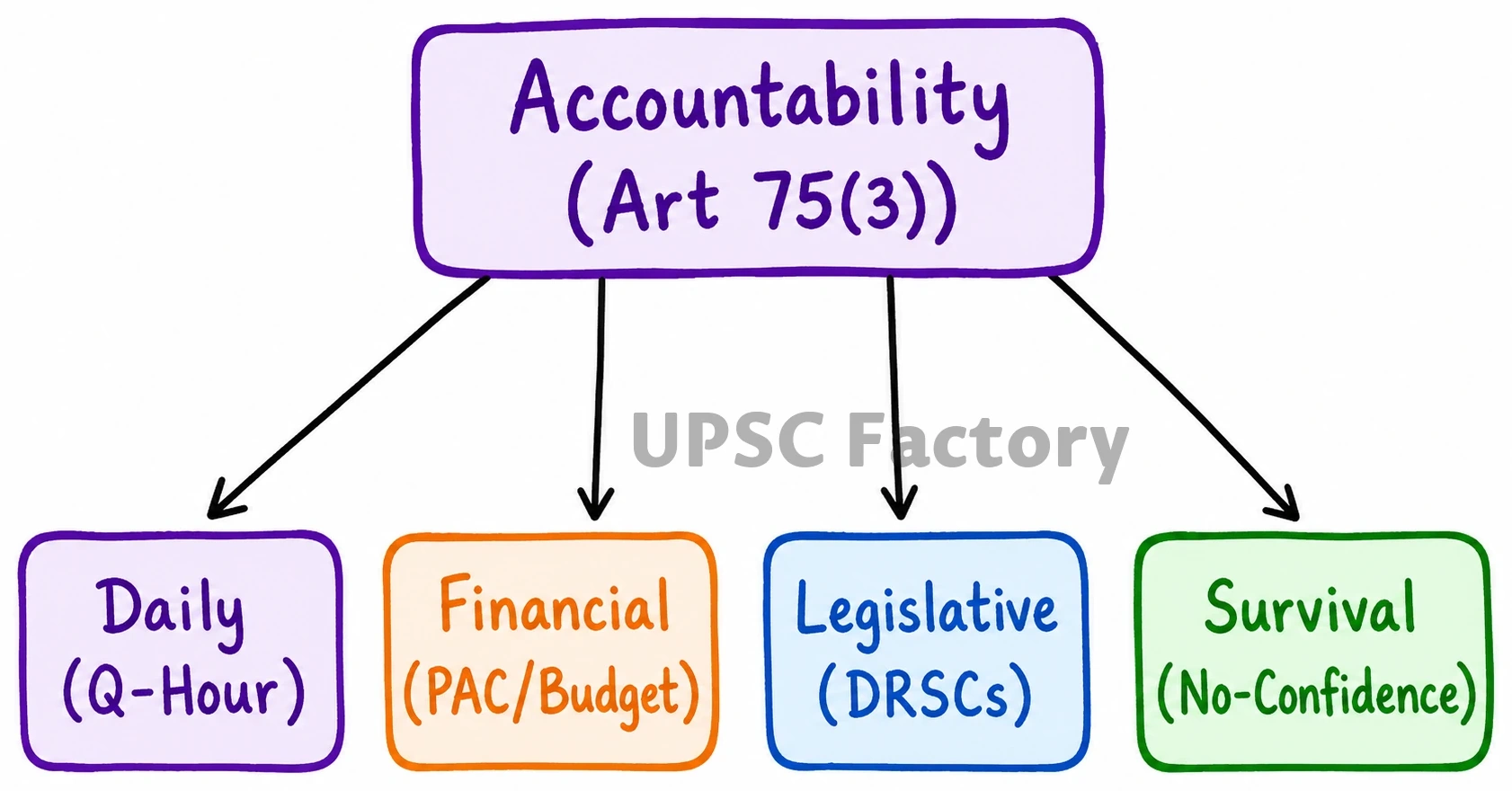
Under Article 75(3), the Council of Ministers is collectively responsible to the Lok Sabha, establishing the constitutional foundation for executive accountability.
1. Mechanisms Ensuring Executive Accountability
Procedural Devices: Question Hour, Zero Hour, and Adjournment Motions enforce daily executive oversight.
Financial Control: Executed via budget approvals, cut motions, and post-expenditure scrutiny by the Public Accounts Committee.
Legislative Oversight: Departmentally Related Standing Committees (DRSCs) enable detailed, non-partisan evaluation of bills and policies.
Ultimate Sanction: The No-Confidence Motion ensures the government’s survival continuously depends on maintaining a legislative majority.
2. Constraints Weakening Parliamentary Oversight
Partisan Restraints: The 10th Schedule (Anti-Defection Law) stifles intra-party dissent, reducing MPs to mere party delegates.
Declining Scrutiny: A sharp drop in bills referred to DRSCs (from 71% in the 15th Lok Sabha to just 16% in the 17th Lok Sabha, per PRS data).
Financial Bypassing: Frequent “Guillotining” of budget demands and bypassing the Rajya Sabha via the ‘Money Bill’ route (e.g., Aadhaar Act).
Executive Unilateralism: Over-reliance on Ordinances (Article 123) and excessive delegated legislation evade direct parliamentary debate.
To restore parliamentary primacy, implementing NCRWC recommendations—such as mandating a minimum of 120 sitting days annually and making DRSC scrutiny mandatory for key bills—is imperative.
Q. How have the recommendations of the 14th Finance Commission of India enabled the states to improve their fiscal position?
Question from UPSC Mains 2021 GS2 Paper
Model Answer:
Under Article 280, the 14th Finance Commission (Y.V. Reddy) fundamentally restructured India’s fiscal federalism by significantly enhancing the financial autonomy and resource share of States.
1. Key Recommendations Boosting State Finances
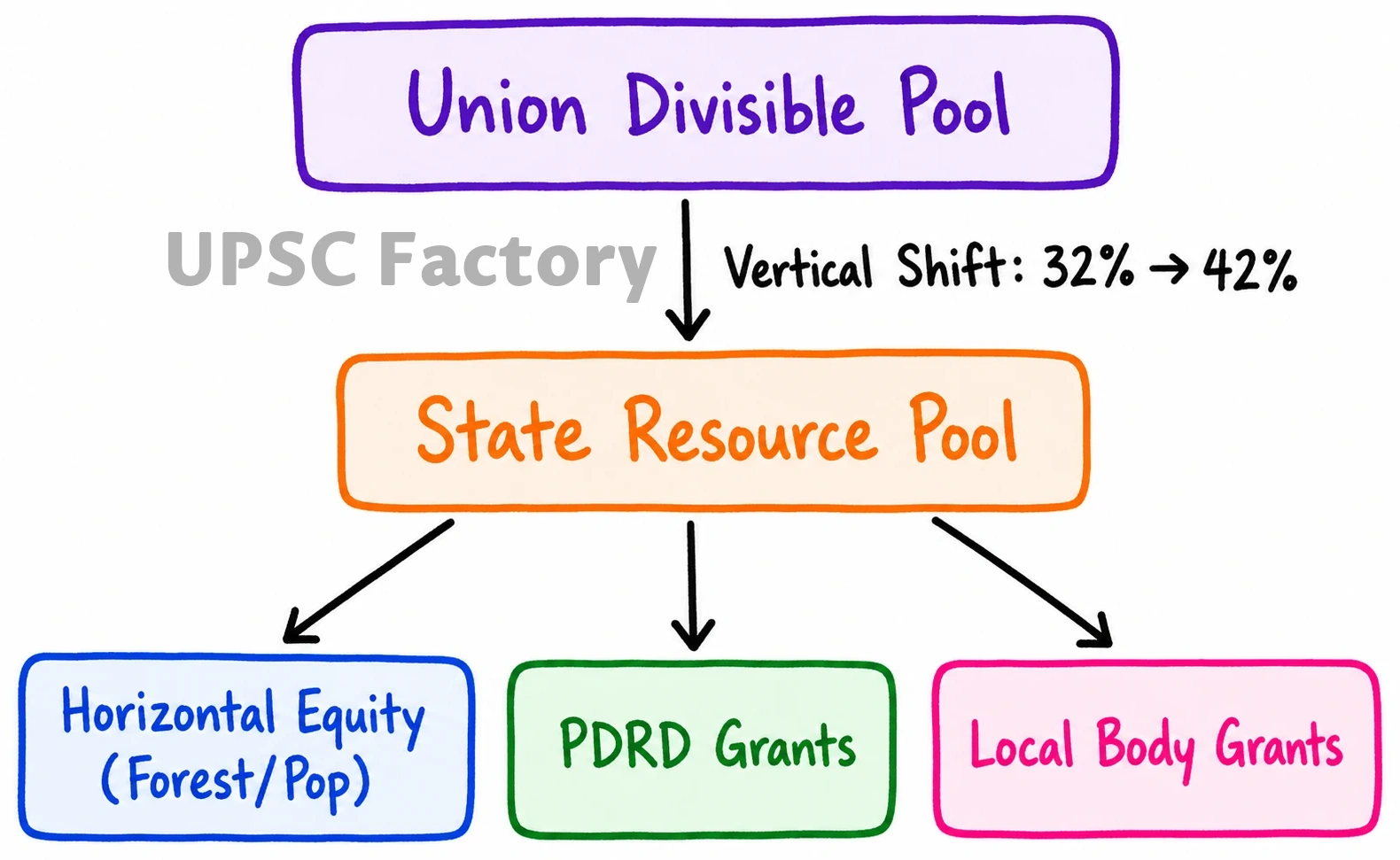
Vertical Devolution: Recommended a historic leap in the States’ share of the divisible tax pool from 32% to 42%.
Horizontal Equity: Introduced progressive criteria, giving weightage to demographic shifts (10% to 2011 population) and forest cover (7.5%).
Statutory Grants: Allocated Post-Devolution Revenue Deficit (PDRD) grants to 11 vulnerable states to bridge revenue gaps.
Local Body Grants: Recommended ₹2.87 lakh crore (basic and performance grants), bypassing state bottlenecks to directly fund panchayats/municipalities.
2. Impact on States’ Fiscal Position
Enhanced Fiscal Autonomy: Replaced tied funds of Centrally Sponsored Schemes (CSS) with untied devolution, allowing localized policy design.
Spurt in Capital Expenditure: Unrestricted funds enabled states to prioritize long-term physical and social infrastructure spending.
Ecological Compensation: Forest-rich states were financially compensated, turning an ecological constraint into a fiscal asset (e.g., Arunachal Pradesh).
Macro-Economic Stability: Despite expanded expenditures, most states were empowered to maintain their fiscal deficits within the 3% FRBM limit.
By shifting the paradigm from centralized planning to empowered cooperative federalism, the 14th FC laid a robust financial foundation for States, a legacy largely sustained by the 15th FC.
Q. Discuss the desirability of greater representation to women in the higher judiciary to ensure diversity, equity and inclusiveness.
Question from UPSC Mains 2021 GS2 Paper
Model Answer:
Despite women comprising nearly 50% of the population, their representation in the higher judiciary remains dismal (only ~13% in High Courts, per India Justice Report).
Desirability of Women in Higher Judiciary
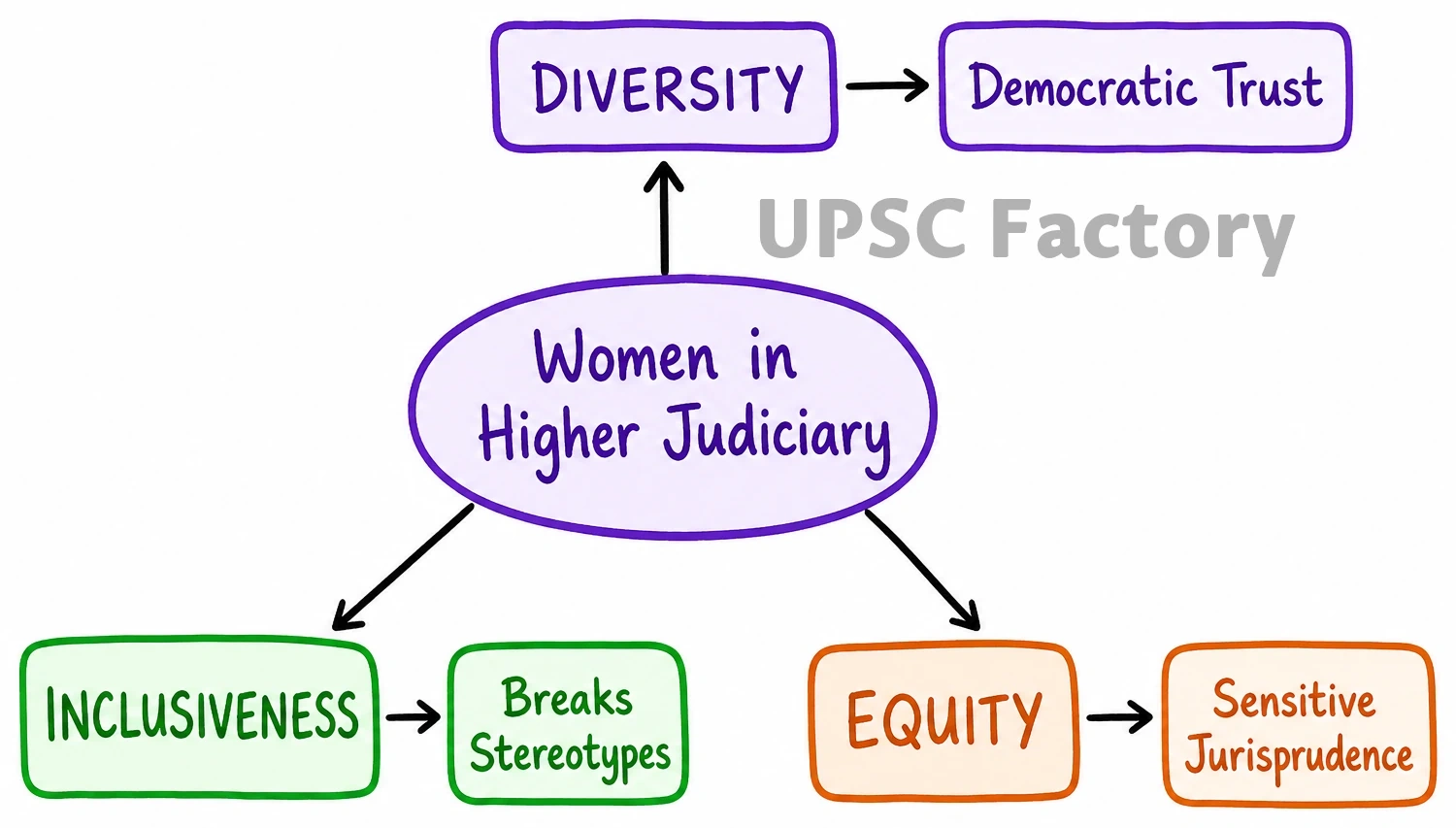
Democratic Legitimacy (Diversity): Courts must reflect societal demographics to bolster institutional credibility and public trust.
Gender-Sensitive Jurisprudence (Equity): Diverse lived experiences challenge patriarchal interpretations, enriching legal reasoning (e.g., Vishaka Guidelines for workplace safety).
Eradicating Stereotypes (Inclusiveness): A critical mass of women eliminates misogynistic biases in judicial pronouncements (e.g., Supreme Court’s Handbook on Combating Gender Stereotypes).
Access to Justice: Marginalized female litigants feel more understood, encouraging them to seek legal recourse without institutional intimidation.
Role Modeling: Apex female judges inspire wider women’s participation across the entire legal and law-enforcement ecosystem.
Constitutional Mandate: Fulfills the core ethos of equality and substantive justice embedded in the Constitution (Article 14, Article 15(3)).
Elevating women to higher judicial echelons, exemplified by Justice B.V. Nagarathna’s projected tenure as the first female CJI, is a non-negotiable imperative to forge a truly equitable justice delivery system.
Q. ‘Constitutional Morality’ is rooted in the Constitution itself and is founded on its essential facets. Explain the doctrine of ‘Constitutional Morality’ with the help of relevant judicial decisions.
Question from UPSC Mains 2021 GS2 Paper
Model Answer:
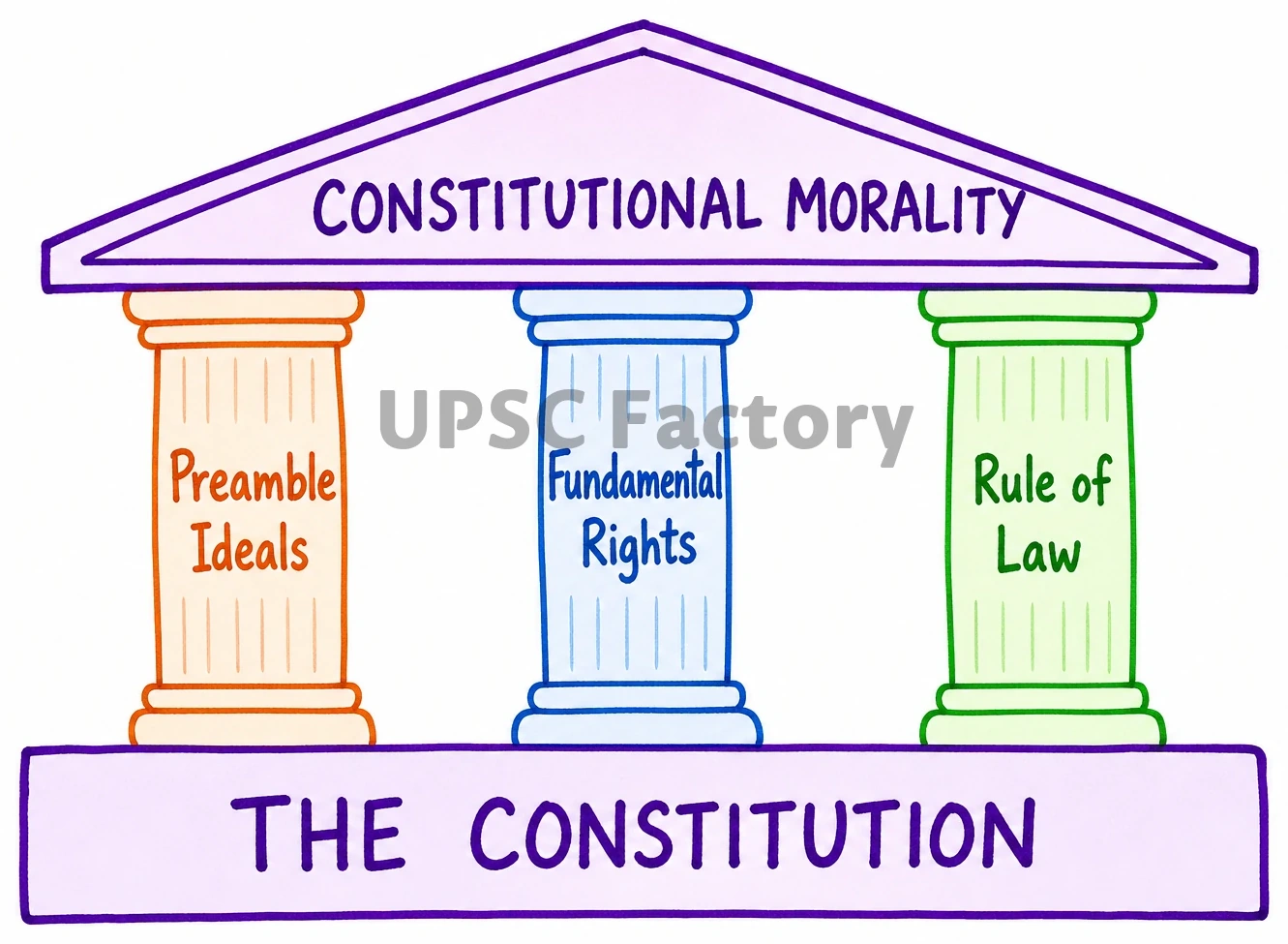
Constitutional Morality (CM) means strict adherence to the Constitution’s core principles. Dr. Ambedkar championed it as a safeguard against majoritarianism and arbitrary state power.
1. Roots and Essential Facets
Preamble Ideals: Anchored in the philosophical values of Justice, Liberty, Equality, and Fraternity, establishing a transformative vision.
Fundamental Rights: Protects individual dignity, autonomy, and prohibits systemic discrimination (Articles 14, 15, 21).
Rule of Law: Restricts arbitrary executive and legislative actions, ensuring institutional accountability (Basic Structure Doctrine).
2. Application via Landmark Judgments
Supremacy over Social Morality: Decriminalized homosexuality, ruling that CM strictly outweighs regressive public morality (Navtej Singh Johar, 2018).
Individual Dignity: Struck down archaic adultery laws, upholding women’s sexual autonomy under CM (Joseph Shine, 2018).
Cooperative Federalism: Mandated “constitutional trust” between the Lieutenant Governor and the elected state government (NCT of Delhi vs. UoI, 2018).
Constitutional morality acts as the Republic’s internal compass, preventing democratic subversion and guiding India’s continuous evolution into a truly egalitarian and progressive society.