UPSC Mains 2021 GS3 Model Answer

Q. Keeping in view India’s internal security, analyse the impact of cross-border cyber attacks. Also discuss defensive measures against these sophisticated attacks.

Q. Keeping in view India’s internal security, analyse the impact of cross-border cyber attacks. Also discuss defensive measures against these sophisticated attacks.

Question from UPSC Mains 2021 GS3 Paper

Model Answer:

State-sponsored Advanced Persistent Threats (APTs) bypass physical borders, acting as asymmetric force multipliers that severely threaten India’s internal security and digital sovereignty.

1. Impact of Cross-Border Cyber Attacks on Internal Security

  • Infrastructure Sabotage: Crippling critical power and nuclear grids (e.g., RedEcho at Mumbai Power Grid 2020; Dtrack at Kudankulam).
  • Strategic Espionage: Paralyzing public services and stealing sensitive demographic/health data (e.g., AIIMS Ransomware 2022).
  • Economic Terrorism: Disrupting banking networks, cryptocurrency extortion, and state-backed intellectual property theft.
  • Cognitive Warfare: Weaponizing social media ecosystems for radicalization, terror recruitment, and inciting communal discord.

2. Defensive Measures against Sophisticated Attacks
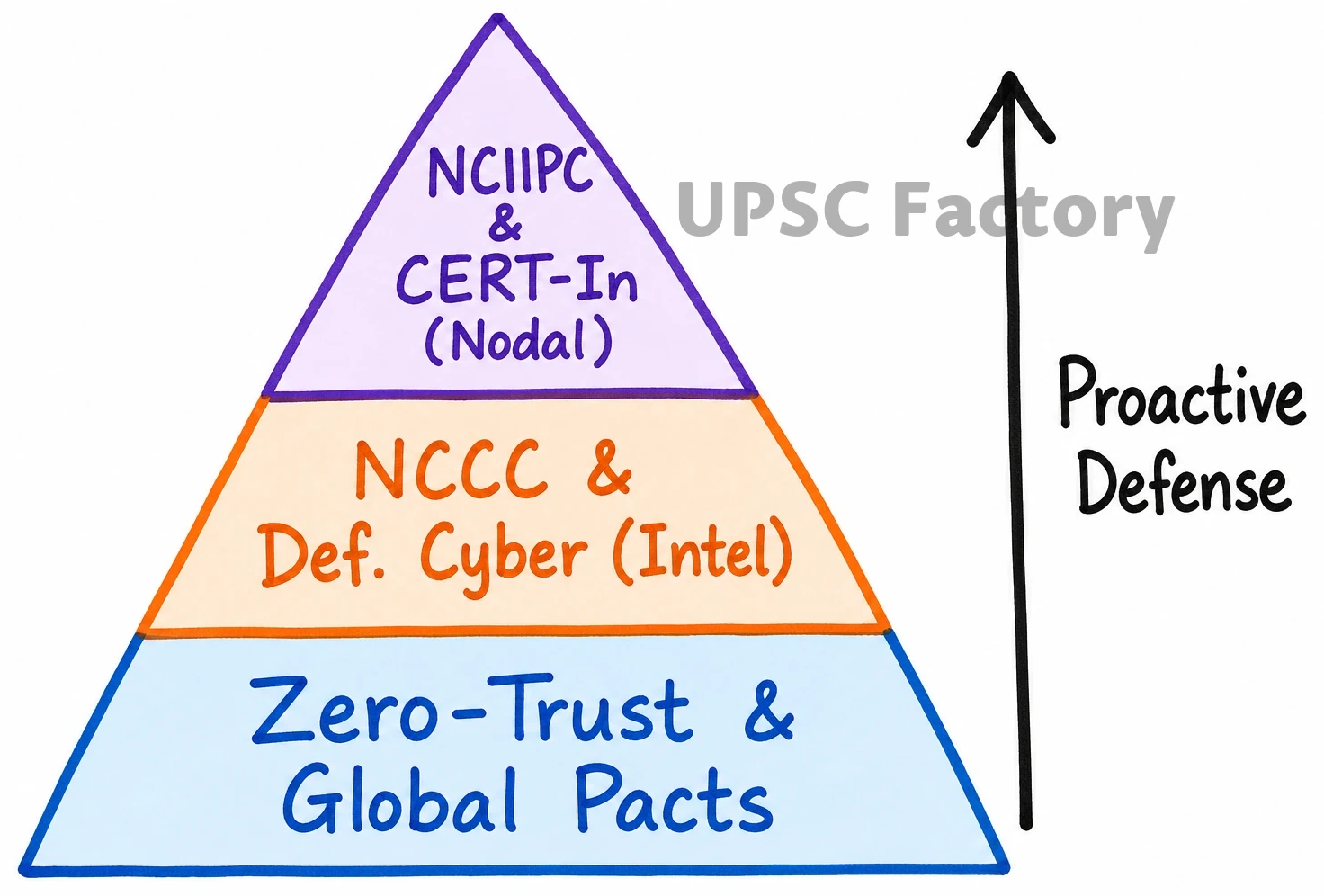
  • Institutional Framework: Empowering NCIIPC to protect critical infrastructure and CERT-In for rapid incident response (Section 70, IT Act 2000).
  • Military Integration: Operationalizing the Defence Cyber Agency (DCA) to counter defense-specific cyber-warfare operations.
  • Technological Shift: Mandating ‘Zero-Trust Architecture’, AI-driven threat hunting, and strict air-gapping of critical networks.
  • Threat Intelligence: Leveraging the National Cyber Coordination Centre (NCCC) for predictive, real-time situational awareness.
  • International Cooperation: Expanding bilateral CERT pacts and actively shaping multilateral treaties on responsible state behavior in cyberspace.

Transitioning from a reactive firewall approach to a proactive “active cyber defence” posture under a modernized National Cyber Security Strategy is imperative to secure India’s digital frontier.
Q. Keeping in view India’s internal security, analyse the impact of cross-border cyber attacks. Also discuss defensive measures against these sophisticated attacks. Read More »

Q. Discuss how emerging technologies and globalisation contribute to money laundering. Elaborate measures to tackle the problem of money laundering both at national and international levels.

Q. Discuss how emerging technologies and globalisation contribute to money laundering. Elaborate measures to tackle the problem of money laundering both at national and international levels.

Question from UPSC Mains 2021 GS3 Paper

Model Answer: 

Money laundering, the process of legitimizing illicit funds, has grown exponentially due to the complex convergence of globalization and emerging technologies.

1. Role of Emerging Tech & Globalisation

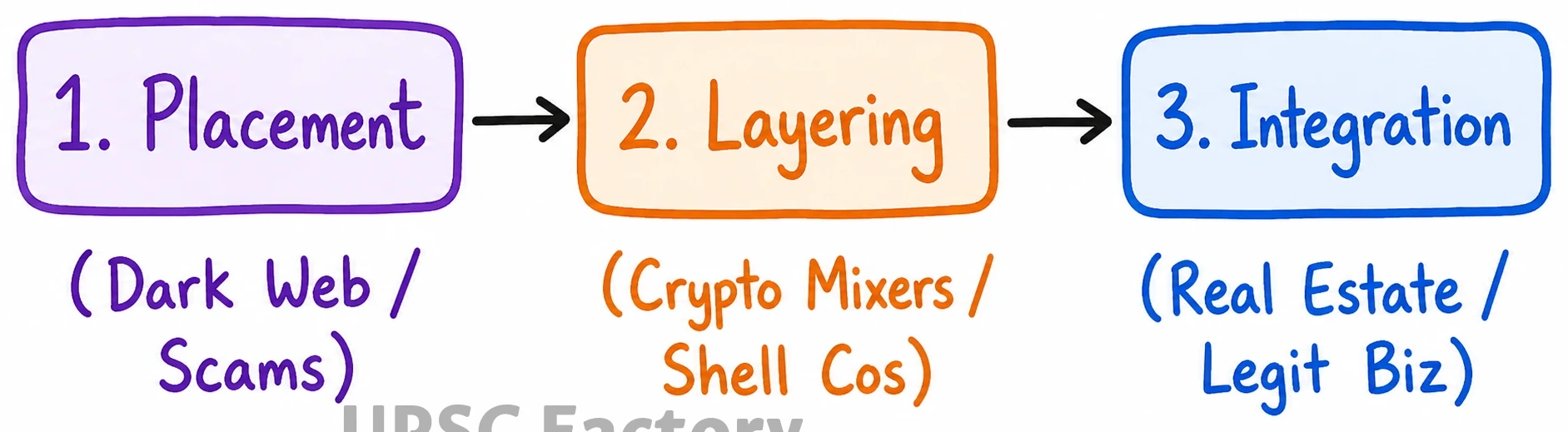
  • Anonymity & Obfuscation: Cryptocurrencies and crypto-mixers (e.g., Tornado Cash) bypass traditional banking, hiding the origin of funds.
  • Borderless Finance: Instant global wire transfers facilitate rapid “layering,” complicating multi-jurisdictional law enforcement tracking.
  • Offshore Havens: Globalization enables complex shell company networks in tax havens to hide beneficial ownership (e.g., Panama/Pandora Papers).
  • Dark Web & Cybercrime: Provides anonymous marketplaces for illicit trade (drugs, ransomware), settling payments via untraceable peer-to-peer virtual assets.

2. Countermeasures: National & International Levels

National Measures:

  • Statutory Mandate: The Prevention of Money Laundering Act (PMLA), 2002 enables strict asset confiscation by the Enforcement Directorate (ED).
  • Financial Intelligence: FIU-IND mandates banks and exchanges to flag Suspicious Transaction Reports (STRs).
  • Cyber Forensics: The Indian Cyber Crime Coordination Centre (I4C) tracks dark-web financial footprints.

International Measures:

  • FATF Guidelines: Mandates the ‘Travel Rule’ for Virtual Asset Service Providers (VASPs) and uses Grey/Black lists for non-compliant nations.
  • Global Treaties: The UN Convention against Transnational Organized Crime (Palermo Convention) standardizes cross-border cooperation.
  • Data Exchange: The Egmont Group facilitates real-time intelligence sharing among 170+ national FIUs.

Combating high-tech money laundering requires standardizing global legal frameworks and deploying AI-driven regulatory technology (RegTech) for proactive, real-time financial surveillance.

Q. Discuss how emerging technologies and globalisation contribute to money laundering. Elaborate measures to tackle the problem of money laundering both at national and international levels. Read More »

Q. Discuss about the vulnerability of India to earthquake related hazards. Give examples including the salient features of major disasters caused by earthquakes in different parts of India during the last three decades.

Q. Discuss about the vulnerability of India to earthquake related hazards. Give examples including the salient features of major disasters caused by earthquakes in different parts of India during the last three decades.

Question from UPSC Mains 2021 GS3 Paper

Model Answer: 

India is highly vulnerable to seismic hazards, with over 59% of its landmass officially classified into moderate to very severe seismic zones (BIS Zones II to V).

1. Drivers of India’s Seismic Vulnerability

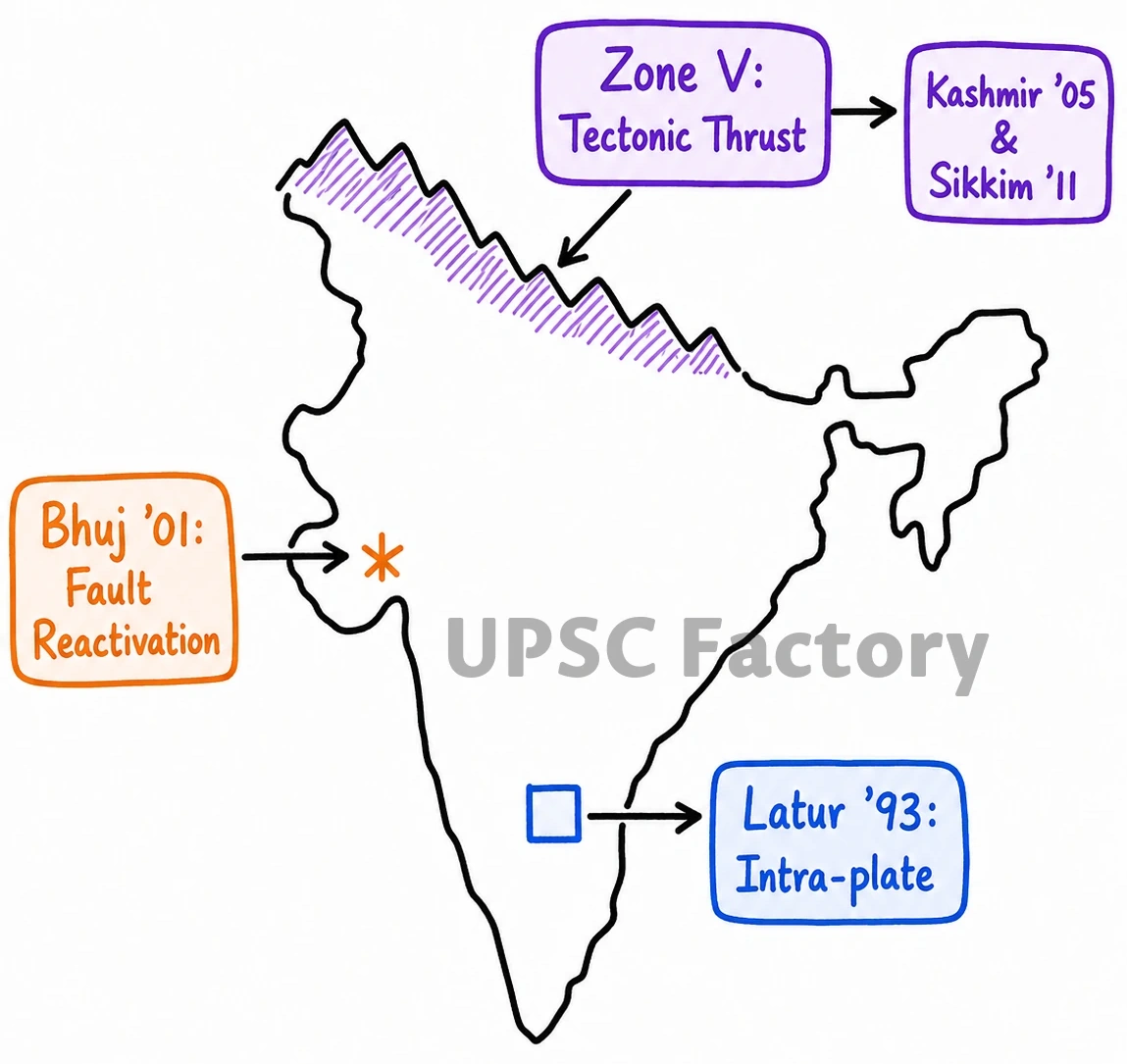
  • Tectonic Setting: The continuous under-thrusting of the Indian Plate beneath the Eurasian Plate creates massive strain, making the entire Himalayan belt highly active (Zone V).
  • Intra-Plate Seismicity: Fault re-activations within the traditionally stable Peninsular shield (e.g., Narmada-Son lineament) generate unexpected tremors.
  • Systemic Fragility: High population density coupled with non-engineered, masonry-heavy built environments drastically amplifies casualty risks.

2. Major Earthquakes (Last 3 Decades) & Salient Features

  • Latur, Maharashtra (1993): A rare, severe intra-plate earthquake. Features: Shallow focus leading to high surface intensity; massive fatalities caused primarily by the collapse of unreinforced stone-masonry rural housing.
  • Bhuj, Gujarat (2001): Reactivation of hidden fault lines. Features: Widespread soil liquefaction, structural “pancaking” of urban high-rises, and catastrophic economic destruction.
  • Kashmir (2005) & Sikkim (2011): Driven by Himalayan thrust activity. Features: Triggered severe secondary hazards (massive landslides, avalanches, flash floods), which severely hampered remote rescue operations.

Mitigating seismic risks necessitates shifting from reactive relief to proactive preparedness through strict enforcement of the National Building Code, seismic micro-zonation, and structural retrofitting per NDMA Guidelines.

Q. Discuss about the vulnerability of India to earthquake related hazards. Give examples including the salient features of major disasters caused by earthquakes in different parts of India during the last three decades. Read More »

Q. Describe the key points of the revised Global Air Quality Guidelines (AQGs) recently released by the World Health Organisation (WHO). How are these different from its last update in 2005? What changes in India’s National Clean Air Programme are required to achieve these revised standards ?

Q. Describe the key points of the revised Global Air Quality Guidelines (AQGs) recently released by the World Health Organisation (WHO). How are these different from its last update in 2005? What changes in India’s National Clean Air Programme are required to achieve these revised standards ?

Question from UPSC Mains 2021 GS3 Paper

Model Answer:

In 2021, the WHO updated its Global Air Quality Guidelines (AQGs) after 15 years, setting much stricter threshold limits for six classic pollutants to mitigate severe public health risks.

1. Key Points & Differences (2021 AQGs vs 2005)

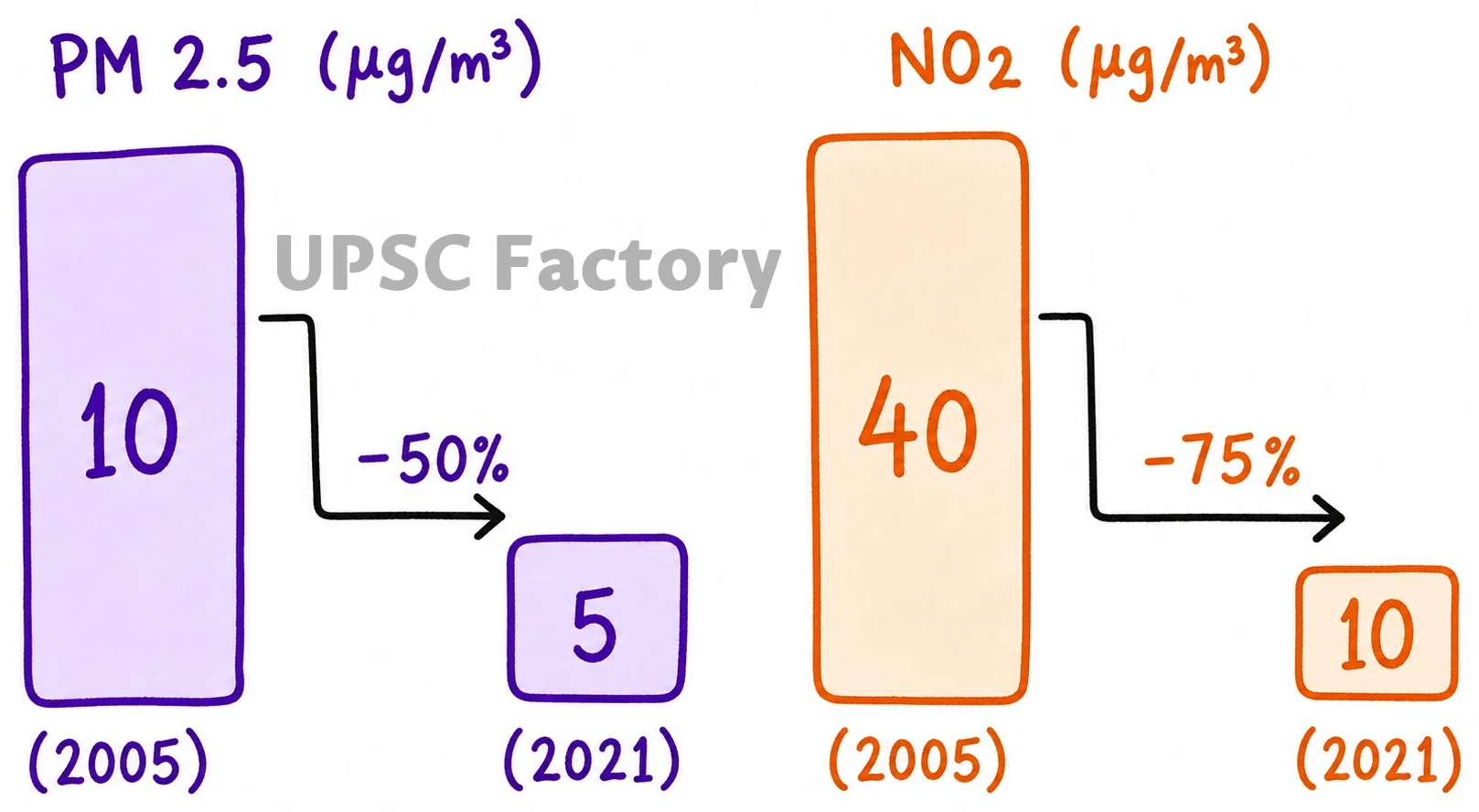
  • Stricter PM Limits: The annual PM2.5 threshold is slashed by half (10 µg/m³ in 2005 to 5 µg/m³) and PM10 is tightened (20 µg/m³ to 15 µg/m³).
  • Drastic NO2 Reduction: The annual Nitrogen Dioxide limit is reduced by 75% (40 µg/m³ in 2005 to 10 µg/m³).
  • New Inclusions: Introduces new “good practice statements” for managing highly toxic ultra-fine particles (UFPs) and black carbon.
  • Advisory Nature: Remains an evidence-based tool for policymakers, not a legally binding treaty.

2. Required Changes in India’s NCAP

  • Align National Standards: Revise India’s outdated 2009 National Ambient Air Quality Standards (current PM2.5 limit is a lenient 40 µg/m³) to approach WHO interim targets.
  • Absolute Health Targets: Upgrade NCAP’s percentage-based reduction goals (40% reduction by 2026) to absolute, health-based pollutant concentration targets.
  • Airshed Management: Shift governance from isolated, city-specific action plans (131 non-attainment cities) to a broader regional “airshed” approach.
  • Multi-Pollutant Focus: Expand NCAP’s monitoring mechanisms (via PRANA portal) to aggressively track NO2, Ozone, and ultra-fine particles alongside PM.

Aligning NCAP with WHO’s stringent AQGs demands a legally backed, airshed-centric governance model to effectively combat pollution, safeguard public health, and ensure environmental justice.

Q. Describe the key points of the revised Global Air Quality Guidelines (AQGs) recently released by the World Health Organisation (WHO). How are these different from its last update in 2005? What changes in India’s National Clean Air Programme are required to achieve these revised standards ? Read More »

Q. Explain the purpose of the Green Grid Initiative launched at World Leaders Summit of the COP26 UN Climate Change Conference in Glasgow in November, 2021. When was this idea first floated in the International Solar Alliance (ISA) ?

Q. Explain the purpose of the Green Grid Initiative launched at World Leaders Summit of the COP26 UN Climate Change Conference in Glasgow in November, 2021. When was this idea first floated in the International Solar Alliance (ISA) ?

Question from UPSC Mains 2021 GS3 Paper

Model Answer: 

The Green Grids Initiative—One Sun One World One Grid (GGI-OSOWOG), launched jointly by India and the UK at COP26, aims to accelerate global renewable energy transitions.

1. Origin of the Idea in the ISA

  • Initial Proposal: The idea was first floated by Prime Minister Narendra Modi during the First Assembly of the International Solar Alliance (ISA) in October 2018.
  • Core Philosophy: It is rooted in the concept that “The Sun Never Sets,” highlighting that solar energy is constantly available at some geographical location globally.

2. Purpose of the Green Grid Initiative

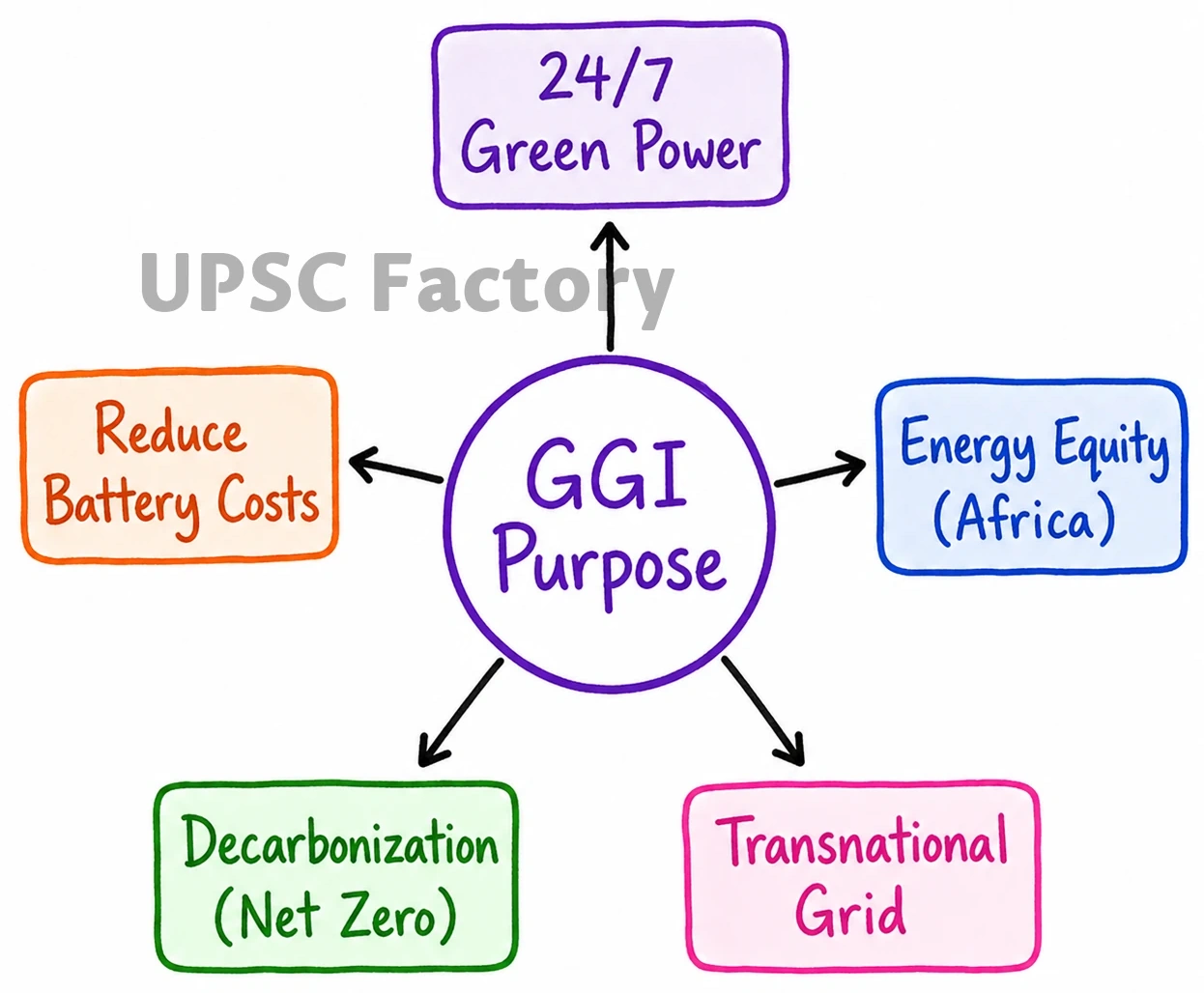
  • Transnational Interconnection: Build a global power grid seamlessly transferring renewable energy across borders (connecting Middle-East, South Asia, and Southeast Asia).
  • Overcoming Intermittency: Ensure reliable 24/7 green power supply by leveraging global time-zone differences.
  • Reducing Storage Costs: Minimize reliance on expensive battery storage infrastructure by directly transmitting surplus solar electricity globally.
  • Rapid Decarbonization: Phase out fossil fuels by integrating large-scale solar and wind projects to meet net-zero targets (Paris Agreement NDCs).
  • Promoting Energy Equity: Mobilize global investments and technical assistance to build resilient renewable infrastructure in energy-deficient regions (e.g., Africa).

GGI-OSOWOG represents a paradigm shift in climate diplomacy, positioning cross-border solar connectivity as a transformative tool for global energy security and sustainable development.

Q. Explain the purpose of the Green Grid Initiative launched at World Leaders Summit of the COP26 UN Climate Change Conference in Glasgow in November, 2021. When was this idea first floated in the International Solar Alliance (ISA) ? Read More »

Q. How is S-400 air defence system technically superior to any other system presently available in the world?

Q. How is S-400 air defence system technically superior to any other system presently available in the world?

Question from UPSC Mains 2021 GS3 Paper

Model Answer: 

The S-400 Triumf is a Russian-designed mobile surface-to-air missile (SAM) system, widely considered the world’s most versatile and advanced operational air defence shield.

1. Key Technical Capabilities of S-400

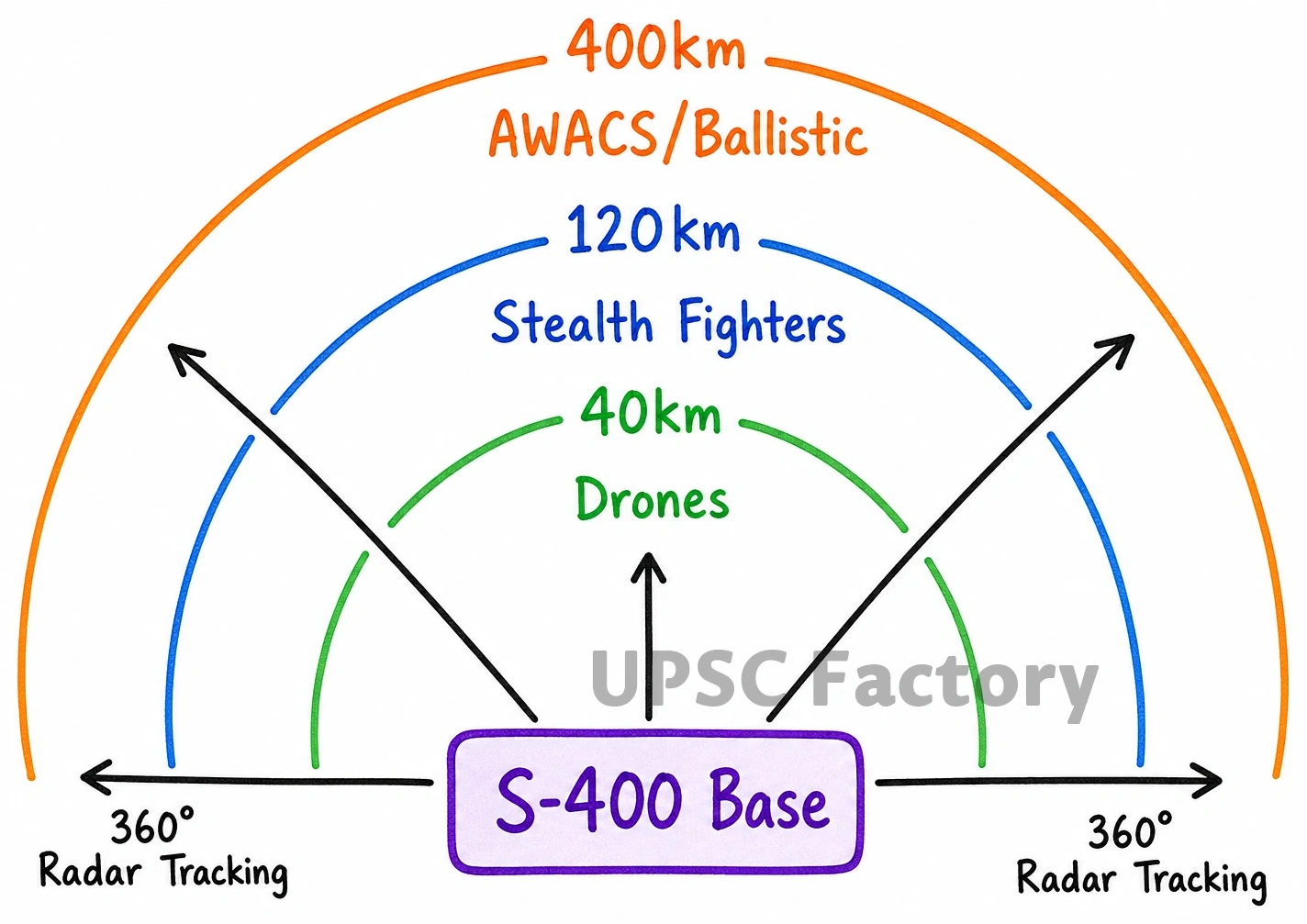
  • Multi-Layered Shield: Deploys four distinct missile variants, creating a nested defence grid covering ranges from 40 km to 400 km.
  • Hypersonic Interception: Capable of destroying targets flying at Mach 14 at altitudes up to 30 km.
  • Advanced Tracking: Utilizes the 92N6E Phased Array Radar, which tracks up to 300 targets and engages 80 simultaneously.
  • Anti-Stealth Edge: Effectively detects and neutralizes low-signature, fifth-generation stealth aircraft (e.g., F-22, F-35).
  • High Mobility: Transitions from transit to combat-ready mode in under 10 minutes, ensuring high battlefield survivability.

2. Comparative Superiority over Global Alternatives

  • Versatility vs. Niche: Unlike the US THAAD, which strictly targets exo-atmospheric ballistic missiles, S-400 intercepts drones, aircraft, and cruise missiles.
  • Range Superiority: Its 400 km engagement perimeter vastly outstrips the US Patriot Advanced Capability-3 (PAC-3) system (max ~160 km).
  • Deployment Speed: S-400’s rapid setup (under 10 minutes) is significantly faster than the Patriot system (25–30 minutes).

By establishing a formidable Anti-Access/Area Denial (A2/AD) bubble, the S-400 provides unparalleled airspace dominance, acting as a critical deterrent against multi-front aerial threats for India.

Q. How is S-400 air defence system technically superior to any other system presently available in the world? Read More »

Q. How and to what extent would micro-irrigation help in solving India’s water crisis ?

Q. How and to what extent would micro-irrigation help in solving India’s water crisis ?

Question from UPSC Mains 2021 GS3 Paper

Model Answer: 

Agriculture consumes ~80% of India’s freshwater. Amid NITI Aayog’s warnings of acute water stress, micro-irrigation (MI) is critical for agricultural sustainability.

How Micro-Irrigation Mitigates the Water Crisis

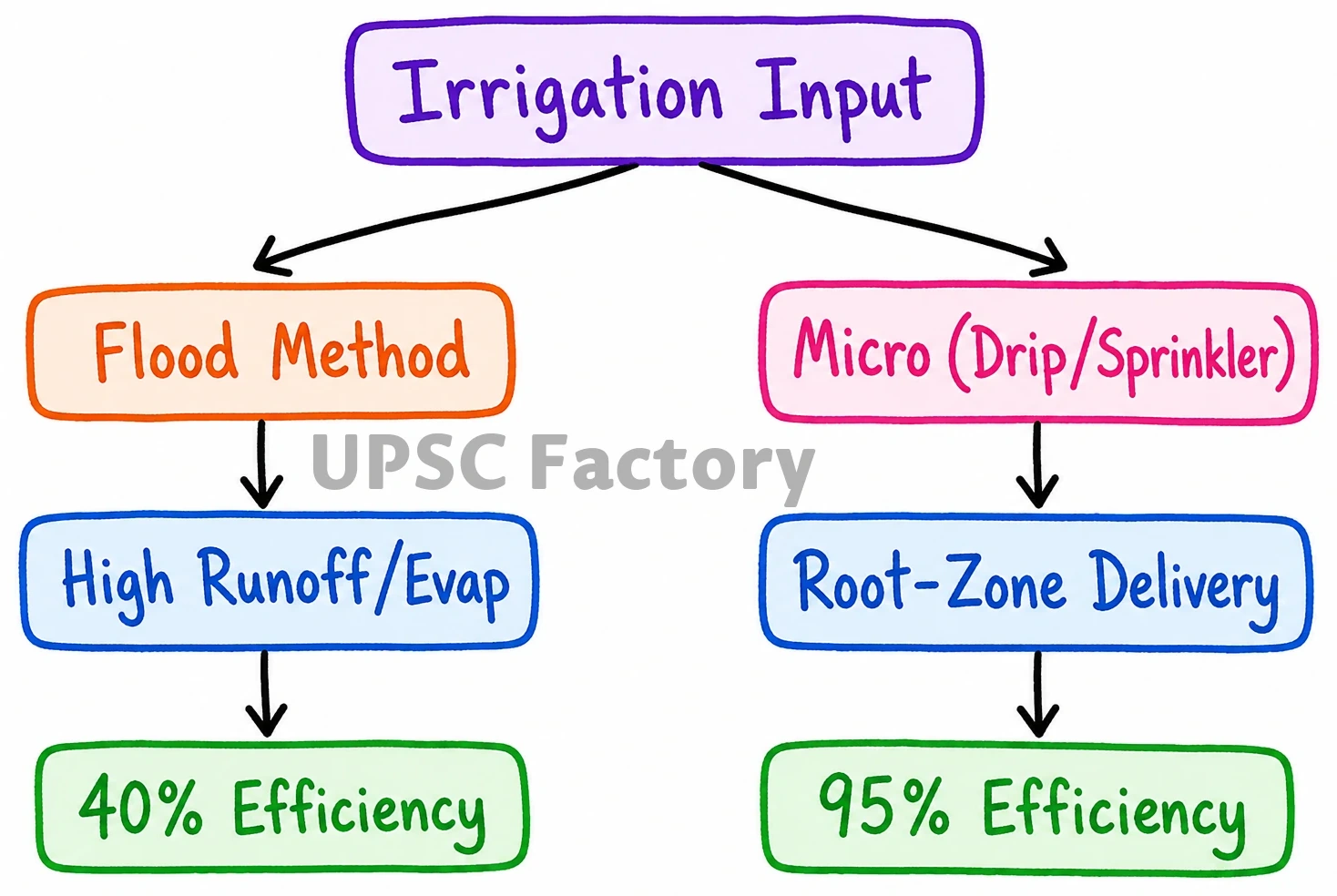
  • Enhanced Water Use Efficiency: Drip/sprinkler systems raise efficiency to 80-95%, replacing wasteful flood irrigation (PMKSY: Per Drop More Crop).
  • Groundwater Conservation: Minimizes deep percolation and checks over-extraction in critical, over-exploited blocks (Punjab, Haryana).
  • Zero Evaporation Loss: Delivers water directly to plant root zones, preventing surface runoff and evaporation.
  • Arid Area Cultivation: Facilitates farming in semi-arid regions, actively aiding crop diversification (Israel’s desert agriculture model).

Extent and Limitations (Constraints to Resolution)

  • Capital & Maintenance Costs: High initial setup expenses and frequent emitter clogging deter smallholder adoption.
  • The Rebound Effect (Jevons Paradox): Water saved is often used to expand cultivation of water-intensive crops instead of being conserved.
  • Energy Dependency: Requires continuous electricity/solar power for pressurization, unlike gravity-fed canal systems.
  • Low Penetration: Currently covers only ~15% of India’s potential area due to fragmented landholdings and low awareness.

While micro-irrigation is foundational, permanently solving the water crisis requires complementing it with crop realignment, rainwater harvesting, and participatory aquifer management.

Q. How and to what extent would micro-irrigation help in solving India’s water crisis ? Read More »

Q. How did land reforms in some parts of the country help to improve the socio-economic conditions of marginal and small farmers ?

Q. How did land reforms in some parts of the country help to improve the socio-economic conditions of marginal and small farmers ?

Question from UPSC Mains 2021 GS3 Paper

Model Answer: 

Land reforms, encompassing Zamindari abolition, tenancy security, and land ceilings, fundamentally transformed agrarian structures, yielding remarkable socio-economic dividends for marginalized farmers, notably in Kerala and West Bengal.

1. Economic Empowerment

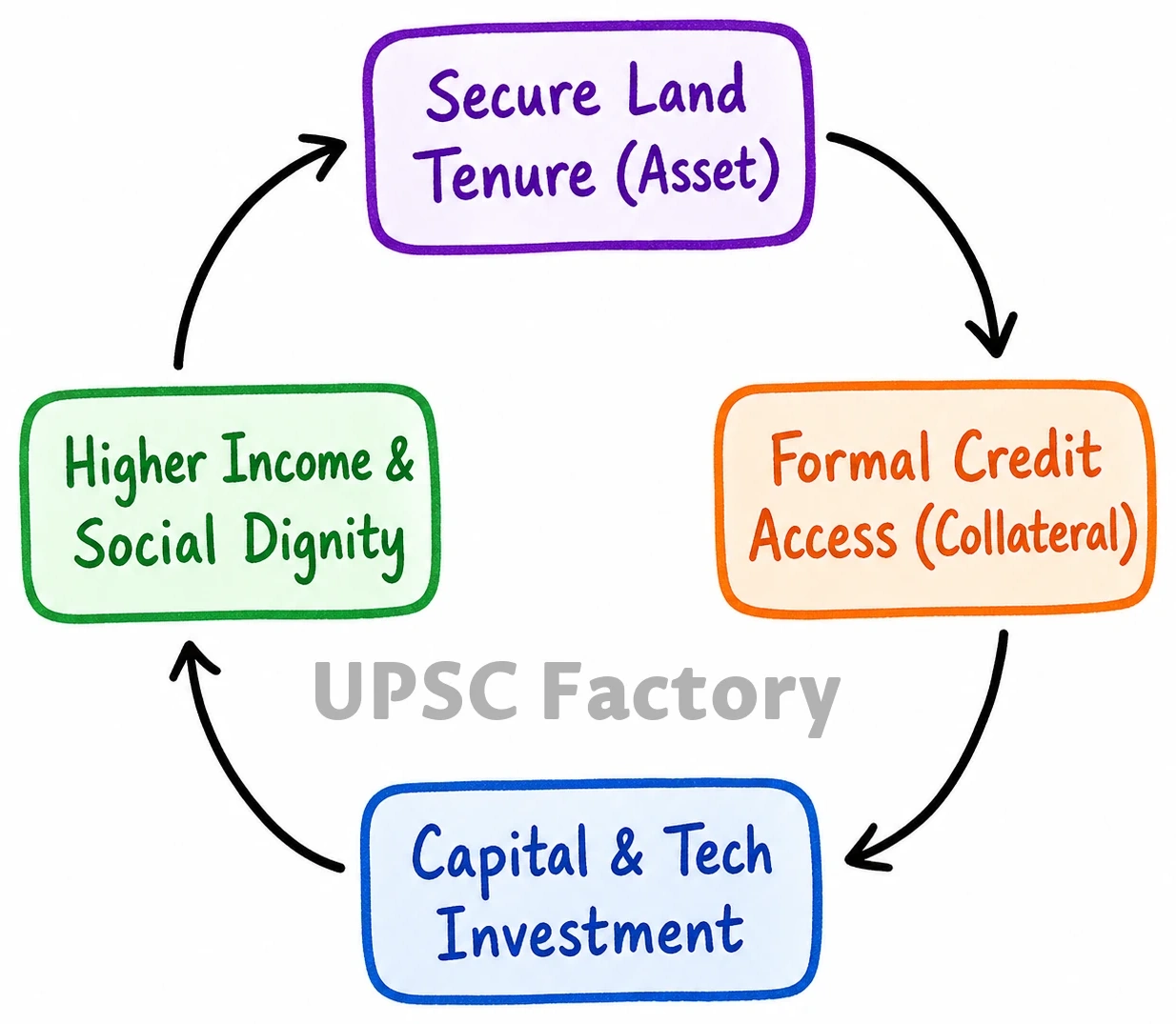
  • Tenancy Security: Conferred secure cultivation rights, inherently incentivizing long-term agricultural investments and capital formation (Operation Barga, West Bengal).
  • Asset Creation: Land redistribution created tangible collateral, seamlessly unlocking formal institutional credit access for marginal farmers.
  • Income Security: The abolition of intermediaries and exploitative rent extraction directly increased household disposable incomes.
  • Productivity Gains: Assured tenure encouraged greater adoption of modern inputs, fertilizers, and irrigation technologies.

2. Social Upliftment

  • Reduced Exploitation: Broke historical feudal nexuses (Begar/forced labour), liberating Dalits and backward castes from systemic subjugation.
  • Social Dignity: Land ownership served as a vital status symbol, drastically elevating the social standing of erstwhile landless laborers.
  • Political Empowerment: Fostered grassroots political consciousness and active leadership in Panchayati Raj Institutions (Kerala Land Reforms Act, 1963).
  • Human Development: Broad-based equitable land distribution drove superior health, nutrition, and education outcomes within agrarian families.

Building on these historical successes, contemporary India requires robust “second-generation” reforms, emphasizing comprehensive land record digitization (SVAMITVA Scheme) and formalized land leasing (NITI Aayog Model Tenancy Act).

Q. How did land reforms in some parts of the country help to improve the socio-economic conditions of marginal and small farmers ? Read More »

Q. Distinguish between Capital Budget and Revenue Budget. Explain the components of both these Budgets.

Q. Distinguish between Capital Budget and Revenue Budget. Explain the components of both these Budgets.

Question from UPSC Mains 2021 GS3 Paper

Model Answer: 

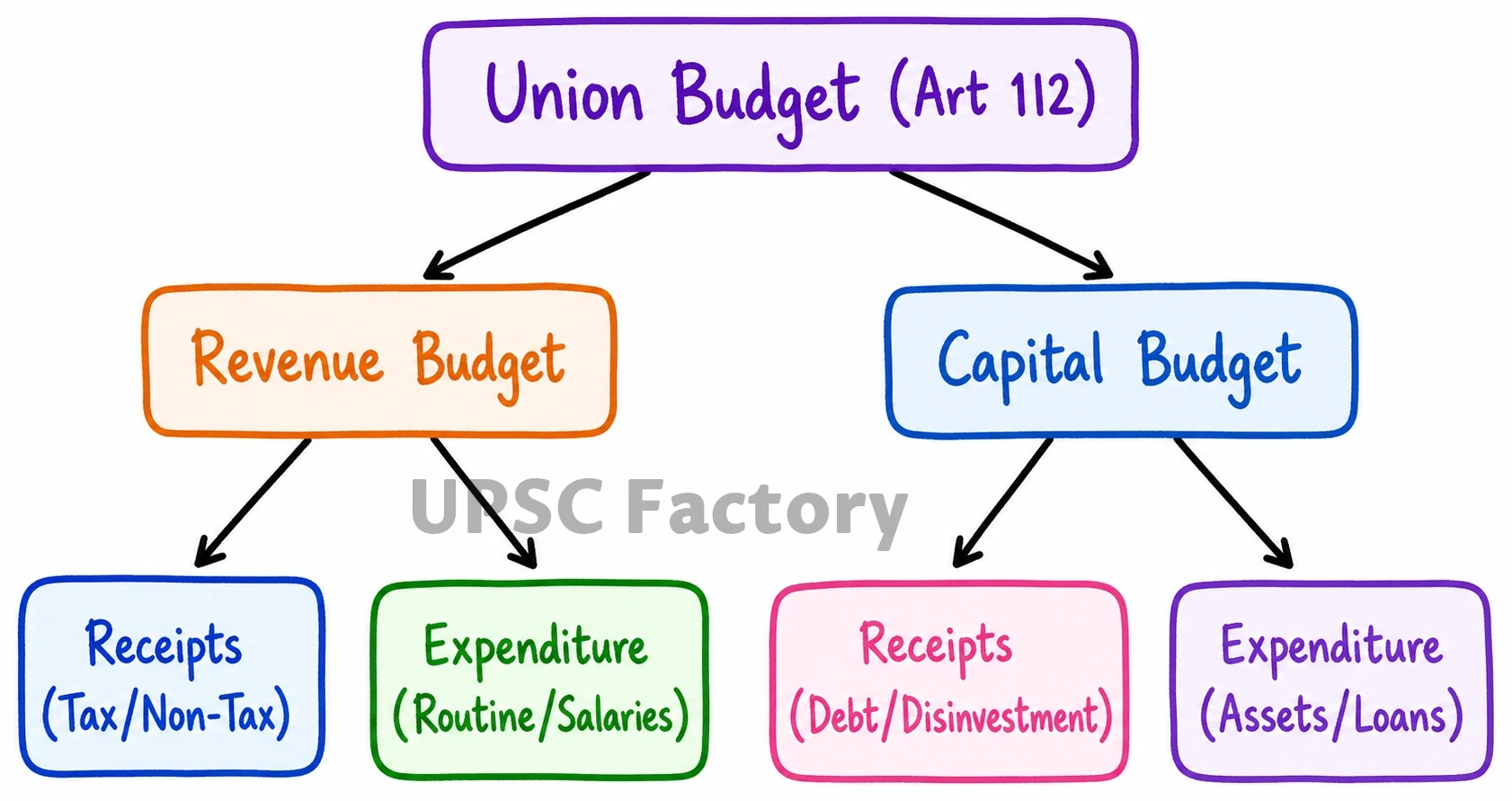
Under Article 112 (Annual Financial Statement), the Union Budget is structurally classified into Revenue and Capital budgets to ensure transparent fiscal management.

1. Capital Budget vs. Revenue Budget

  • Asset/Liability Impact: Capital budgets alter government assets or liabilities; Revenue budgets do neither.
  • Nature of Transactions: Capital transactions are non-recurring and long-term; Revenue transactions are routine and recurring.
  • Economic Multiplier: Capital spending generates high macroeconomic multipliers (PM GatiShakti); Revenue spending facilitates immediate consumption and welfare (PM-KISAN).

2. Components of Revenue Budget

  • Revenue Receipts: Funds that neither create liability nor reduce assets. Sub-divided into Tax Revenue (Income tax, GST) and Non-Tax Revenue (Dividends, spectrum fees, grants).
  • Revenue Expenditure: Routine operational spending. Includes interest payments, government salaries, subsidies, and grants-in-aid to states.

3. Components of Capital Budget

  • Capital Receipts: Funds creating liability or reducing assets. Includes Debt Receipts (Market borrowings, external loans) and Non-Debt Receipts (Disinvestment like Air India, loan recoveries).
  • Capital Expenditure: Spending that creates physical/financial assets or reduces liabilities. Includes infrastructure creation (Highways, hospitals) and loans given to States/UTs.

Aligning with the FRBM Act 2003, India’s current fiscal glide path prioritizes eliminating the revenue deficit while expanding capital expenditure to ensure long-term, sustainable economic growth.

Q. Distinguish between Capital Budget and Revenue Budget. Explain the components of both these Budgets. Read More »

Q. Explain the difference between computing methodology of India’s Gross Domestic Product (GDP) before the year 2015 and after the year 2015.

Q. Explain the difference between computing methodology of India’s Gross Domestic Product (GDP) before the year 2015 and after the year 2015.

Question from UPSC Mains 2021 GS3 Paper

Model Answer: 

In 2015, the Central Statistics Office (CSO) revised India’s GDP computation methodology to comprehensively align with the UN System of National Accounts (SNA) 2008.

Pre-2015 GDP Computing Methodology

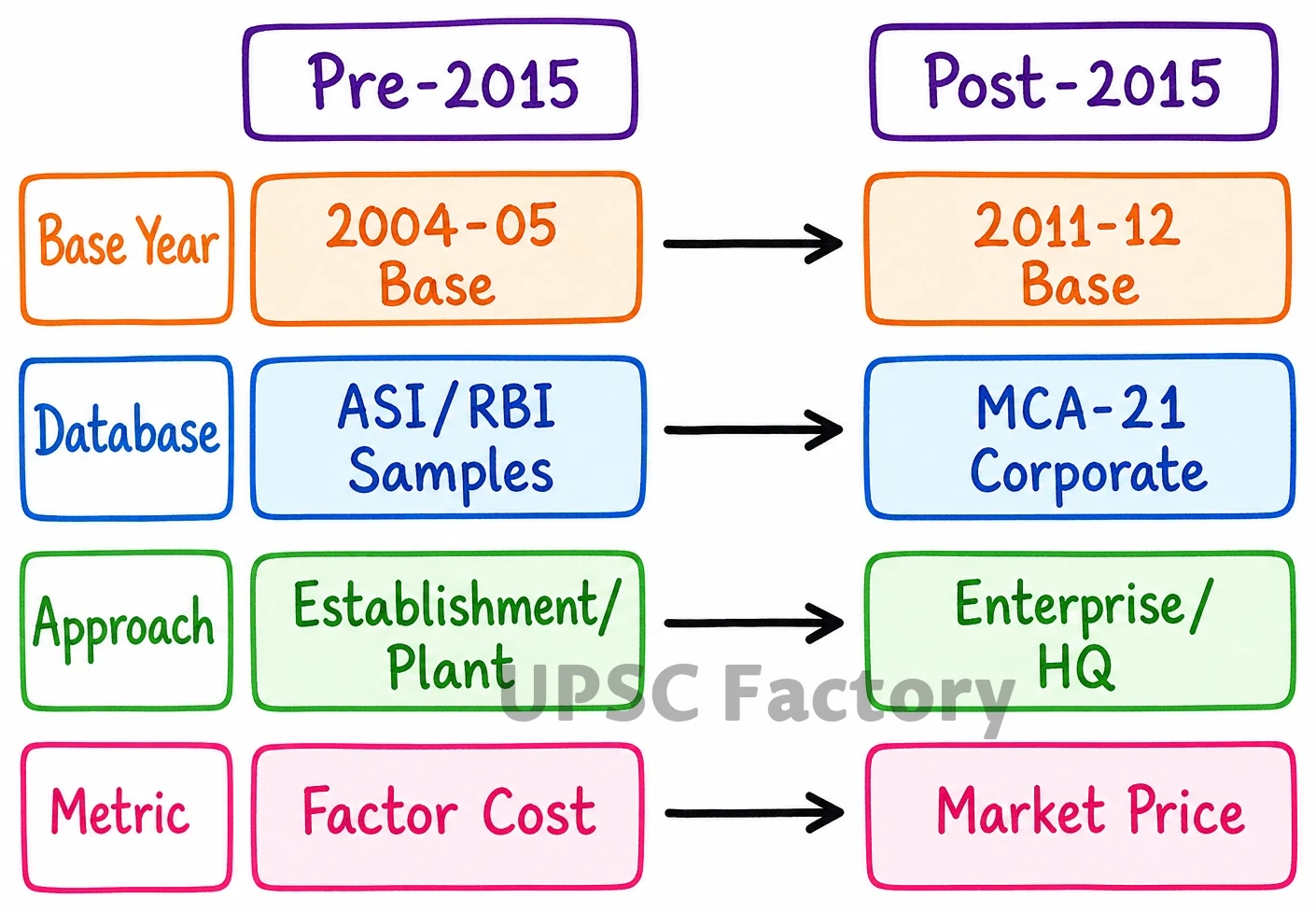
  • Base Year: Calculated using 2004-05 as the standard base year.
  • Headline Metric: GDP was primarily measured and reported at ‘Factor Cost’ (actual production costs).
  • Data Sources: Relied heavily on the Annual Survey of Industries (ASI) and RBI sample studies.
  • Establishment Approach: Valued manufacturing solely at the plant/factory level, often missing ancillary corporate value addition.

Post-2015 GDP Computing Methodology

  • Base Year Shift: Updated to 2011-12 to capture contemporary economic realities and newer industries.
  • Market Price Metric: Headline GDP is now measured at ‘Market Prices’ (GVA at basic prices + indirect taxes – subsidies).
  • Enterprise Approach: Adopted the comprehensive MCA-21 corporate database, capturing value addition at the holistic enterprise/head-office level.
  • Broadened Financial Coverage: Included diverse financial entities (stockbrokers, mutual funds) and regulatory bodies (SEBI, PFRDA, IRDAI).
  • Agriculture & Labor: Improved capture of livestock data and incorporated newer employment survey metrics.

This methodological upgrade enhanced the statistical accuracy and global comparability of India’s macroeconomic data, providing a more granular reflection of a rapidly formalizing economy.

Q. Explain the difference between computing methodology of India’s Gross Domestic Product (GDP) before the year 2015 and after the year 2015. Read More »