Model Answer:
State-sponsored Advanced Persistent Threats (APTs) bypass physical borders, acting as asymmetric force multipliers that severely threaten India’s internal security and digital sovereignty.
1. Impact of Cross-Border Cyber Attacks on Internal Security
- Infrastructure Sabotage: Crippling critical power and nuclear grids (e.g., RedEcho at Mumbai Power Grid 2020; Dtrack at Kudankulam).
- Strategic Espionage: Paralyzing public services and stealing sensitive demographic/health data (e.g., AIIMS Ransomware 2022).
- Economic Terrorism: Disrupting banking networks, cryptocurrency extortion, and state-backed intellectual property theft.
- Cognitive Warfare: Weaponizing social media ecosystems for radicalization, terror recruitment, and inciting communal discord.
2. Defensive Measures against Sophisticated Attacks
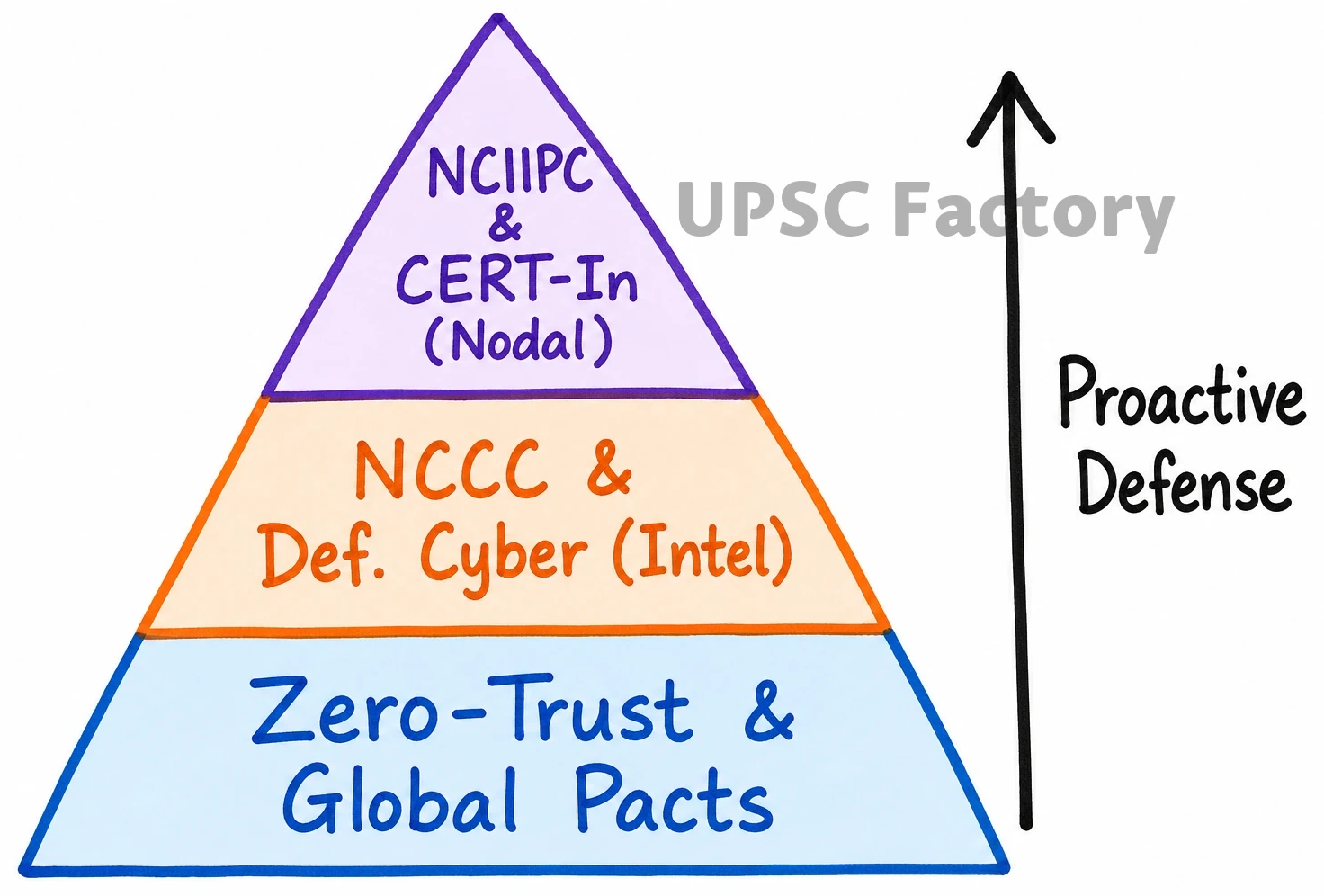
- Institutional Framework: Empowering NCIIPC to protect critical infrastructure and CERT-In for rapid incident response (Section 70, IT Act 2000).
- Military Integration: Operationalizing the Defence Cyber Agency (DCA) to counter defense-specific cyber-warfare operations.
- Technological Shift: Mandating ‘Zero-Trust Architecture’, AI-driven threat hunting, and strict air-gapping of critical networks.
- Threat Intelligence: Leveraging the National Cyber Coordination Centre (NCCC) for predictive, real-time situational awareness.
- International Cooperation: Expanding bilateral CERT pacts and actively shaping multilateral treaties on responsible state behavior in cyberspace.
Transitioning from a reactive firewall approach to a proactive “active cyber defence” posture under a modernized National Cyber Security Strategy is imperative to secure India’s digital frontier.