Model Answer:
Historically, India’s agrarian class structure was rooted in land ownership and intertwined with caste hierarchies, characterized by W.H. Wiser’s Jajmani system. Modern forces—land reforms, the Green Revolution, globalization, and democratic politics—have driven a transition from a status-based to a contract-based agrarian structure, fundamentally reshaping rural relations.
Capitalist Transformation and Class Reconfiguration
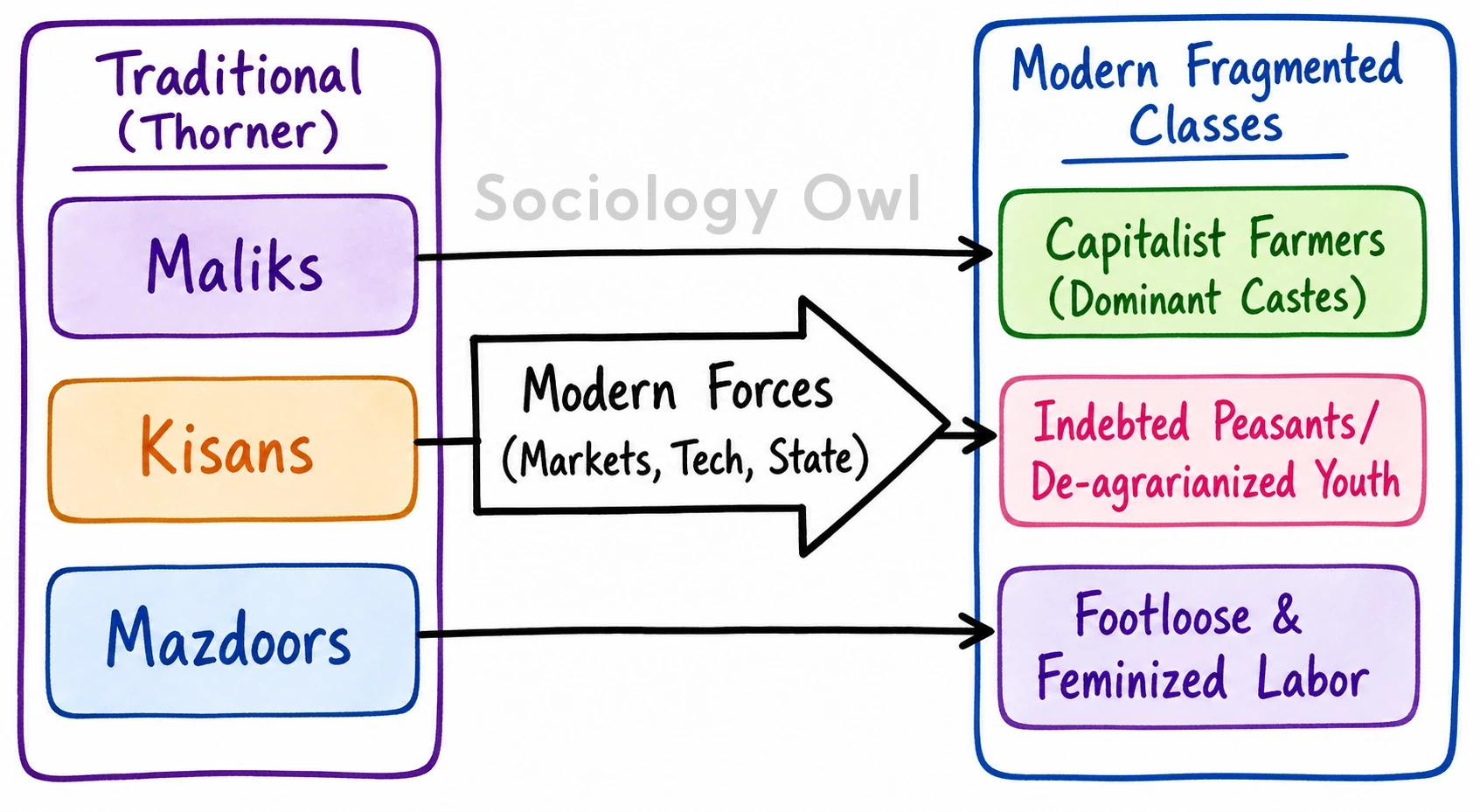
Daniel Thorner categorized traditional agrarian classes into Maliks, Kisans, and Mazdoors. Modern interventions have structurally altered these categories:
- Mode of Production Debate: Marxist sociologists like Utsa Patnaik, Ashok Rudra, and Alice Thorner debated the nature of this transition. Utsa Patnaik argued that Indian agriculture has seen the emergence of market-oriented capitalism, replacing subsistence farming.
- Dominant Castes: M.N. Srinivas noted that capitalist farmers who monopolized Green Revolution benefits largely belonged to intermediary Dominant Castes (e.g., Jats, Kammas), thereby consolidating the caste-class nexus.
- Footloose Labor: Analyzing South Gujarat, Jan Breman documented a shift from traditional “patronage to exploitation.” Commercialization eroded feudal dependencies, creating a massive, unorganized workforce of migrating “footloose labor.”
Critical Examination: Crises and New Inequalities
While modern forces dismantled older feudal ties, they spawned new paradoxes and vulnerabilities:
- Agrarian Distress: A.R. Vasavi highlights that reliance on cash crops and exposure to global market volatility have pushed the middle Kisan class into severe debt traps, triggering farmer suicides.
- Feminization of Agriculture: Bina Agarwal argues that male out-migration leaves women as the primary agricultural laborers, yet structural patriarchy continues to deny them land ownership rights.
- De-peasantization: Surinder S. Jodhka observes that rural youth no longer view farming as a viable primary identity or income source, leading to the “de-agrarianization” of rural spaces.
Erratic weather patterns due to climate change act as modern disrupters, forcing marginal farmers to sell land and swelling the ranks of landless laborers. Additionally, contract farming by multinational corporations shifts agrarian power away from village structures to global agribusiness elites.
Conclusion
The agrarian transition in India remains complex and uneven. It represents what Utsa Patnaik terms an articulation of capitalist and pre-capitalist modes of production, where traditional inequalities of caste and gender are not erased, but continuously reproduced within modern capitalist forms.