Model Answer:
In the digital era, movements have shifted from hierarchical structures to fluid networks, fundamentally transforming Resource Mobilization (McCarthy & Zald) through rapid cyber-activism.
Networked Mobilization and Public Sphere
- Networks of Outrage and Hope: Manuel Castells argues decentralized digital nodes drastically lower mobilization costs and bypass traditional organizational hierarchies.
- Networked Public Sphere: Updating Jürgen Habermas, digital platforms allow subaltern groups (e.g., Dalit WhatsApp networks) to bypass media gatekeepers via viral framing.
- New Social Movements: Following Alberto Melucci, digital activism focuses heavily on post-materialistic identity and symbols rather than traditional class struggles.
Critical Limitations
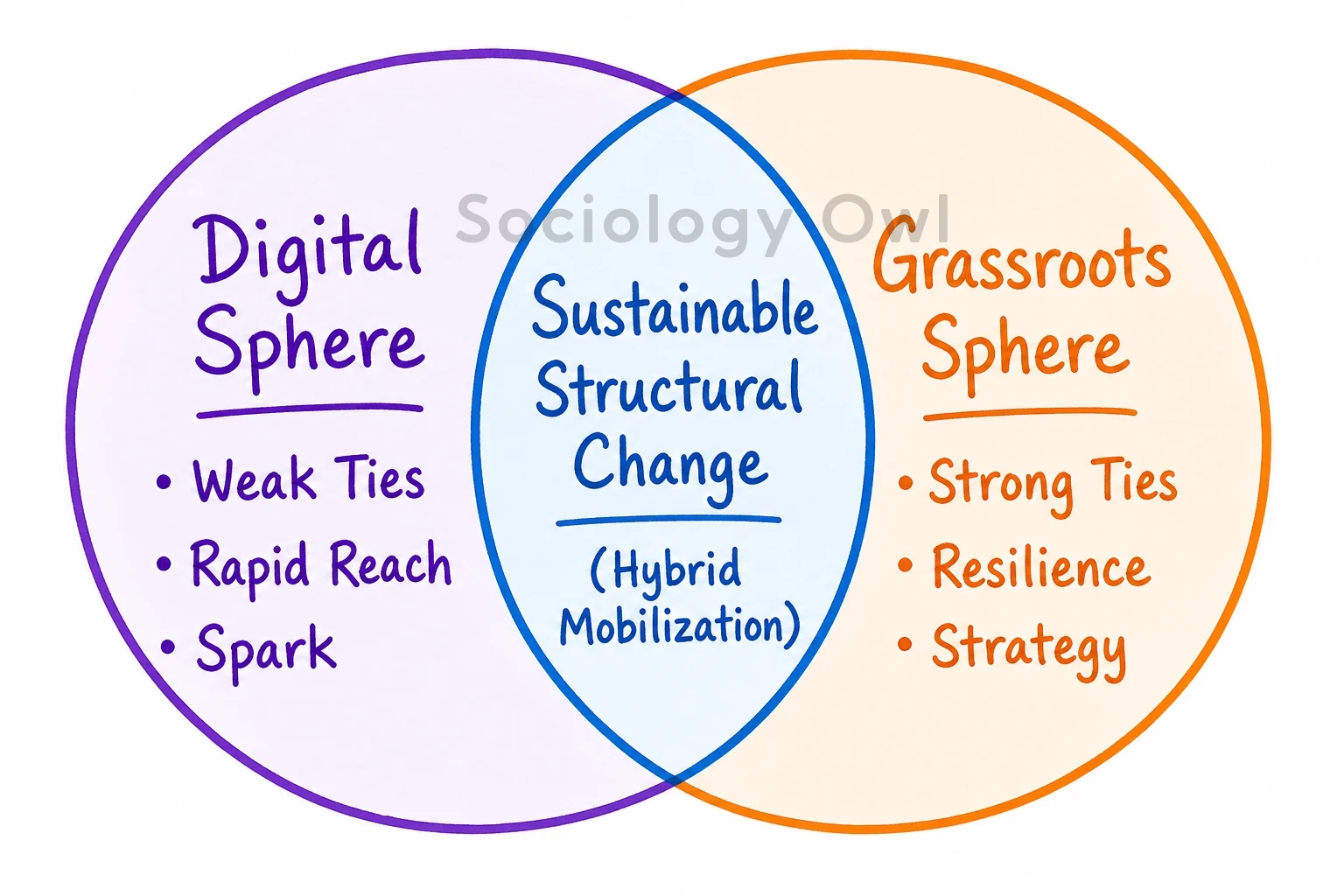
- Weak Ties: Malcolm Gladwell critiques digital “slacktivism” for fostering shallow connections that lack the organizational resilience (Zeynep Tufekci) necessary for high-risk activism.
- Digital Authoritarianism: In The Net Delusion, Evgeny Morozov highlights how states weaponize algorithms for surveillance and control.
The 2020-21 Indian Farmers’ Protest successfully merged digital “toolkits” with grassroots organizing to build transnational solidarity, mirroring the global identity-based mobilization of #MeToo.
Conclusion
Ultimately, while digital platforms provide a powerful mobilizing spark, sustaining structural social change requires translating online “weak ties” into robust, offline structural action.