Model Answer:
India’s volatile geopolitical neighbourhood exposes it to a continuous spectrum of internal security threats orchestrated by hostile state actors and elusive non-state networks.
Multidimensional Challenges to Internal Security
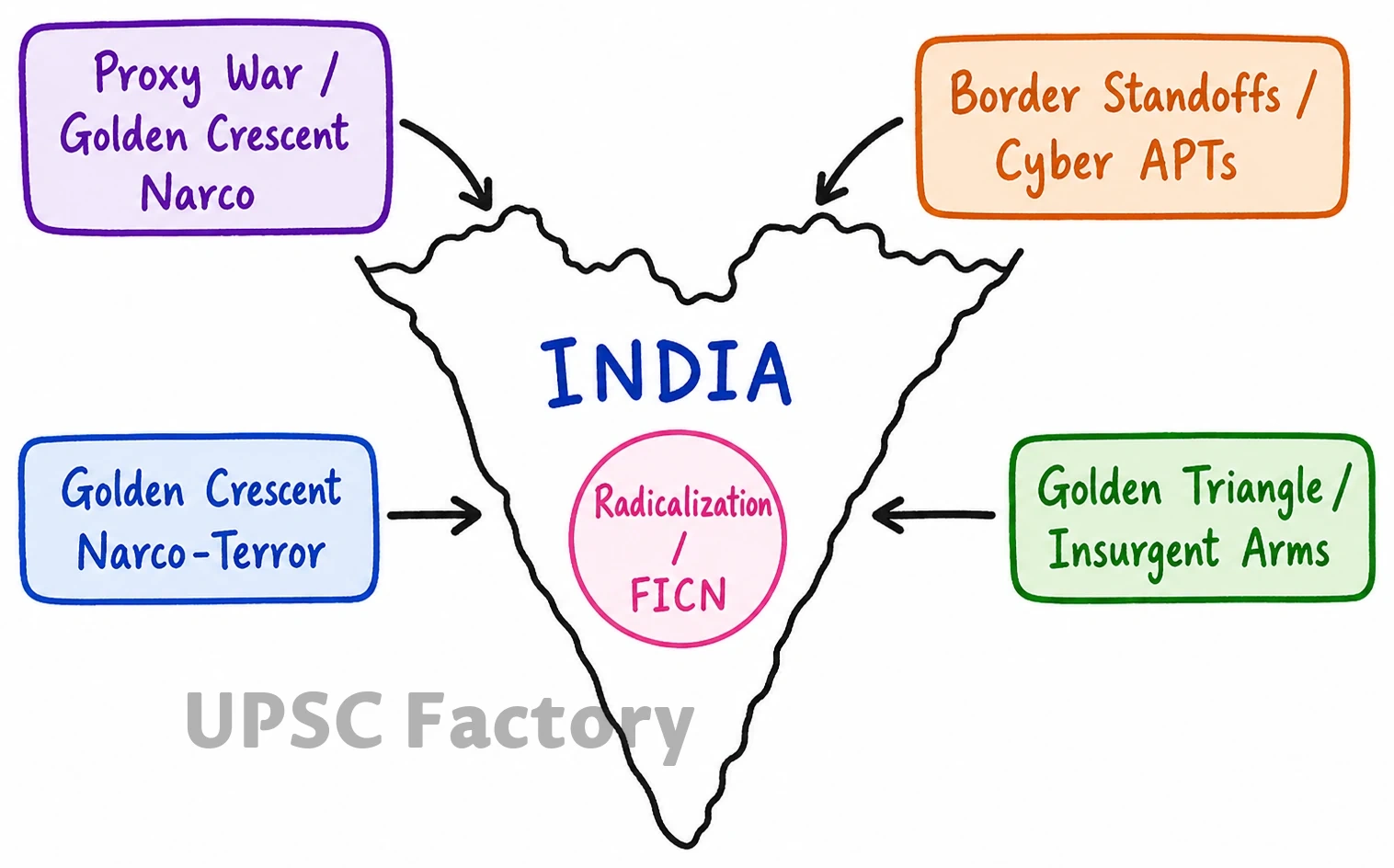
From External State Actors:
- Proxy Warfare: Employing state-sponsored terrorism as a deliberate instrument of state policy (Pakistan, 26/11 attacks).
- Territorial & Cartographic Aggression: Border incursions, localized standoffs, and rapid border infrastructure build-ups (China in Galwan/Arunachal).
- Cyber Warfare: State-backed Advanced Persistent Threats (APTs) targeting critical national infrastructure (Chinese RedEcho targeting power grids).
From Non-State Actors:
- Narco-Terrorism: Transnational drug cartels financing terror networks through illegal trafficking (Golden Crescent/Triangle nexus).
- Economic Subversion: Smuggling Fake Indian Currency Notes (FICN) and hawala transactions to artificially destabilize India’s macro-economy.
- Digital Radicalization: Global terror groups utilizing encrypted social media to radicalize youth and orchestrate lone-wolf attacks (ISIS modules).
- Insurgent Symbiosis: Cross-border syndicates supplying sophisticated arms to Northeast insurgent groups and Left-Wing Extremists.
Measures Required to Combat Threats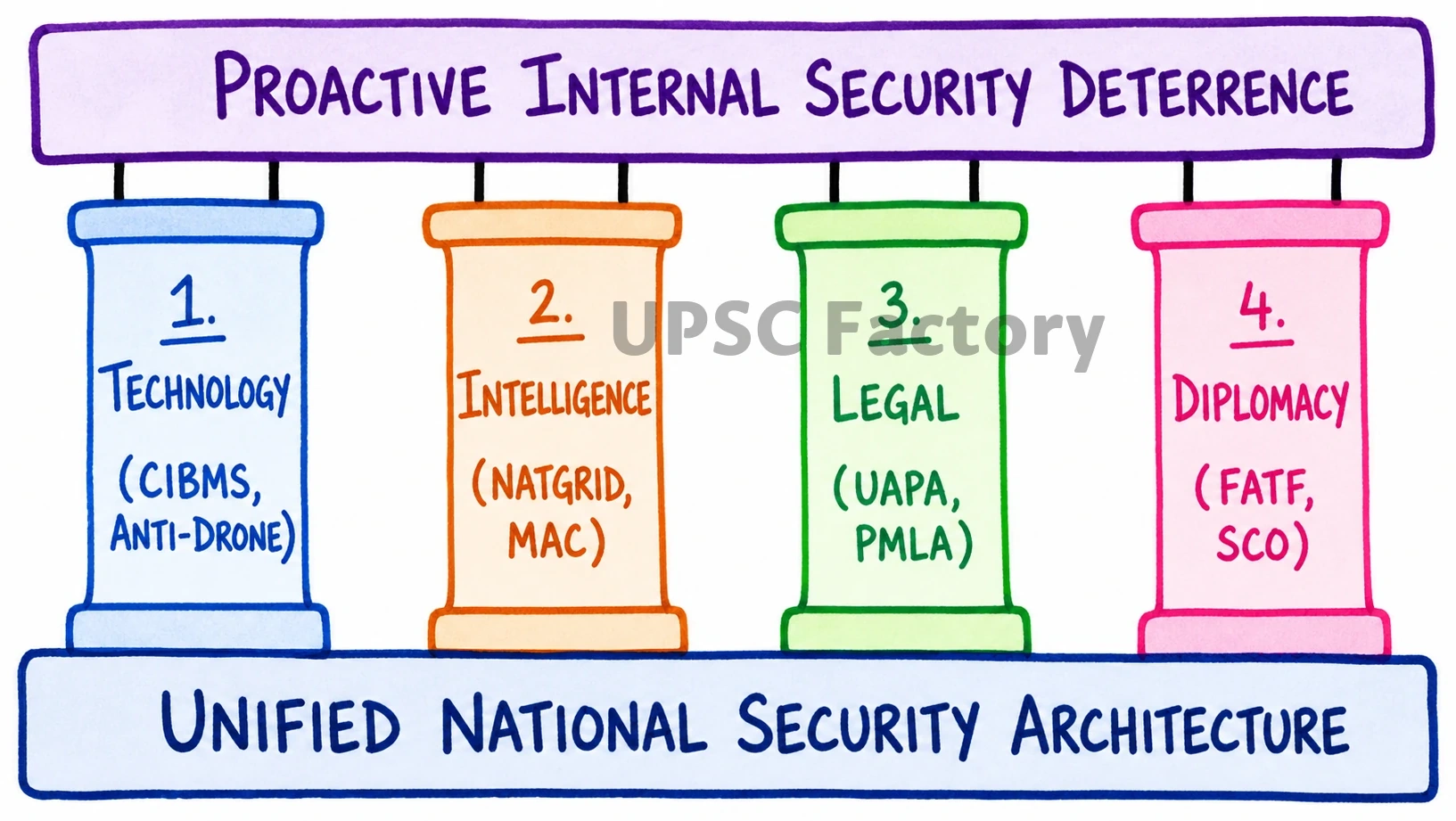
- Technological Integration: Expedite the Comprehensive Integrated Border Management System (CIBMS) and deploy localized anti-drone technologies.
- Institutional Intelligence: Fully operationalize NATGRID, strengthen the Multi-Agency Centre (MAC), and expand National Investigation Agency (NIA) jurisdictions.
- Legal Fortification: Stringently enforce UAPA and the Prevention of Money Laundering Act (PMLA) to choke terror financing nodes.
- Cyber Resilience: Finalize the National Cyber Security Strategy, mandate critical infrastructure audits, and upgrade CERT-In’s offensive capabilities.
- Diplomatic Offensive: Leverage multilateral forums like FATF, SCO, and the UN to economically and diplomatically isolate terror-sponsoring states.
- Border Integration: Execute the Vibrant Villages Programme to economically integrate border populations and prevent demographic alienation.
Transitioning from reactive defense to proactive deterrence requires integrating these measures under a unified national security architecture, as envisioned by the Kargil Review Committee.