Model Answer:
Swami Vivekananda’s quote underscores the universal Law of Reciprocity, emphasizing that our emotions and actions inevitably return to us, shaping our moral reality.
1. Philosophical Essence: The Cycle of Karma
- Law of Cause and Effect: Emotions act as seeds producing identical fruits, ensuring a cyclical return of energy (Karma).
- The Golden Rule: Aligns with Kant’s Categorical Imperative, advocating that we must treat others exactly as we wish to be treated.
- Psychological Impact: Hatred acts as a self-consuming emotional poison, whereas radiating love cultivates inner peace and moral elevation.
2. Contemporary Relevance in Governance and Society
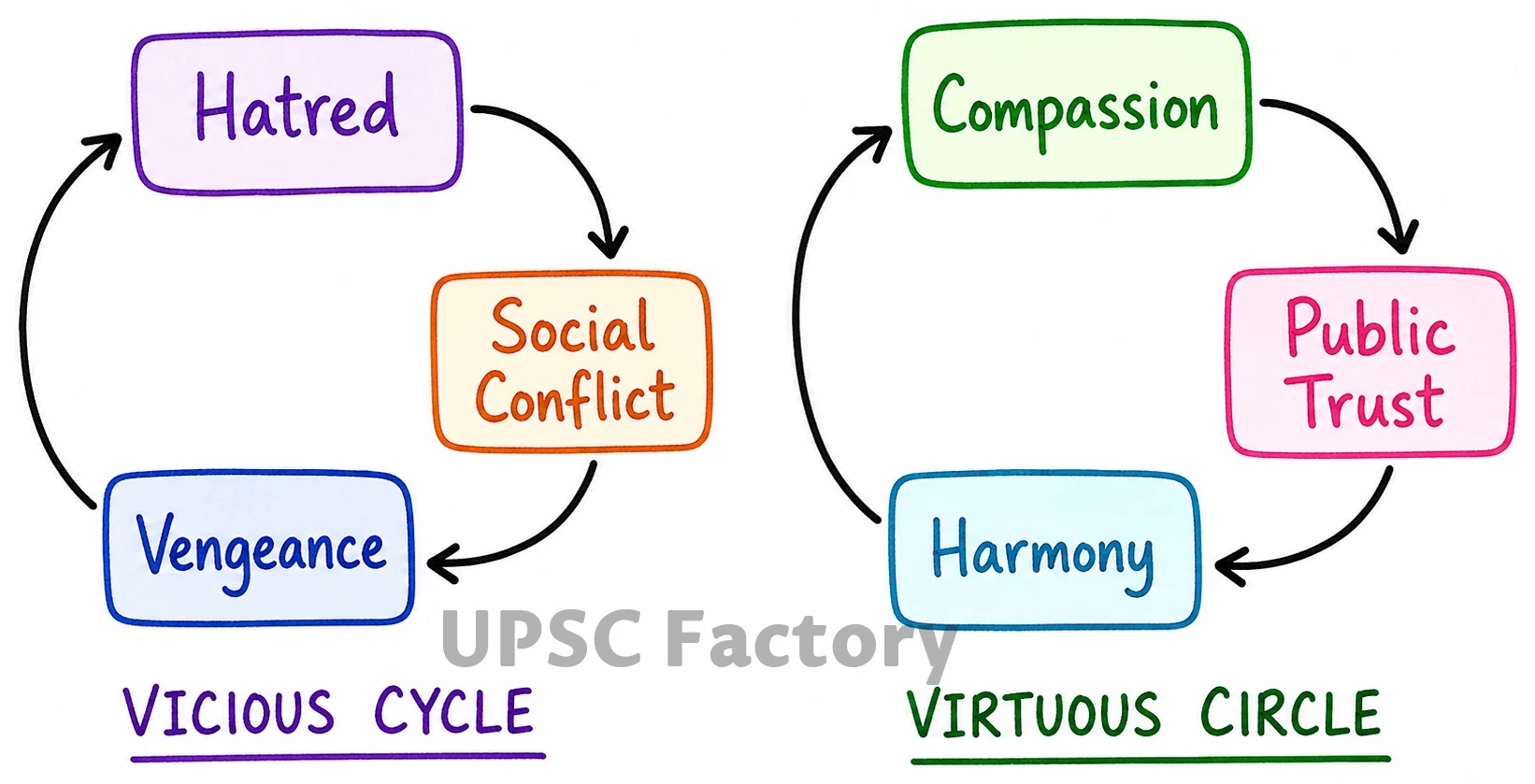
- Restorative Justice: Compassion and forgiveness break generational chains of vengeance (e.g., Nelson Mandela’s Truth and Reconciliation Commission).
- Communal Harmony: Countering social polarization with active fraternity builds resilient, united communities (e.g., peace-building via Mohalla Committees).
- Empathetic Administration: Civil servants projecting empathy generate reciprocal public trust, enhancing cooperative governance and social capital.
- Emotional Intelligence: Consciously regulating destructive emotions like anger or hatred ensures objective, citizen-centric decision-making.
Embracing this philosophy transforms human interactions from vicious cycles of retaliation into virtuous circles of compassion, laying the foundation for an ethical, peaceful society.