Model Answer:
Rapid digitalization in governance, education, and healthcare enhances efficiency but triggers severe ethical dilemmas surrounding equity, privacy, and systemic justice.
1. General Ethical Issues in Online Methods
- Data Privacy Violations: Monetization or breach of sensitive health/personal data without genuine informed consent (Puttaswamy Judgment).
- Accountability Deficits: “System glitches” and automated approvals blur human responsibility in administrative decision-making.
- Erosion of Empathy: Dilution of the human connection and compassion in teaching and telemedicine (violating the Principle of Non-maleficence).
2. Ethical Concerns for Vulnerable Sections
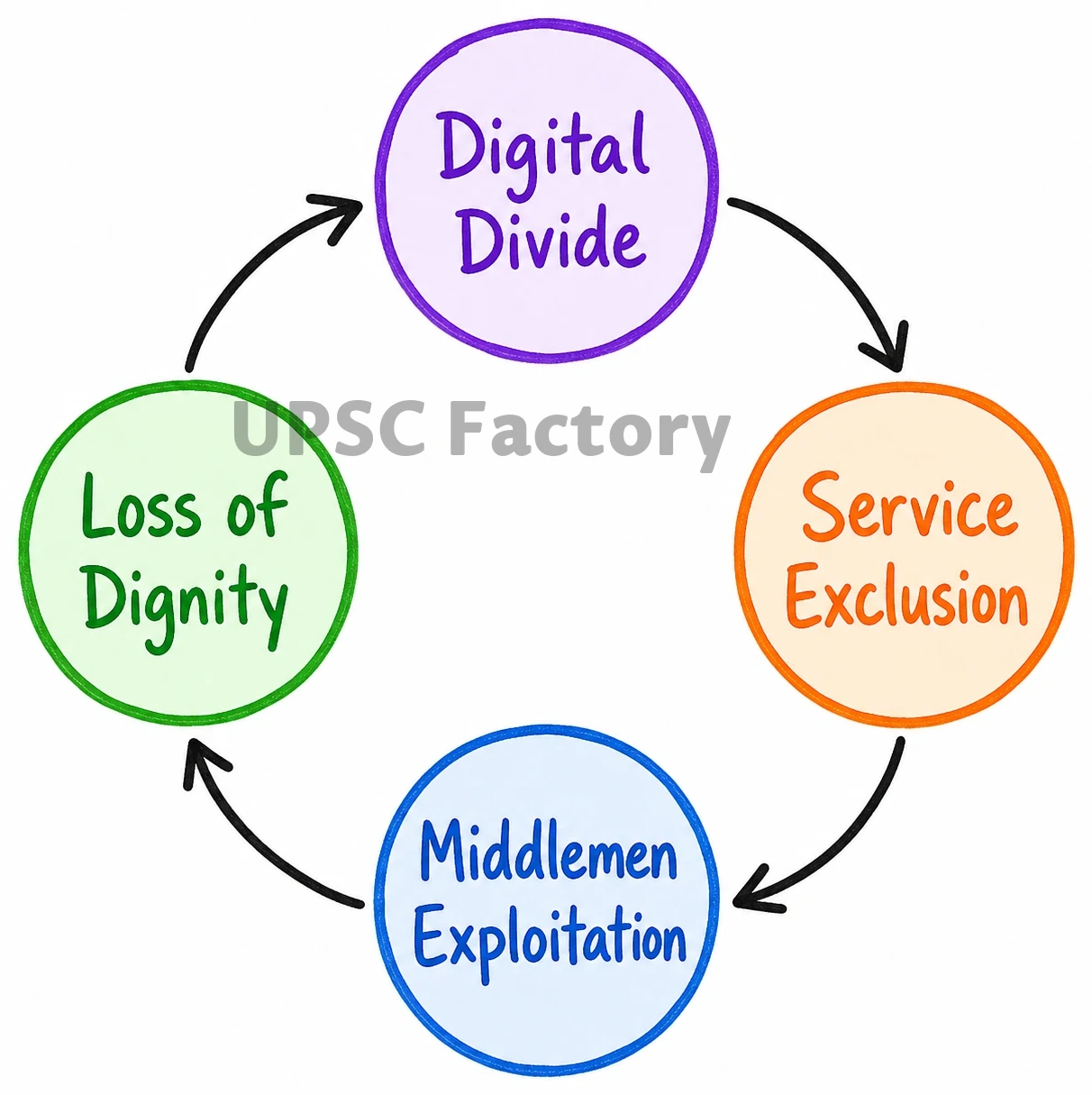
- The Digital Divide: Unequal access to devices/internet denies basic public services, violating constitutional equality (Article 14).
- Educational Inequity: Poor and rural students are systematically denied a level playing field, breaching the Right to Education (Violation of Rawlsian Justice).
- Healthcare Marginalization: The elderly, disabled, and illiterate struggle to access critical portals due to complex interfaces (e.g., CoWIN, e-Sanjeevani).
- Exploitation & Loss of Dignity: Forced reliance on tech-savvy middlemen leaves marginalized groups vulnerable to financial extortion.
True e-governance must embody “Digital Antyodaya,” ensuring technology operates as an inclusive enabler of justice rather than an exclusionary barrier for the marginalized.