Model Answer:
India’s state-level bicameral system features the Legislative Council (Vidhan Parishad) as the upper house, designed to ensure deeper deliberation and check hasty regional legislations.
Constitutional Provisions for Establishment
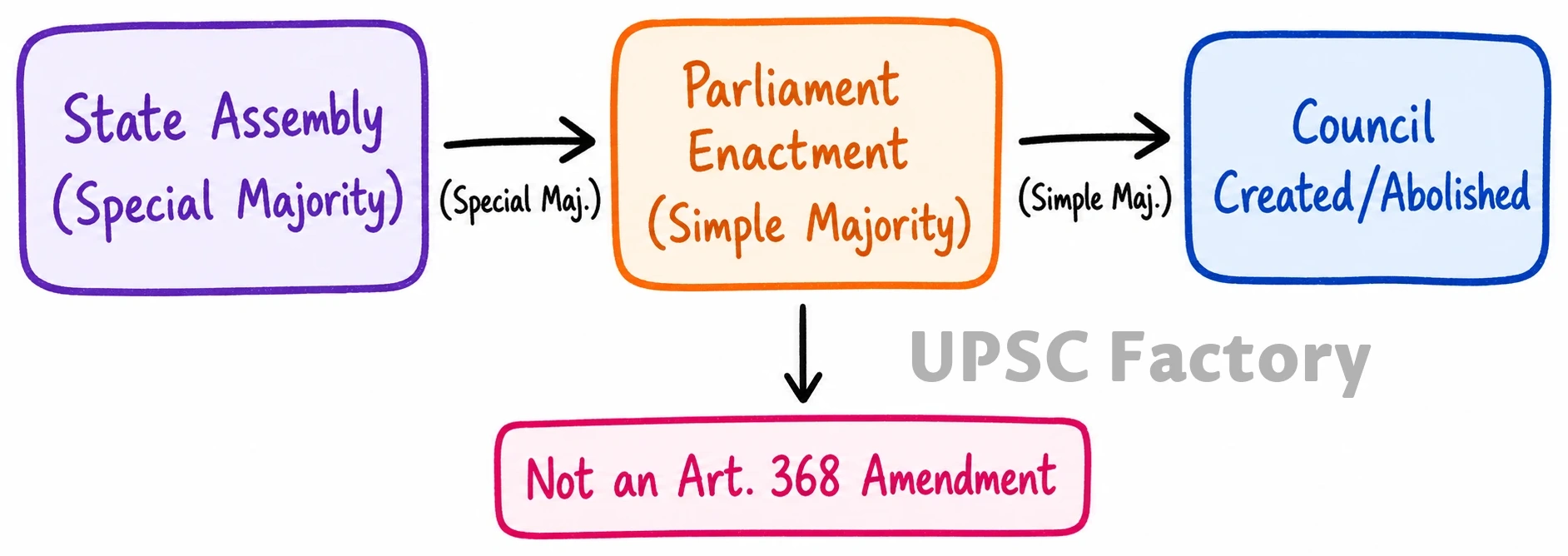
- Article 169 (Creation/Abolition): A State Assembly must pass a resolution by a special majority, followed by Parliamentary enactment via a simple majority (not considered an Article 368 amendment).
- Article 171 (Composition Limit): Total strength is capped at one-third of the State Assembly’s size, with a minimum threshold of 40 members.
- Electoral College Formulation: Members are indirectly elected: 1/3rd by local bodies, 1/3rd by MLAs, 1/12th by graduates, and 1/12th by teachers.
- Gubernatorial Nomination: The Governor nominates 1/6th of members from fields like literature, science, art, cooperative movement, and social service.
Current Status and Illustrations
- Active Presence: Currently, only 6 states operate with Councils (Uttar Pradesh, Bihar, Maharashtra, Karnataka, Andhra Pradesh, Telangana).
- Political Ambiguity: Utility is often dictated by political convenience rather than systemic need (e.g., Andhra Pradesh passing an abolition resolution in 2020 but later withdrawing it; West Bengal and Odisha recently seeking creation).
Review of Working: Utility vs. Limitations
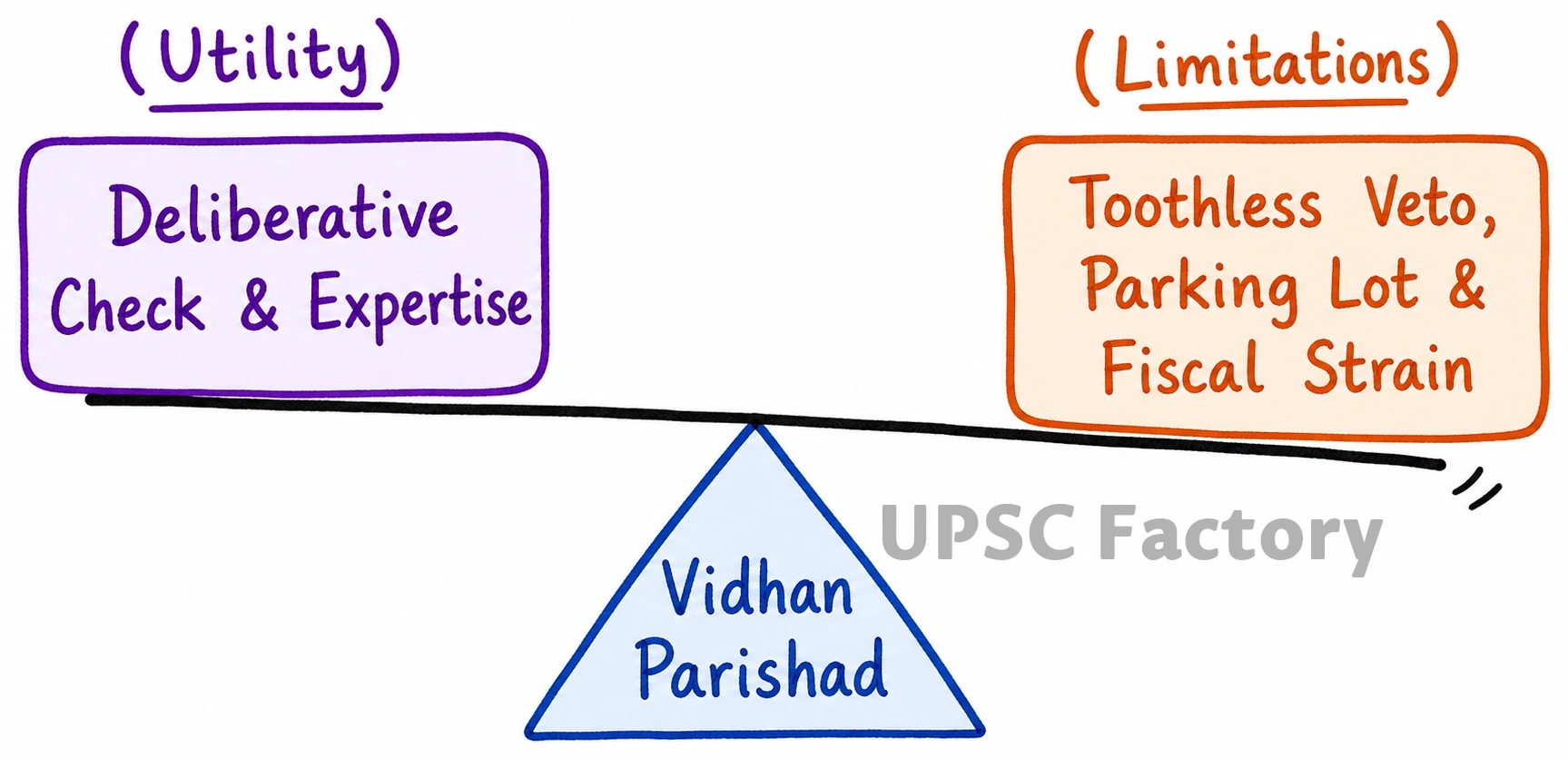
- Deliberative Check: Acts as a revising chamber, enabling a sober “second thought” on populist or rushed bills.
- Domain Expertise: Accommodates non-political specialists in policymaking via the nomination route.
- Toothless Veto: Fundamentally a delaying chamber; can stall ordinary bills for a maximum of 4 months and money bills for just 14 days.
- Political Parking Lot: Frequently misused to rehabilitate electorally defeated politicians or pacify intra-party dissenters.
- Fiscal Strain: Creates a recurring administrative and financial burden on the state exchequer without commensurate legislative output.
A consensus-based “National Policy on Upper Houses,” as recommended by the Parliamentary Standing Committee, is essential to standardize their creation and ensure they function as genuine deliberative forums.