Model Answer:
Formed post-Abraham Accords, I2U2 (India, Israel, UAE, USA) is a geoeconomic minilateral, often dubbed the “West Asian Quad,” focusing on collaborative non-traditional security.
Strategic and Economic Synergies within I2U2
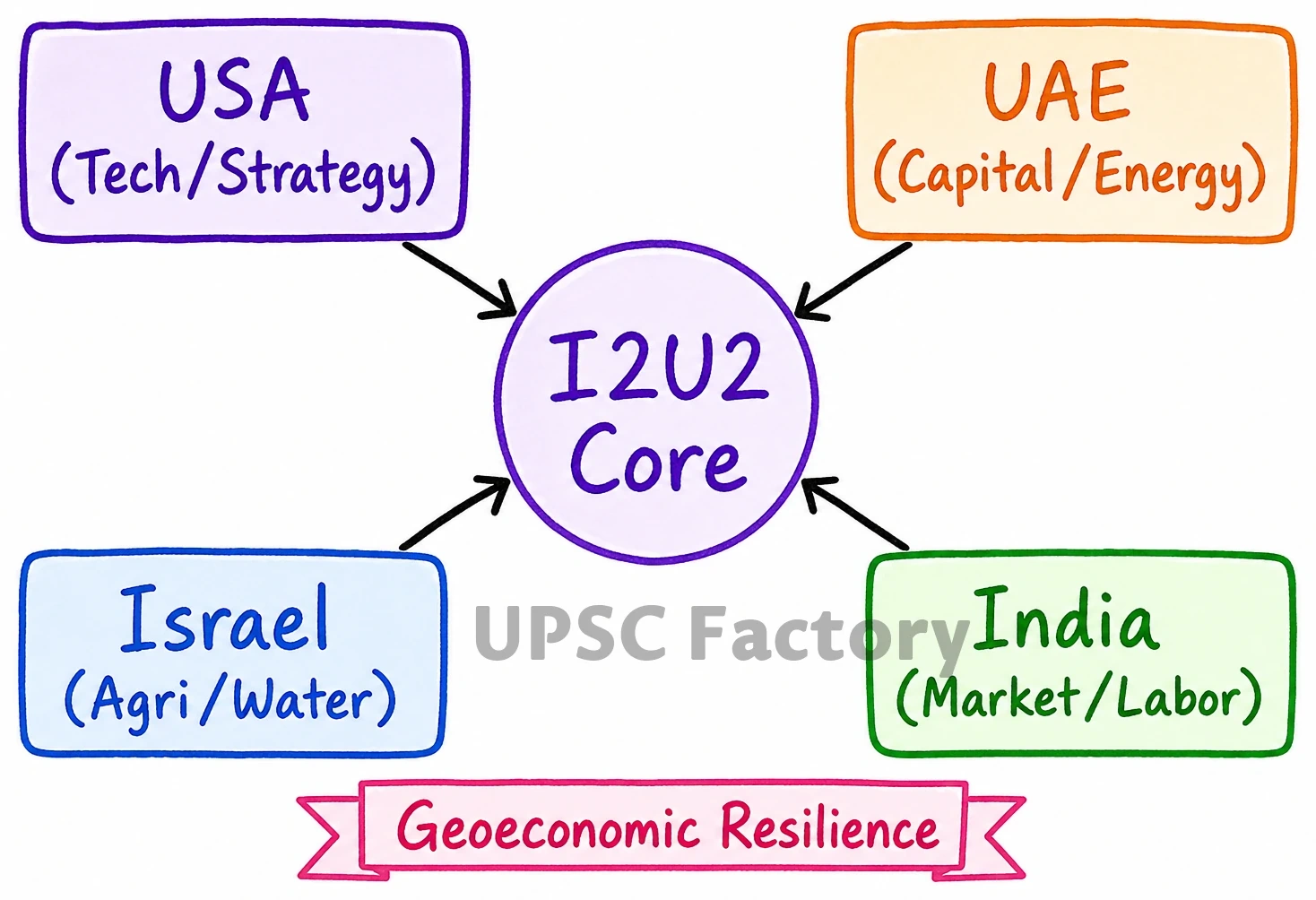
- Tech-Capital-Market Synthesis: Integrates US/Israeli technological prowess and UAE’s sovereign capital with India’s massive market and human resources.
- Food Security Architecture: Enables mega-investments to secure supply chains ($2 billion UAE funding for integrated food parks in India).
- Green Energy Transitions: Fosters joint climate action through technology transfer (300 MW hybrid renewable energy project in Gujarat).
- Non-Traditional Security Focus: Synergizes cross-border capabilities in six core areas: water, energy, transportation, space, health, and food security.
Transformation of India’s Global Geopolitical Positioning
- Elevated West Asian Role: Transitions India from a passive energy buyer to an active geoeconomic architect in the Middle East.
- Validation of De-hyphenation Policy: Demonstrates India’s diplomatic maturity in simultaneously engaging Arab nations (UAE) and Israel without zero-sum constraints.
- Champion of Minilateralism: Cements India’s strategy of leveraging issue-based, agile coalitions to bypass paralyzed multilateral institutions.
- Counterweight to Chinese Hegemony: Provides a transparent, cooperative alternative to China’s expanding Belt and Road Initiative (BRI) footprint in West Asia.
- Expanded Indo-US Strategic Theater: Broadens the Indo-US partnership beyond the Indo-Pacific into a unified, strategic vision for the Western Indian Ocean.
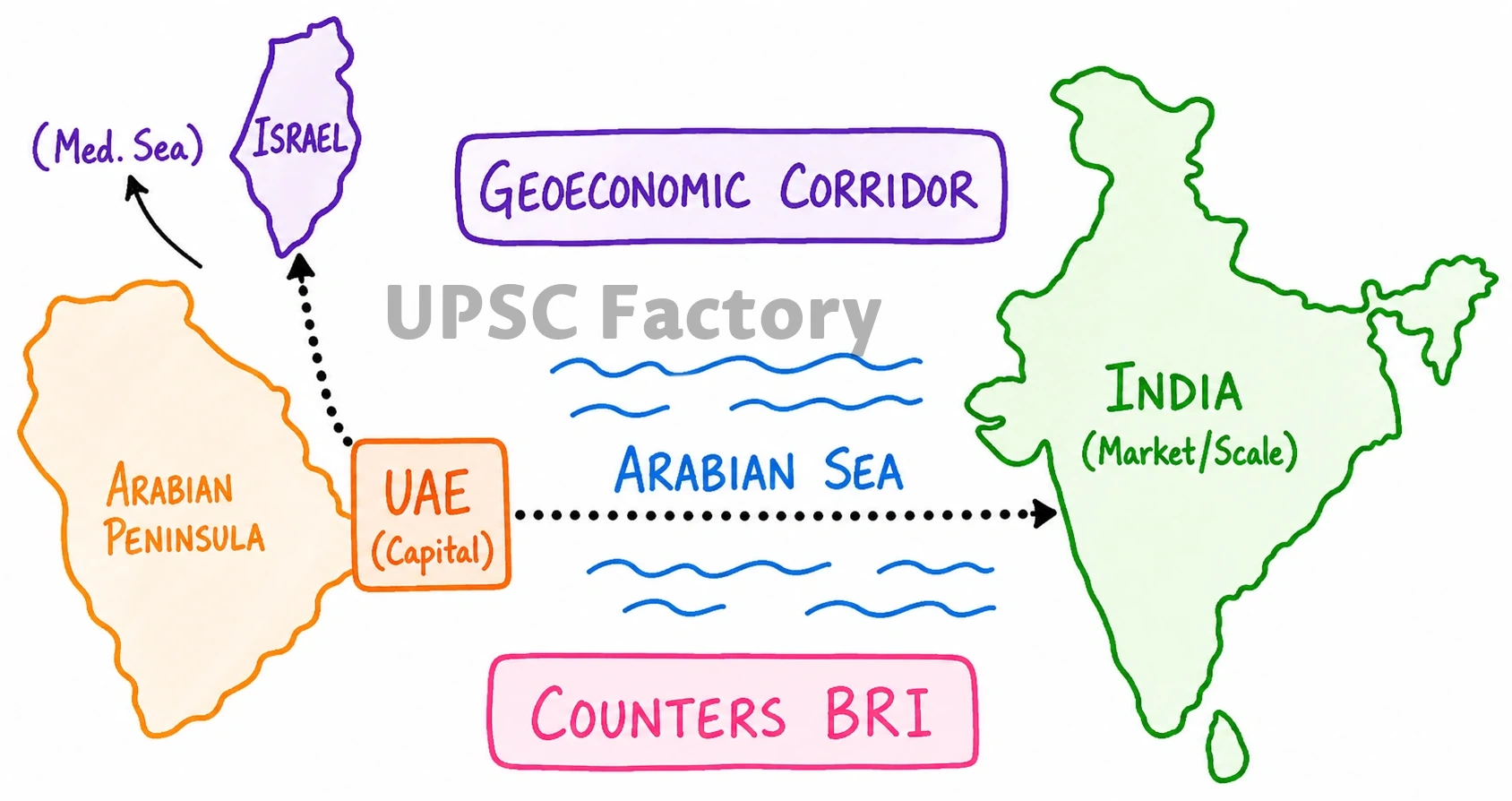
- Diaspora & Remittance Security: Institutionalizes regional stability, safeguarding the socio-economic interests of nearly 9 million Indian expatriates in the Gulf.
I2U2 represents a paradigm shift in India’s foreign policy, leveraging pragmatic minilateralism to secure strategic depth, assert regional leadership, and build geoeconomic resilience in a multipolar world.