Model Answer:
The British East India Company’s (EIC) consistent victories against formidable Indian armies stemmed from a combination of superior institutional modernization, financial stability, and tactical discipline.
1. EIC’s Institutional & Military Superiority
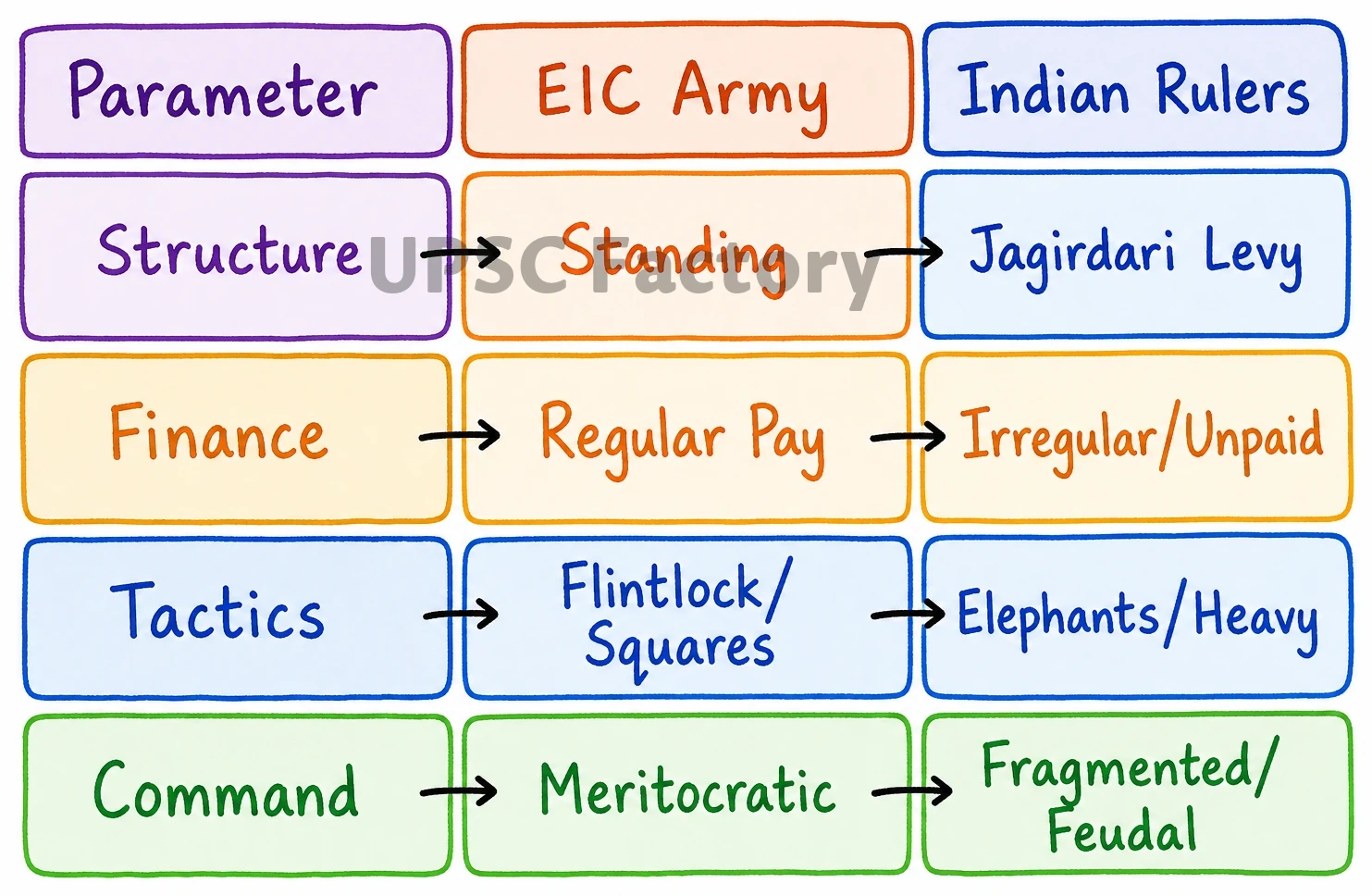
- Financial Stability: Regular salary payments built immense loyalty among sepoys, contrasting with the irregular pay by Indian rulers.
- Tactical & Technological Edge: Widespread deployment of advanced weaponry (flintlock muskets) and superior tactical formations (European infantry squares).
- Meritocratic Leadership: Highly capable, professional commanders (Robert Clive, Hector Munro) led rigorously drilled, permanent standing armies.
- Naval Supremacy: Undisputed maritime control ensured uninterrupted supply lines and rapid troop reinforcements.
2. Inherent Flaws in Indian Armies & Polity
- Feudal Military Structure: Indian armies relied on decentralized Jagirdari levies that severely lacked unified command and standardized training.
- Fragmented Polity: Constant internal regional rivalries allowed the EIC to forge opportunistic alliances and isolate enemies.
- Vulnerable Loyalties: Unpaid troops and diplomatic treachery frequently undermined Indian rulers from within (Battle of Plassey, 1757).
- Strategic Stagnation: Over-reliance on heavy, static elements like war elephants failed against agile European artillery (Battle of Buxar, 1764).
Ultimately, the EIC’s military success was not merely a martial victory, but the triumph of a modern, organized corporate-military state over a declining, fragmented feudal order.