Model Answer:
The Presidential elections in India (Article 54) and France (Article 7) reflect their divergent constitutional frameworks, specifically tailored for a parliamentary democracy versus a semi-presidential system.
Comparative Election Procedures
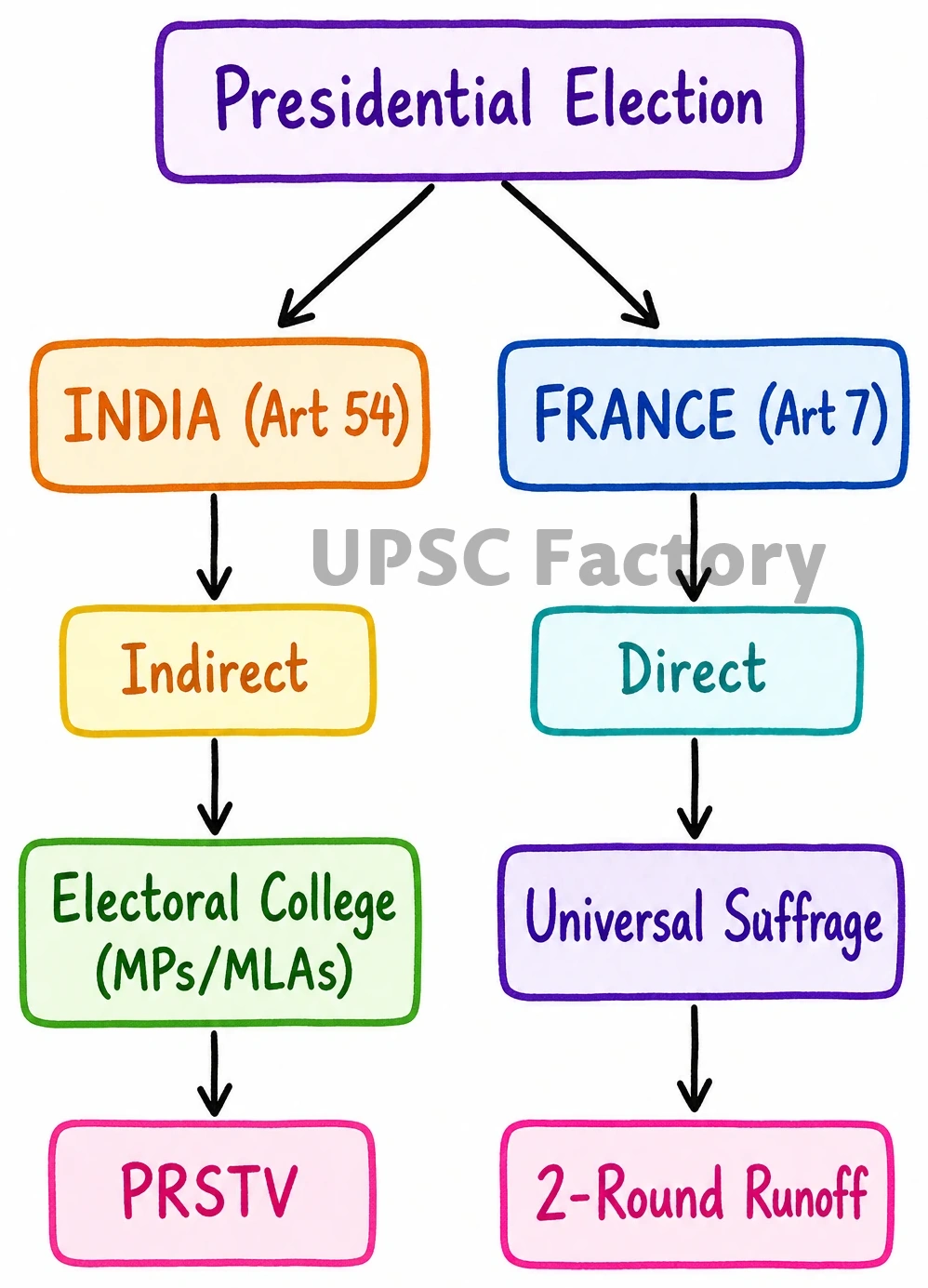
- Electorate and Mechanism:
- India (Indirect): Elected by an Electoral College comprising elected MPs and MLAs (Article 54).
- France (Direct): Elected directly by the citizens through universal adult suffrage.
- Voting System:
- India (PRSTV): Uses Proportional Representation by Single Transferable Vote (Article 55), ensuring victory by a specific quota.
- France (Two-Round Runoff): Uses a majoritarian runoff. If no candidate secures an absolute majority (>50%) in round one, the top two contest a second round (e.g., Macron vs. Le Pen, 2022).
- Weightage and Representation:
- India (Federal Parity): Vote value of MLAs/MPs is mathematically weighted based on state population, ensuring federal balance.
- France (Unitary Mandate): One citizen equals one vote, reflecting a purely national, centralized mandate.
Critical Assessment of the Mechanisms
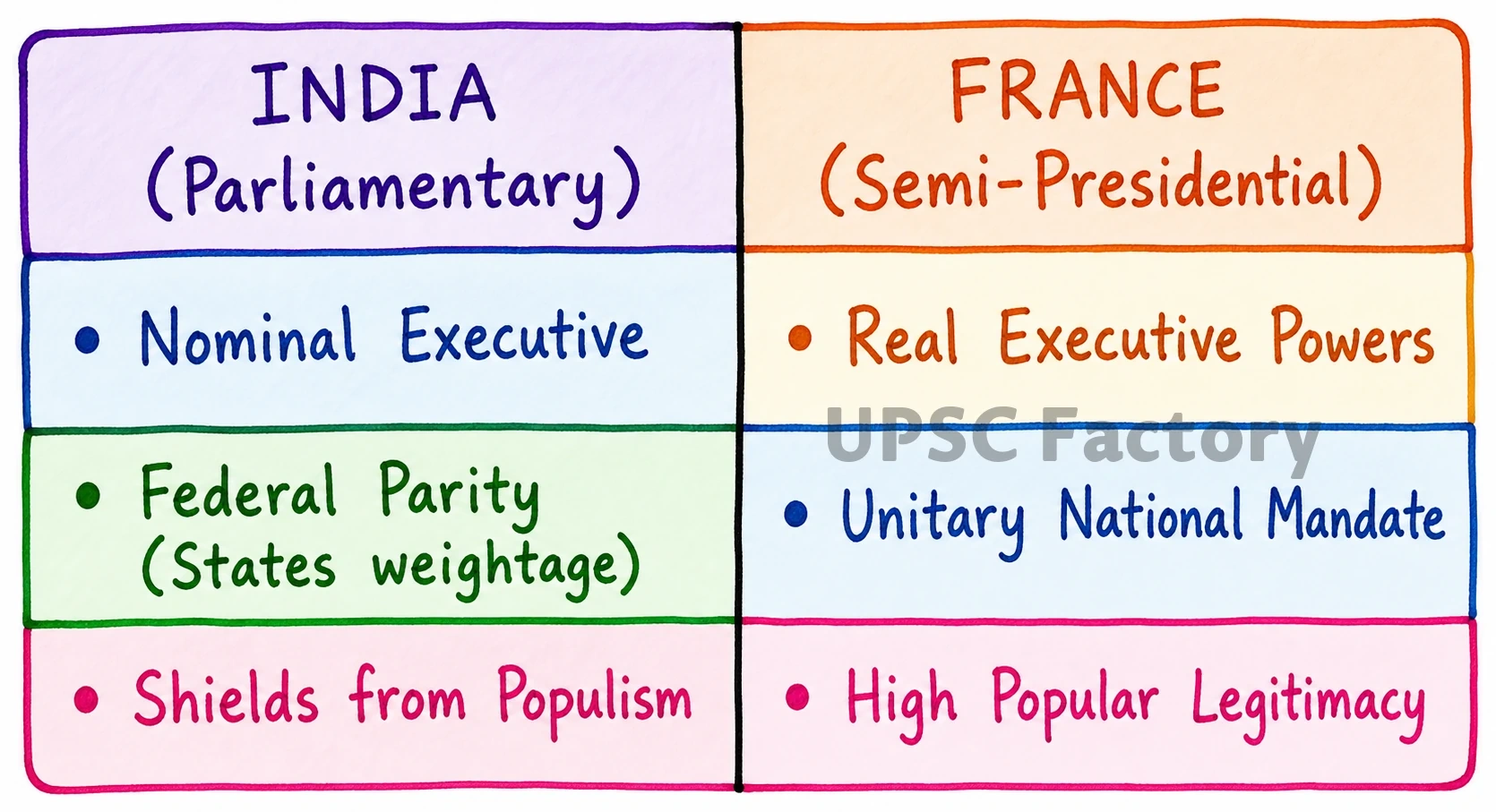
- Constitutional Rationale & Power Dynamics:
- India’s indirect election prevents the creation of a rival power center to the Prime Minister, suiting a nominal executive.
- France’s direct election provides massive democratic legitimacy, necessary for a President wielding real executive and veto powers.
- Systemic Stability vs. Populism:
- India’s Electoral College insulates the highest office from populist pressures and avoids the massive cost of a nationwide direct election.
- France’s two-round runoff prevents mandate fragmentation, forcing political consensus in the second round to defeat extreme factions.
- Federal vs. National Focus:
- India’s formula explicitly protects state-level demographic representation, reinforcing cooperative federalism.
- France’s mechanism treats the nation as a single constituency, prioritizing unified national leadership over regional diversity.
Ultimately, India’s indirect, proportional method sustains parliamentary supremacy and federal harmony, whereas France’s direct runoff ensures the popular legitimacy required for a strong, decisive executive.