Model Answer:
Good governance represents the ethical exercise of political, economic, and administrative authority to manage public affairs transparently, ensuring justice and maximum public welfare.
1. Principles of Good Governance
Guided by the World Bank’s 8 Pillars and the 2nd ARC, its core ethical premises include:
- Accountability & Transparency: Open public decision-making and strict answerability.
- Responsiveness & Efficiency: Timely, optimal utilization of resources for service delivery.
- Equity & Inclusiveness: Protecting vulnerable sections without discrimination or bias.
2. Impact of e-Governance on Beneficiaries
E-governance translates these principles into SMART (Simple, Moral, Accountable, Responsive, Transparent) administration:
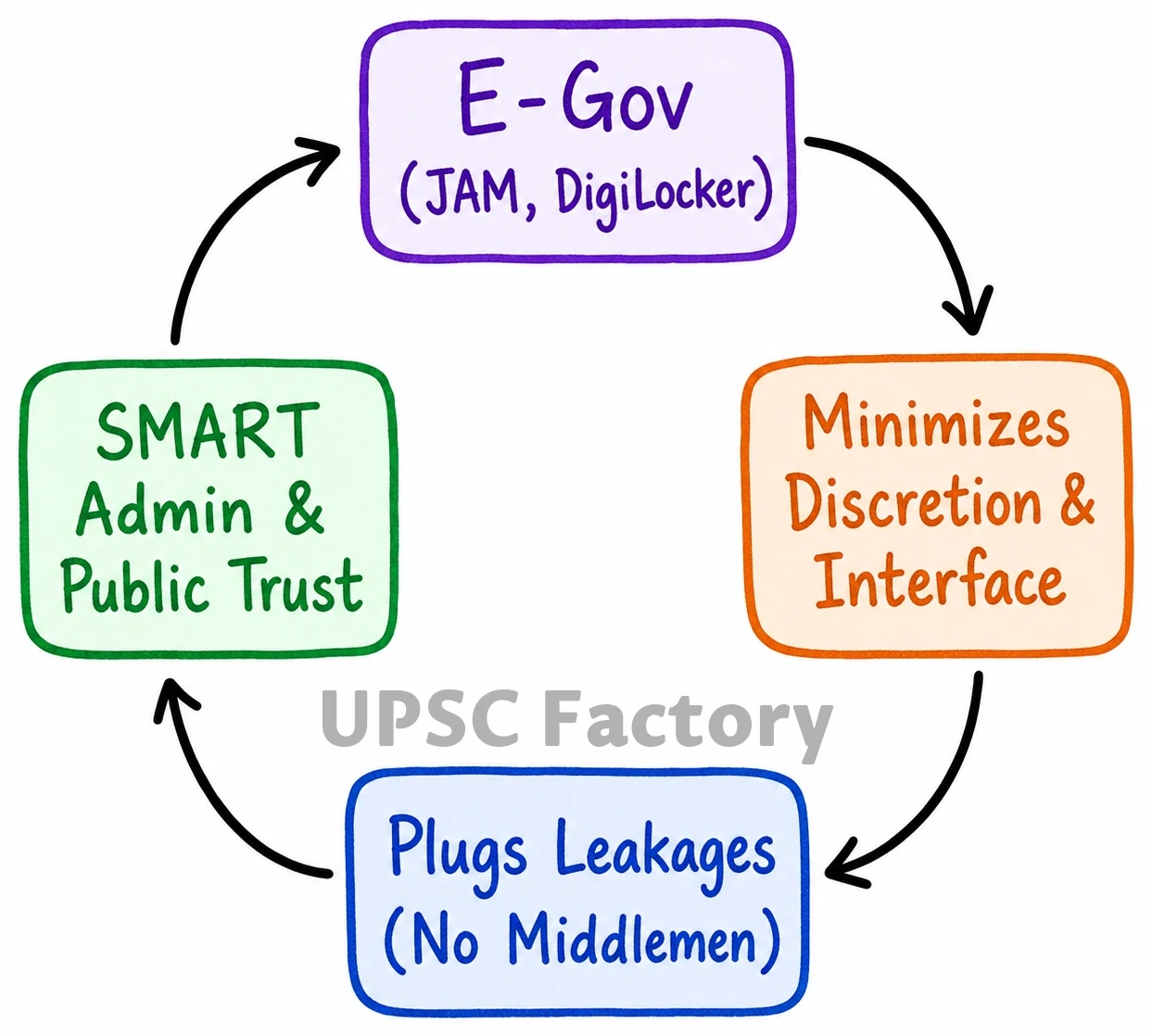
- Plugging Leakages: Direct benefit transfers eliminate middlemen, ensuring exact socio-economic targeting (JAM Trinity for PM-KISAN).
- Accessibility & Convenience: Remote access to essential records saves time and reduces petty bribery (DigiLocker, Karnataka’s Bhoomi).
- Swift Grievance Redressal: Empowers citizens to directly escalate administrative failures to higher authorities (CPGRAMS, MyGov).
- Inclusivity Gaps: Despite successes, digital illiteracy and infrastructural deficits occasionally exclude marginalized beneficiaries (Digital Divide).
E-governance is not merely a technological upgrade but an ethical imperative. Bridging the digital divide remains critical to achieving true Antyodaya through citizen-centric, technology-driven administration.