Model Answer:
While a Code of Conduct dictates specific, enforceable rules (e.g., CCS Rules 1964), a Code of Ethics provides a broader, value-based moral compass guiding administrative discretion.
Need for a Code of Ethics
- Negative Orientation: Existing rules focus heavily on prohibitions rather than inspiring proactive public service values.
- Discretionary Blind-spots: Purely legal frameworks fail to guide modern ethical dilemmas lacking explicit statutory precedents.
Proposed Model for Code of Ethics
Aligning with the 2nd ARC (10th Report) and the Draft Public Service Bill 2006, the model should include:
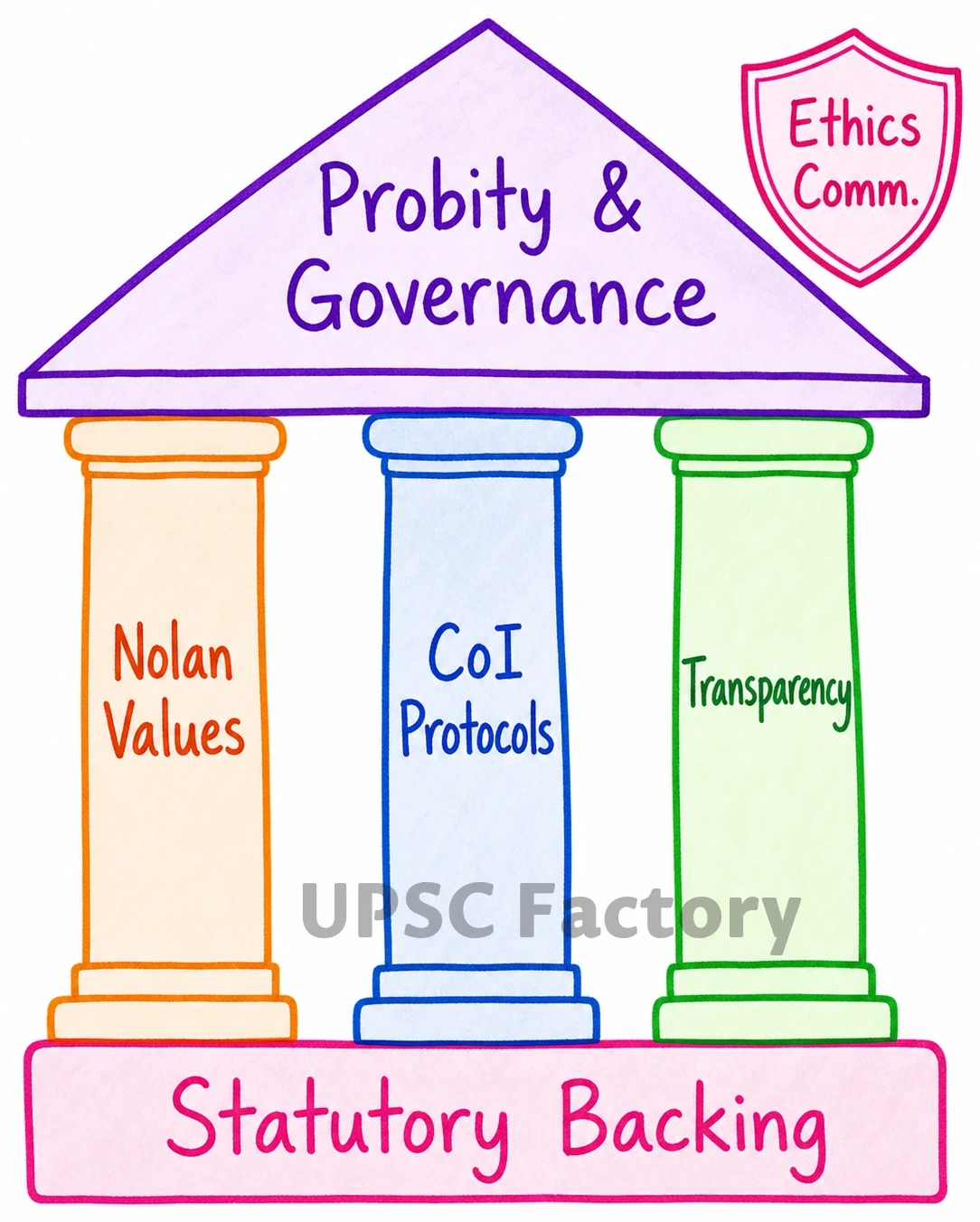
- Statutory Backing: Institutionalize ethical benchmarks through parliamentary legislation to ensure binding commitment.
- Value-Based Foundation: Formally adopt the Nolan Principles (Objectivity, Integrity, Leadership) alongside constitutional morality.
- Conflict of Interest Architecture: Mandate strict recusal protocols and public declaration of private interests.
- Transparency Protocols: Enforce proactive disclosures under Section 4 of RTI, minimizing reliance on the Official Secrets Act.
- Dedicated Enforcement: Establish an independent Civil Service Authority or Ethics Commissioner (as seen in New Zealand) for counseling and oversight.
- Protection Mechanisms: Integrate robust whistleblower protection to empower ethical officers against systemic victimization.
A statutory Code of Ethics will transform public administration from a system of mere bureaucratic compliance to one driven by empathetic, morally sound good governance.