Model Answer:
Inserted under Articles 323A and 323B (42nd Amendment, Swaran Singh Committee), tribunals provide specialized, parallel dispute resolution to bypass traditional judicial bottlenecks.
Need for Administrative Tribunals vs. Court System
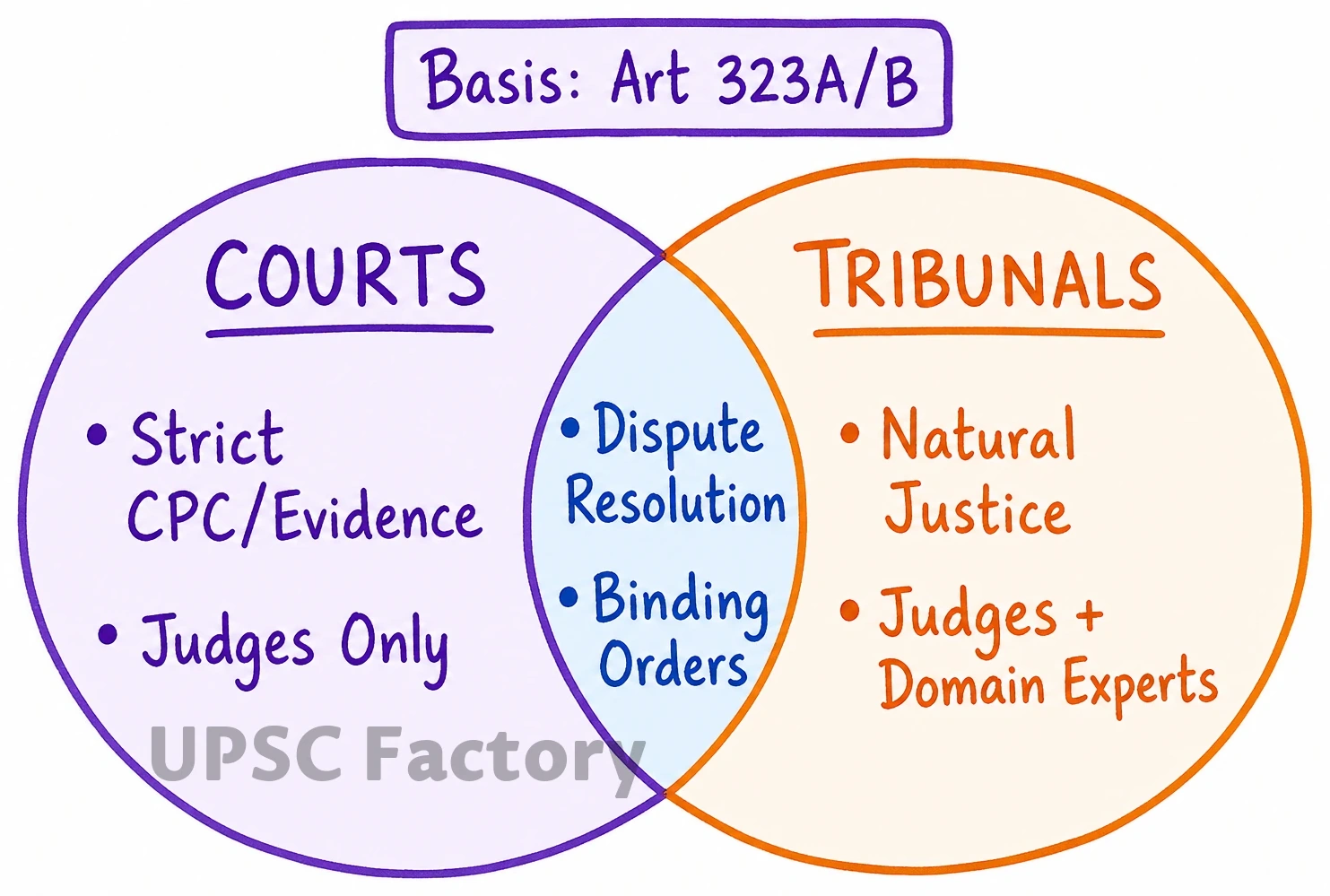
- Domain Expertise: Integrates subject-matter experts alongside judicial members for technical disputes (e.g., NGT for environment).
- Procedural Flexibility: Guided by principles of natural justice, remaining unburdened by strict CPC or Evidence Act codes.
- Decongesting Judiciary: Diverts specialized litigation, alleviating the massive backlog of regular courts.
- Cost and Speed: Ensures rapid, economically accessible, and simplified dispute resolution for citizens and administration.
Impact of Tribunal Reforms Act, 2021
- Forum Consolidation: Abolished non-essential appellate bodies (FCAT, IPAB), transferring their jurisdiction to High Courts and Commercial Courts.
- Resource Efficiency: Reduced the public exchequer’s financial burden by streamlining overlapping and underperforming jurisdictions.
- Risk of Overburdening: Re-transferring cases risks re-choking High Courts that currently lack specialized benches (e.g., Intellectual Property).
- Independence Concerns: Executive dominance in Search-cum-Selection Committees and shorter tenures raised judicial independence issues (Madras Bar Association case).
While rationalization streamlines administrative adjudication, establishing an independent National Tribunals Commission is essential to ensure infrastructural autonomy and preserve specialized justice delivery.