Model Answer:
The Speaker’s sole adjudicatory authority under the Tenth Schedule has exposed this constitutional office to partisan pressures, undermining legislative impartiality.
Vulnerabilities Under Anti-Defection Regime
- Discretionary Delays: Absence of time limits enables selective inertia, often protecting ruling-coalition defectors (Keisham Meghachandra Case, 2020).
- Conflict of Interest: Retaining active party links while functioning as a quasi-judicial tribunal breaches procedural neutrality (Kihoto Hollohan, 1992).
- Subversion of Mandates: Partisan adjudication facilitates political instability through engineered defections and weaponised resignations (Nabam Rebia Case, 2016).
Institutional Reforms for Neutrality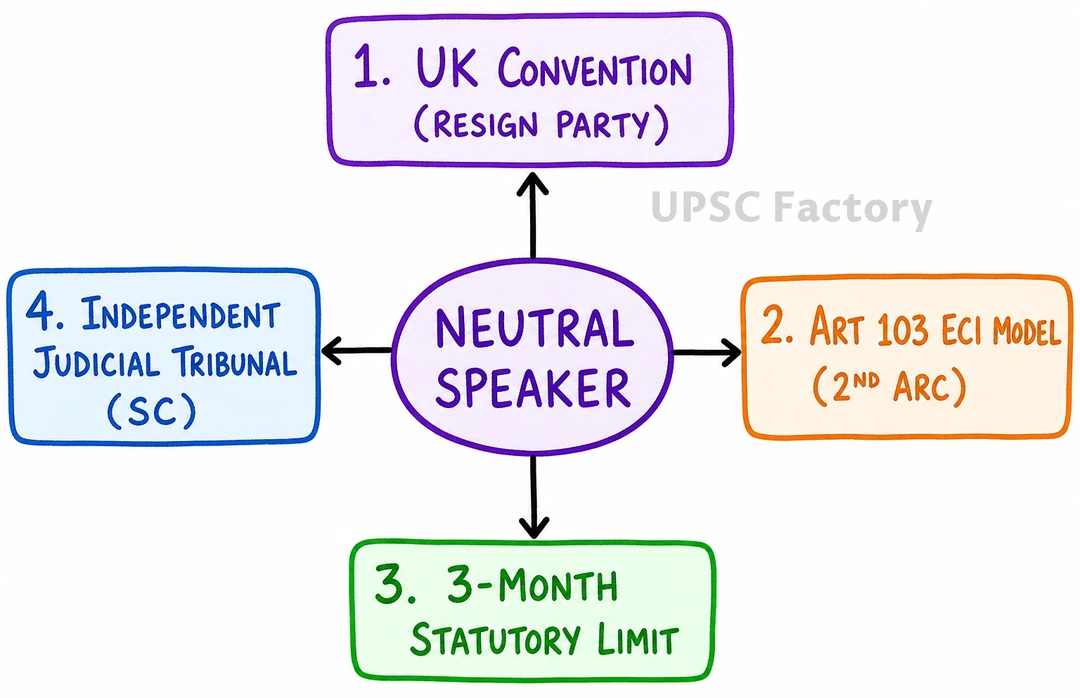
- Independent Tribunal: Transfer Tenth Schedule adjudication from the Speaker to an independent tribunal headed by retired judges (Supreme Court recommendation).
- ECI-Led Adjudication: Vest disqualification powers in the President acting on binding Election Commission advice (2nd ARC; Law Commission 255th Report).
- UK Convention: Adopt the rule of “Once a Speaker, always a Speaker”, requiring formal resignation from political party upon election.
- Statutory Timelines: Enforce a strict 3-month outer limit to decide defection petitions.
Depoliticising the Speaker’s adjudicatory role is imperative to uphold constitutional morality and preserve the integrity of a polarised Parliament.