UPSC Mains 2026 GS2 Model Answer

Q. “China’s Belt and Road Initiative (BRI) has transformed South Asia from a regional space into a theatre of great power competition.” Analyse the strategic implications of the BRI for India’s security and regional influence in South Asia.

Q. “China’s Belt and Road Initiative (BRI) has transformed South Asia from a regional space into a theatre of great power competition.” Analyse the strategic implications of the BRI for India’s security and regional influence in South Asia.

Question from UPSC Mains 2026 GS2 Paper

Model Answer: 

China’s Belt and Road Initiative (BRI) has structurally altered South Asia’s geopolitical landscape, transforming India’s historical sphere of influence into a contested arena of US-China-India strategic competition.

Strategic & Security Implications for India

  1. Sovereignty Infringement: The China-Pakistan Economic Corridor (CPEC) traverses Pakistan-occupied Kashmir (PoK), directly violating India’s territorial sovereignty.
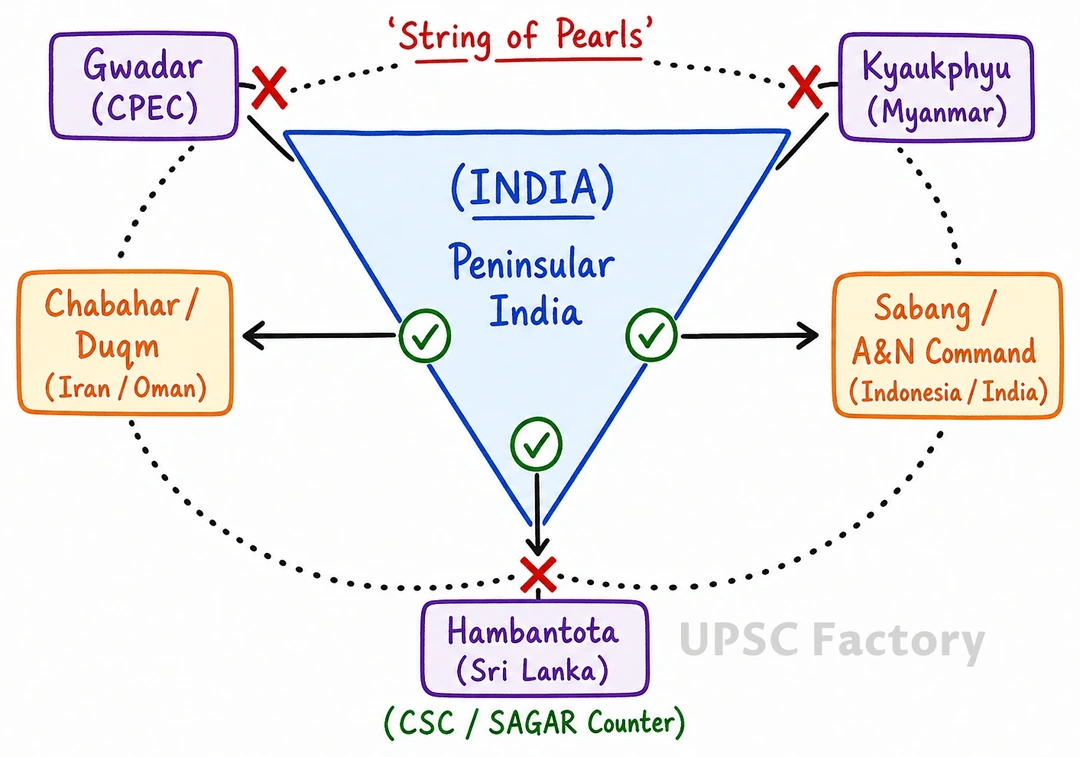
  2. Maritime Encirclement (String of Pearls): Dual-use commercial ports (e.g., Gwadar, Hambantota, Kyaukphyu) facilitate PLA Navy power projection across India’s vital Sea Lines of Communication (SLOCs).
  3. Intelligence & ISR Vulnerabilities: Frequent docking of Chinese space-tracking and research vessels (e.g., Yuan Wang-class) undermines India’s eastern and southern naval security.
  4. Continental Two-Front Dilemma: Trans-Himalayan infrastructure integration (e.g., China-Nepal Economic Corridor) accelerates PLA rapid-mobilisation capabilities along the Line of Actual Control (LAC).
Impact on Regional Influence & Great Power Dynamics

  1. Erosion of Traditional Primacy: Heavy infrastructure financing alters regional elite alignments, reducing India’s traditional diplomatic leverage (e.g., Maldives, Sri Lanka).
  2. Parallel Regional Architecture: Beijing establishes China-centric sub-regional mechanisms (e.g., China-South Asia Cooperation Forum), deliberately bypassing SAARC.
  3. Debt-Trap Vulnerabilities: Opaque loan conditionalities lead to strategic concessions, enabling long-term Chinese operational control (e.g., 99-year lease of Hambantota).
  4. Catalyst for Great Power Friction: South Asian states become battlegrounds for competing connectivity models (e.g., US Millennium Challenge Corporation (MCC) in Nepal vs. BRI).
  5. Indo-Pacific Strategic Counter-Balancing: Forces India to reinforce multi-layered deterrence via minilaterals and regional doctrines (Colombo Security Conclave, Quad, IMEC, SAGAR framework).
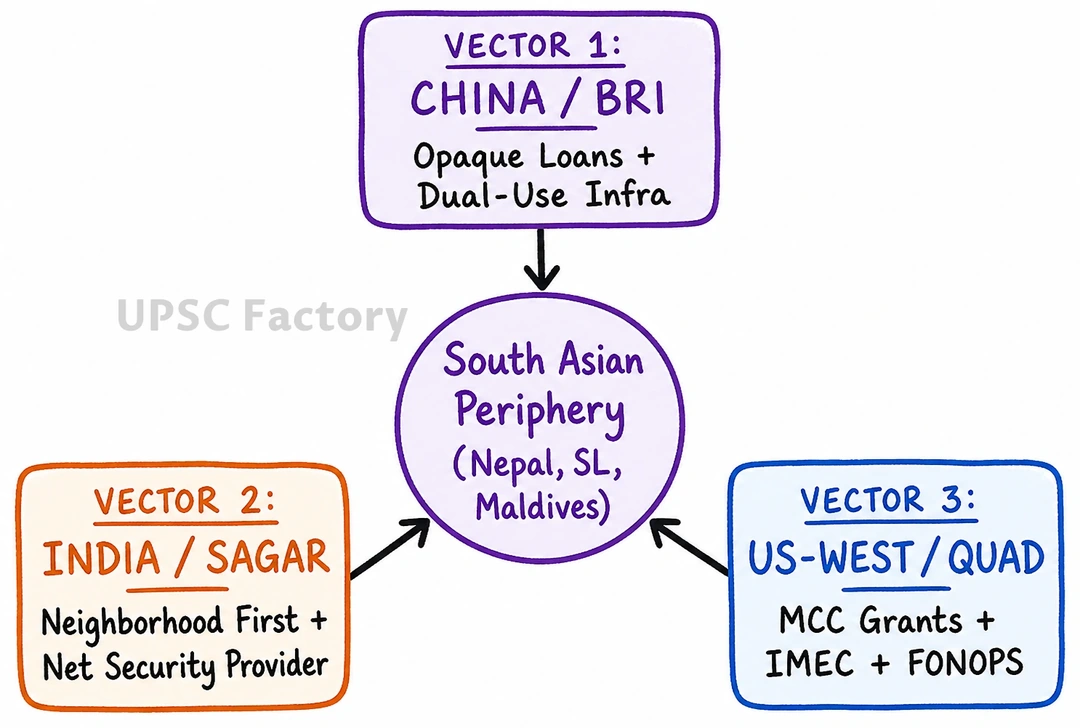

India must counter BRI-driven encirclement by fast-tracking its Neighborhood First delivery, offering transparent infrastructure alternatives, and reinforcing its net security provider role in the Indian Ocean.
Q. “China’s Belt and Road Initiative (BRI) has transformed South Asia from a regional space into a theatre of great power competition.” Analyse the strategic implications of the BRI for India’s security and regional influence in South Asia. Read More »

Q. “India’s global diaspora acts as a living bridge, as a critical economic factor and knowledge network in transforming cultural heritage into geopolitical influence and strategic leverage worldwide.” Critically examine this statement.

Q. “India’s global diaspora acts as a living bridge, as a critical economic factor and knowledge network in transforming cultural heritage into geopolitical influence and strategic leverage worldwide.” Critically examine this statement.

Question from UPSC Mains 2026 GS2 Paper

Model Answer: 

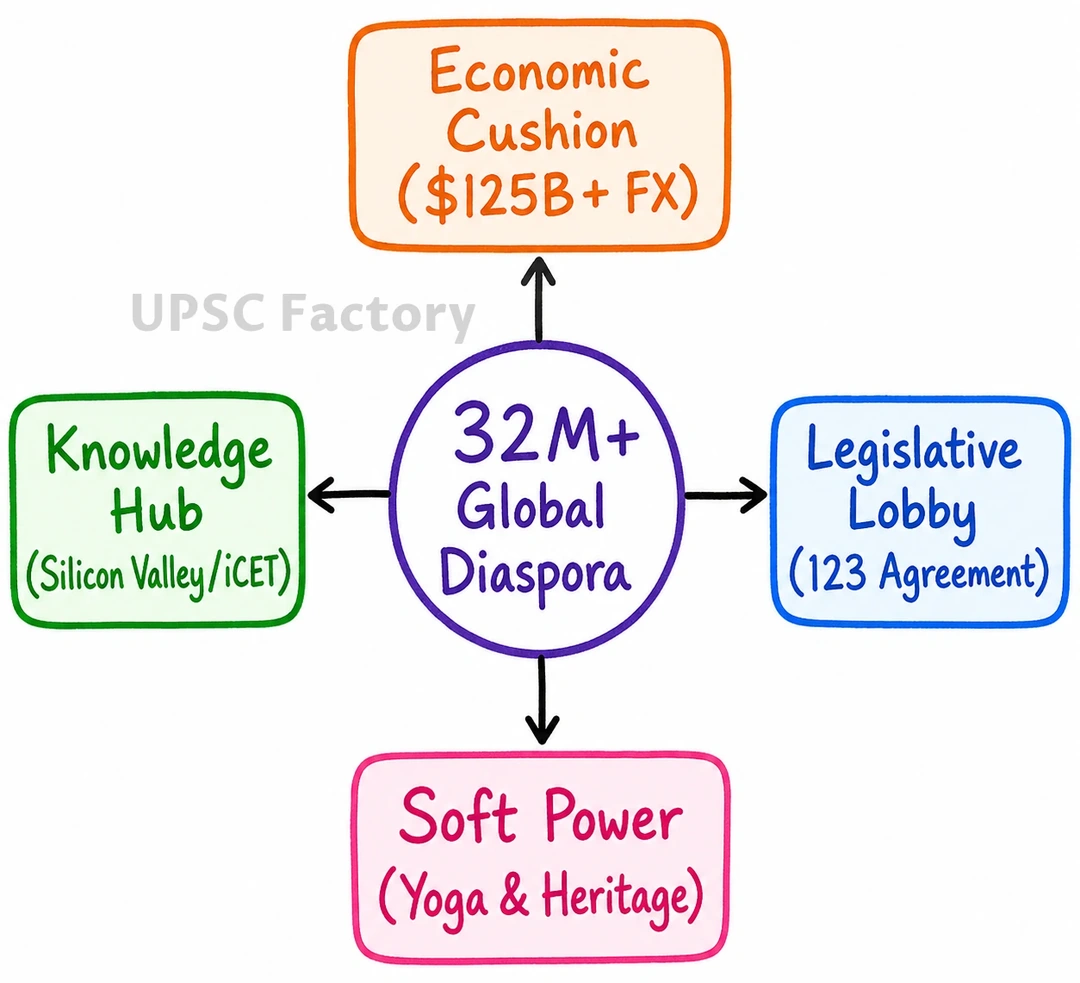
Comprising over 32 million people, India’s diaspora is the world’s largest, functioning as a strategic asset that converts cultural affinity and economic weight into formidable geopolitical leverage.

Strategic Dividends: Economic, Knowledge, and Geopolitical Vectors

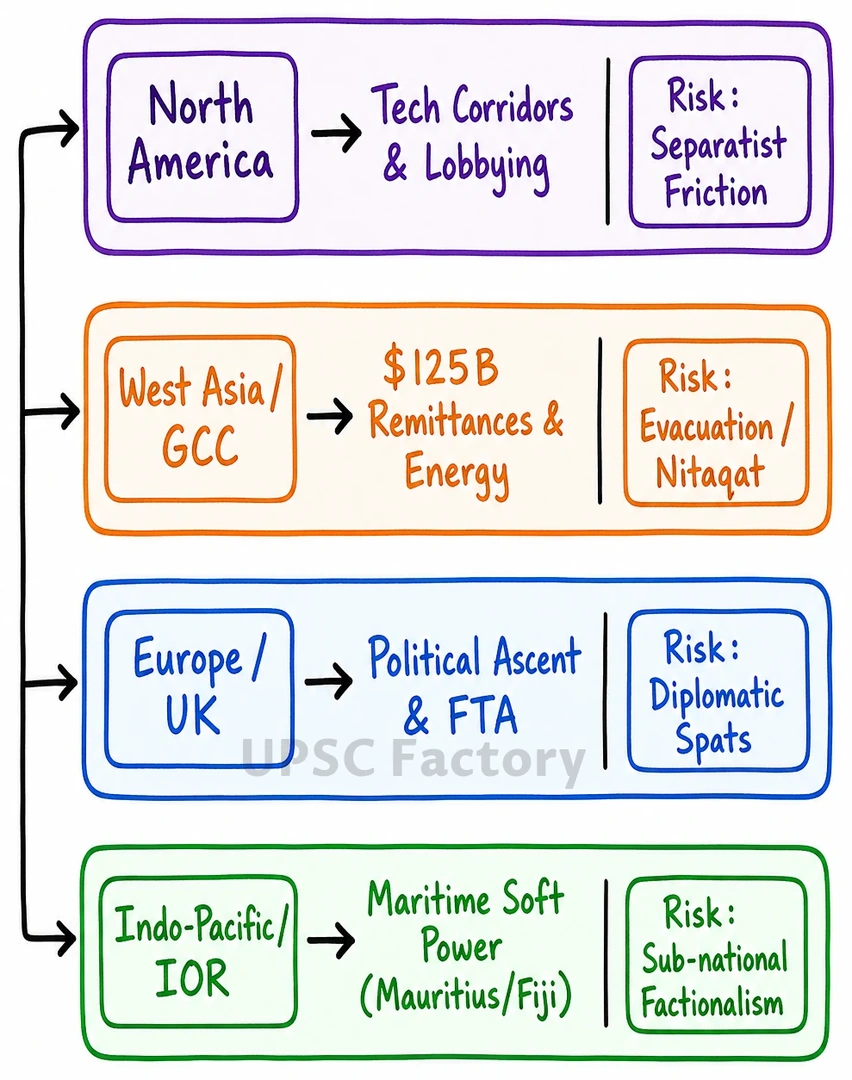
  • Economic Cushion & Capital Inflows: Generates over $125 billion in annual remittances (World Bank), stabilizing foreign exchange reserves and stimulating sovereign capital investments.
  • Knowledge Networks & Critical Tech: Diaspora leadership in Silicon Valley drives bilateral tech partnerships and high-value R&D corridors (e.g., US-India iCET initiative).
  • Legislative & Strategic Lobbying: High-income diaspora caucuses influence host-nation foreign policies in India’s favor (e.g., USINPAC mobilizing support for the 123 Civil Nuclear Agreement).
  • Soft Power to Diplomatic Goodwill: Global propagation of Indian heritage, cuisine, and cultural ethos (e.g., International Day of Yoga) enhances national branding and institutional influence.
  • Political Ascent in Host Nations: High-profile representation in host governments (e.g., UK, US, Mauritius) fosters natural institutional access and strategic alignment.

Strategic Constraints and Operational Liabilities

  • Bilateral Diplomatic Frictions: Extremist and separatist mobilization within diaspora pockets strains key inter-state relations (e.g., Khalistani activities in Canada and the UK).
  • Dual-Loyalty & Xenophobic Backlash: Diaspora political activism attracts scrutiny over foreign interference and triggers local nativist pushback (e.g., US H-1B visa curbs, Gulf Nitaqat laws).
  • Ideological & Regional Factionalism: Polarization along religious, caste, and domestic political lines fragments community cohesion, weakening unified lobbying power.
  • Evacuation & Security Liabilities: Geopolitical instability in conflict zones creates immense logistical, consular, and financial burdens on the Indian state (e.g., Operation Kaveri in Sudan, Operation Ajay in Israel).

Transforming the diaspora from a reactive asset into enduring geopolitical leverage requires institutionalizing engagement through an updated Emigration Governance Framework and proactive Track-1.5 diplomacy to safeguard national interests.

Q. “India’s global diaspora acts as a living bridge, as a critical economic factor and knowledge network in transforming cultural heritage into geopolitical influence and strategic leverage worldwide.” Critically examine this statement. Read More »

Q. Should education be treated primarily as a welfare obligation of the state or as a strategic investment for building a globally competitive, knowledge-driven nation? Critically evaluate.

Q. Should education be treated primarily as a welfare obligation of the state or as a strategic investment for building a globally competitive, knowledge-driven nation? Critically evaluate.

Question from UPSC Mains 2026 GS2 Paper

Model Answer: 

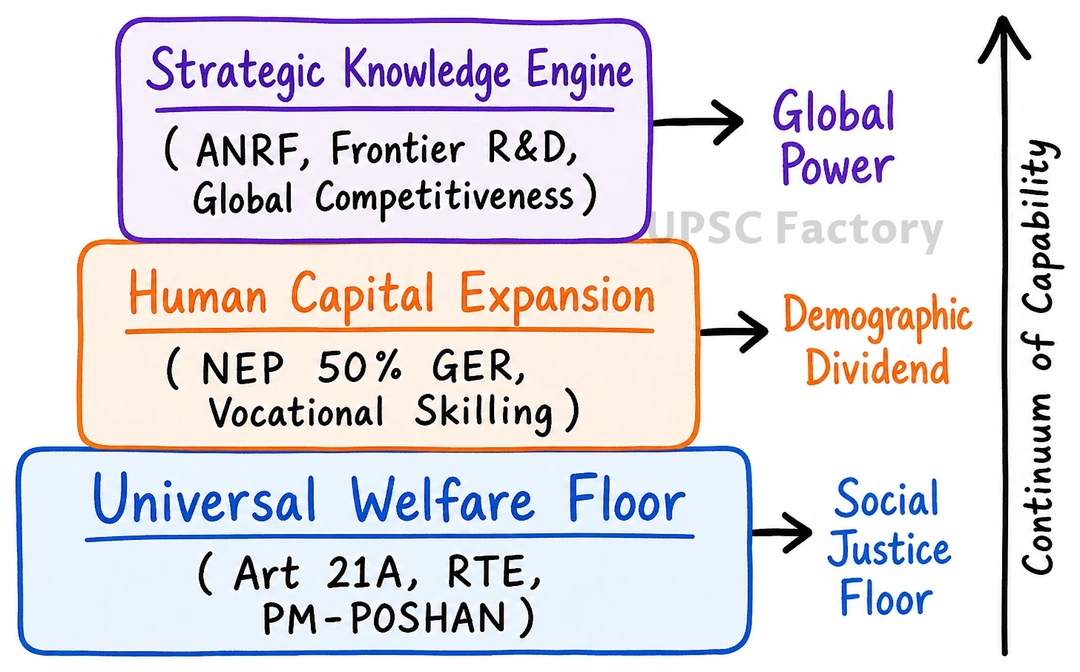
Education is not a binary policy choice; it is a developmental continuum where rights-based welfare provides the foundational equity necessary to build a strategic, knowledge-driven economy.

Welfare Obligation: Equity and Social Justice

  • Constitutional & Rights Mandate: Guarantees universal access as an enforceable fundamental right (Article 21A, RTE Act 2009, Article 45).
  • Capability Enhancement: Expands substantive freedoms, dismantling intergenerational poverty and caste-gender divides (Amartya Sen’s Capability Approach).
  • Correcting Market Failures: Prevents exclusionary commercialization by subsidizing basic schooling for vulnerable demographics (PM-POSHAN, Samagra Shiksha).
  • Democratic Deepening: Inculcates constitutional values, social cohesion, and active citizenship essential for institutional stability (Article 51A).

Strategic Investment: Global Competitiveness and Innovation

  • Demographic Dividend: Converts working-age population into high-skill human capital for Industry 4.0 (NEP 2020 target: 50% Higher Education GER by 2035).
  • Frontier Innovation & Growth: Drives patent generation, indigenous R&D, and high-tech manufacturing output (e.g., South Korea’s education-led economic leap).
  • Geopolitical Soft Power: Projects educational diplomacy, high-skill talent exports, and global research leadership (Anusandhan National Research Foundation).
  • Fiscal Multiplier: Yields long-term tax revenues and boosts total factor productivity, lowering future public welfare outlays.

Integrated Synergy: Resolving the Binary

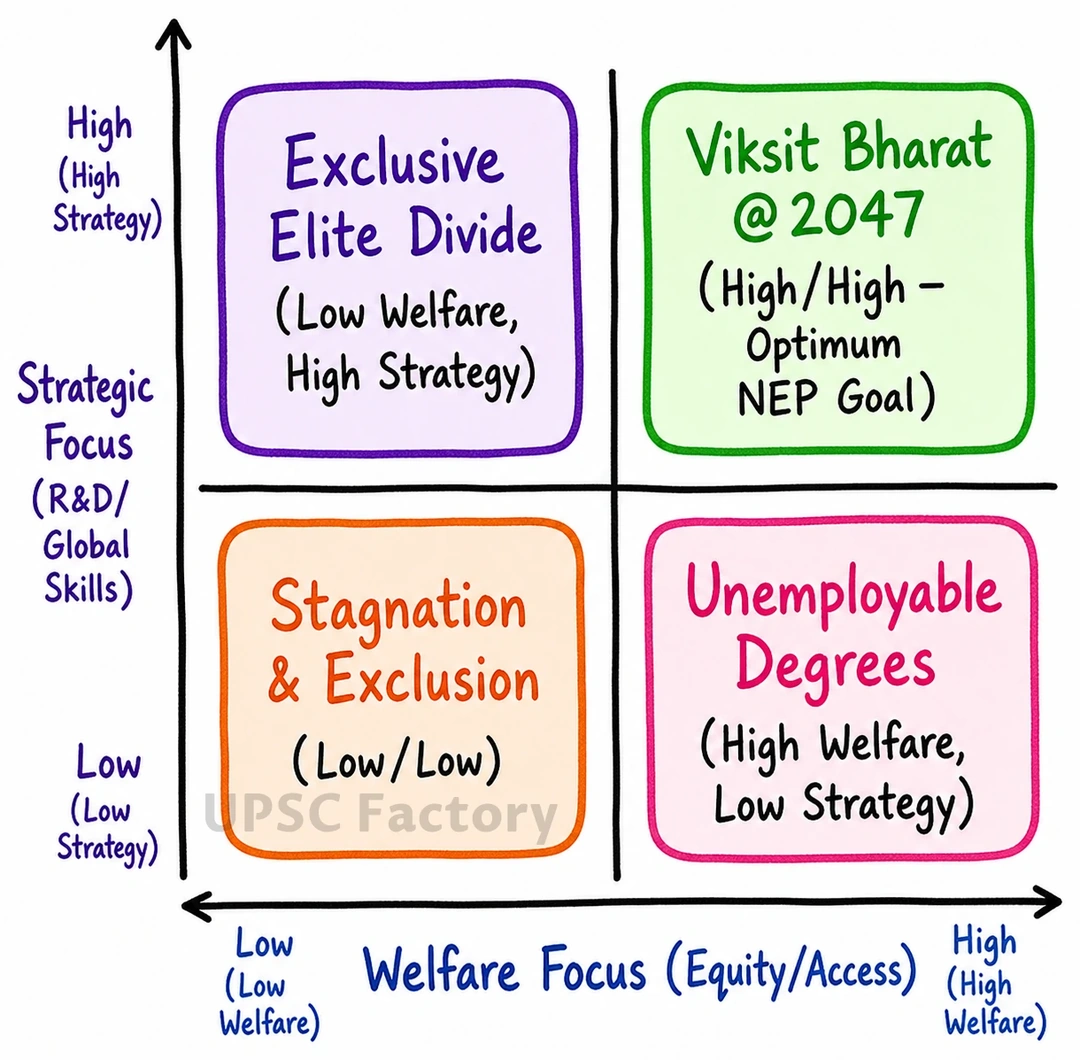
  • Interdependence: Welfare without quality creates unemployable graduates; strategic investment without equity creates stark digital and socioeconomic divides.
  • Policy Harmonization: Universal primary education must serve as an equitable welfare floor, while tertiary and technical education act as strategic growth engines via 6% GDP spending.

Integrating rights-based welfare with high-end strategic skilling is imperative to transition India from basic literacy to a globally competitive superpower for Viksit Bharat @2047.

Q. Should education be treated primarily as a welfare obligation of the state or as a strategic investment for building a globally competitive, knowledge-driven nation? Critically evaluate. Read More »

Q. Can the constitutional mandate of rights-based welfare be effectively realised in the context of non-integrated governance and minimal public investment? Examine.

Q. Can the constitutional mandate of rights-based welfare be effectively realised in the context of non-integrated governance and minimal public investment? Examine.

Question from UPSC Mains 2026 GS2 Paper

Model Answer: 

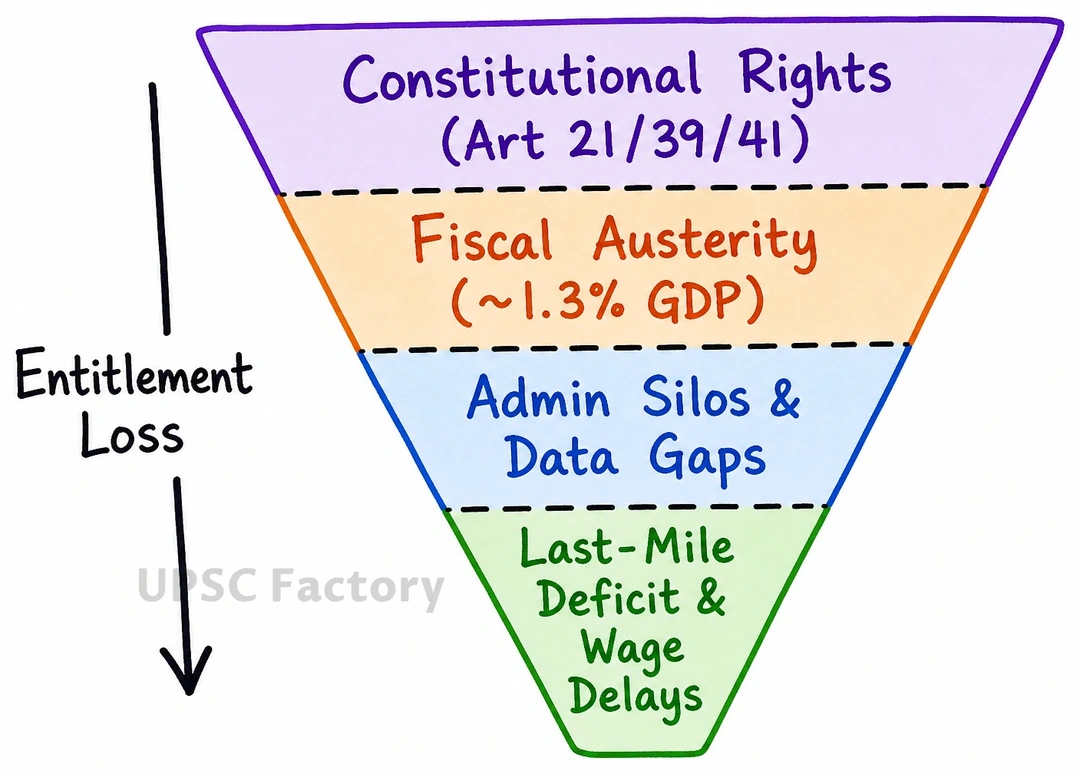
The constitutional transition from patron-state benevolence to a justiciable rights-based welfare paradigm (Articles 21, 39, 41) remains severely compromised by administrative departmentalism and chronic social-sector underfunding.

Structural Bottlenecks Undermining Rights-Based Welfare

  1. Inter-Departmental Silos: Fragmented execution dilutes multi-sectoral outcomes across interdependent indicators (e.g., POSHAN Abhiyaan convergence gaps between MoWCD, MoHFW, and Jal Jeevan Mission).
  2. Chronic Fiscal Deprivation: Inadequate public spending forces the rationing of basic rights rather than universal coverage (e.g., Public health expenditure at ~1.3% GDP vs. 2.5% target under NHP 2017).
  3. Exclusion via Data Fragmentation: Unintegrated beneficiary databases cause high targeting errors and arbitrary denials (e.g., Static 2011 Census quotas under NFSA excluding over 100 million eligible citizens).
  4. Compromised Statutory Justiciability: Fiscal constraints directly violate legally mandated operational timelines (e.g., Repeated MGNREGA wage delays violating Section 3 due to Ministry of Finance budget-clearing bottlenecks).
  5. Administrative Overhead & Duplication: Parallel delivery channels create institutional friction and squander scarce budgetary resources (e.g., Multiple overlapping maternity benefit guidelines across state and central schemes).

Strategic Imperatives for Integrated Delivery & Fiscal Expansion

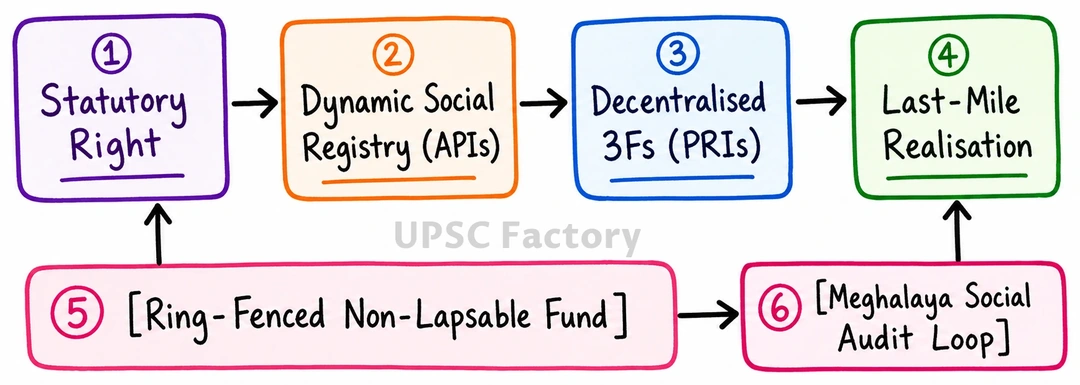
  1. Whole-of-Government Architecture: Institutionalize unified social security delivery systems to dismantle administrative silos (e.g., 2nd ARC’s single-window delivery mechanism; PM GatiShakti-style social registry).
  2. Fiscal Ring-Fencing: Protect welfare allocations through dedicated, non-lapsable statutory funding mechanisms (e.g., Replicating Madhyamik and Uchchatara Shiksha Kosh for healthcare and social security).
  3. Dynamic Social Registries: Deploy interoperable, API-linked public digital infrastructure to automate inclusion and enable portable entitlements (e.g., Madhya Pradesh’s Samagra portal; One Nation One Ration Card).
  4. Decentralized Convergence (3Fs): Devolve Funds, Functions, and Functionaries to Panchayati Raj Institutions for integrated bottom-up planning (Article 243G; 15th Finance Commission tied grants).
  5. Institutionalized Social Accountability: Mandate independent social audits to enforce justiciable rights and rectify last-mile delivery leakages (e.g., Statutory framework under the Meghalaya Social Audit Act).

Transforming abstract constitutional mandates into lived entitlements requires transitioning from schematic fragmentation and fiscal austerity toward an integrated, well-resourced state capacity grounded in constitutional morality.

Q. Can the constitutional mandate of rights-based welfare be effectively realised in the context of non-integrated governance and minimal public investment? Examine. Read More »

Q. “Transparency and accountability in governance are not about controlling corruption but about creating the trust of stakeholders in the policy process by following the Rule of Law and Participatory Governance.” Comment.

Q. “Transparency and accountability in governance are not about controlling corruption but about creating the trust of stakeholders in the policy process by following the Rule of Law and Participatory Governance.” Comment.

Question from UPSC Mains 2026 GS2 Paper

Model Answer: 

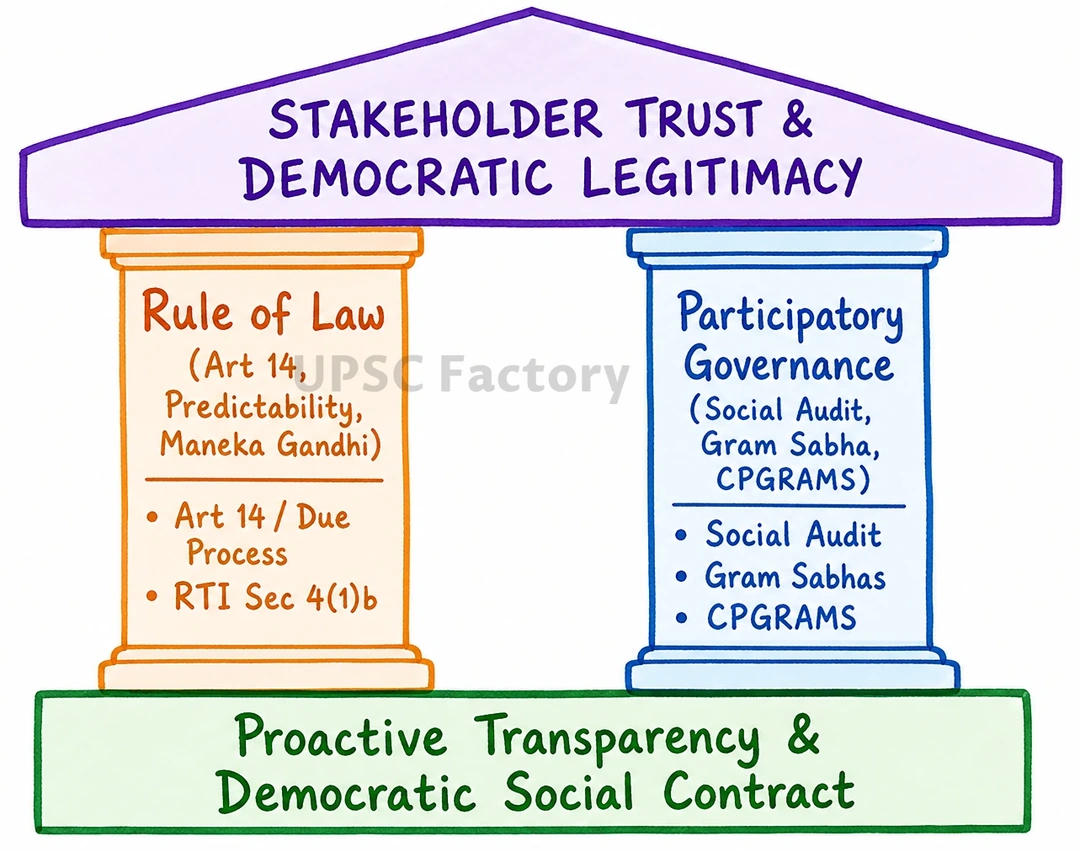
Transparency and accountability transcend punitive anti-corruption mechanisms; they constitute the democratic social contract’s bedrock, proactively generating institutional trust, policy predictability, and citizen-state synergy.

Beyond Anti-Corruption: Cultivating Stakeholder Trust

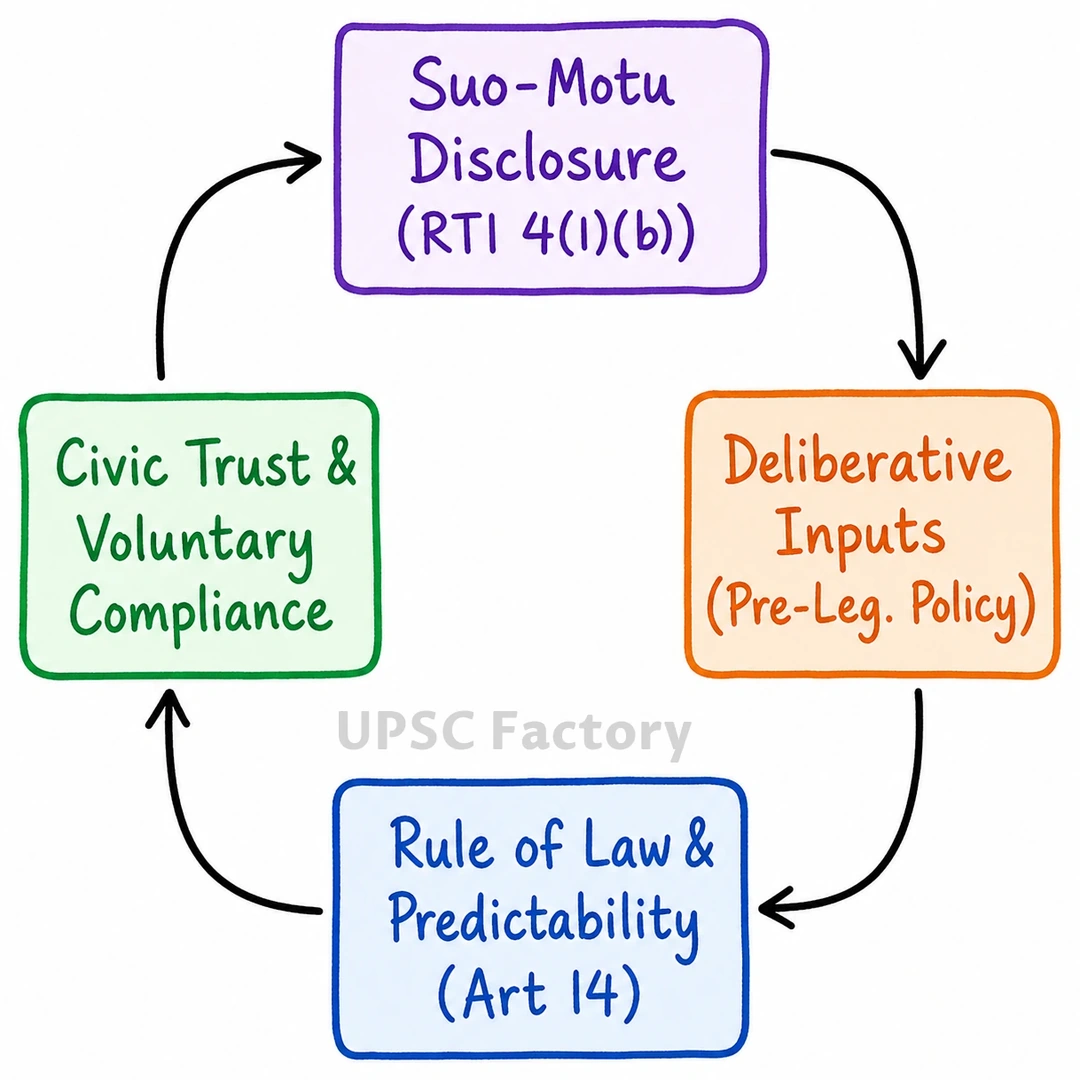
  1. Eliminating Information Asymmetry: Suo-motu disclosures demystify executive intent, preventing public mistrust and civic friction (RTI Act Sec 4(1)(b)).
  2. Driving Voluntary Compliance: Open decision-making fosters institutional credibility, replacing coercive enforcement with civic cooperation and self-regulation.
  3. Enhancing Democratic Legitimacy: Transparent criteria for policy trade-offs build stakeholder consensus during contentious reforms (2nd ARC: Ethics in Governance).
  4. Transforming Citizen Status: Replaces bureaucratic paternalism, empowering citizens as legitimate co-owners of governance rather than passive welfare recipients.

Anchoring Trust via Rule of Law & Participatory Governance

  1. Procedural Non-Arbitrariness: Curbs administrative discretion and ensures rule-based predictability in executive actions (Article 14, Maneka Gandhi Case).
  2. Deliberative Policy Formulation: Institutionalized consultations align legislative drafts with ground realities, preventing policy failure (Pre-Legislative Consultation Policy, 2014).
  3. Horizontal Social Accountability: Citizen-led monitoring embeds community oversight directly into project lifecycles (Meghalaya Social Audit Act, MGNREGA Social Audits).
  4. Responsive Grievance Redressal: Time-bound resolution mechanisms institutionalize administrative answerability and citizen-centric service delivery (CPGRAMS, Sevottam Model).
  5. Decentralized Co-Governance: Bottom-up planning de-monopolizes power, ensuring contextual resource allocation through local participation (73rd & 74th Amendments, Gram Sabhas).

Transitioning from negative vigilance to trust-based participatory governance operationalizes the 2nd ARC’s vision of citizen-centric administration, transforming procedural democracy into substantive constitutional trust.

Q. “Transparency and accountability in governance are not about controlling corruption but about creating the trust of stakeholders in the policy process by following the Rule of Law and Participatory Governance.” Comment. Read More »

Q. To what extent do pressure groups, social movements and corporate lobbies deepen pluralistic democracy in India by representing excluded interests? Analyse whether the growing convergence of corporate wealth and political power poses a threat to the autonomy of formal democratic institutions.

Q. To what extent do pressure groups, social movements and corporate lobbies deepen pluralistic democracy in India by representing excluded interests? Analyse whether the growing convergence of corporate wealth and political power poses a threat to the autonomy of formal democratic institutions.

Question from UPSC Mains 2026 GS2 Paper

Model Answer: 

Pluralist democracy relies on intermediate associations (Articles 19(1)(a) and 19(1)(c)) to aggregate diverse public interests, balancing state authority through competitive advocacy and participatory governance.

Representing Excluded Interests: Deepening vs. Distorting Pluralism

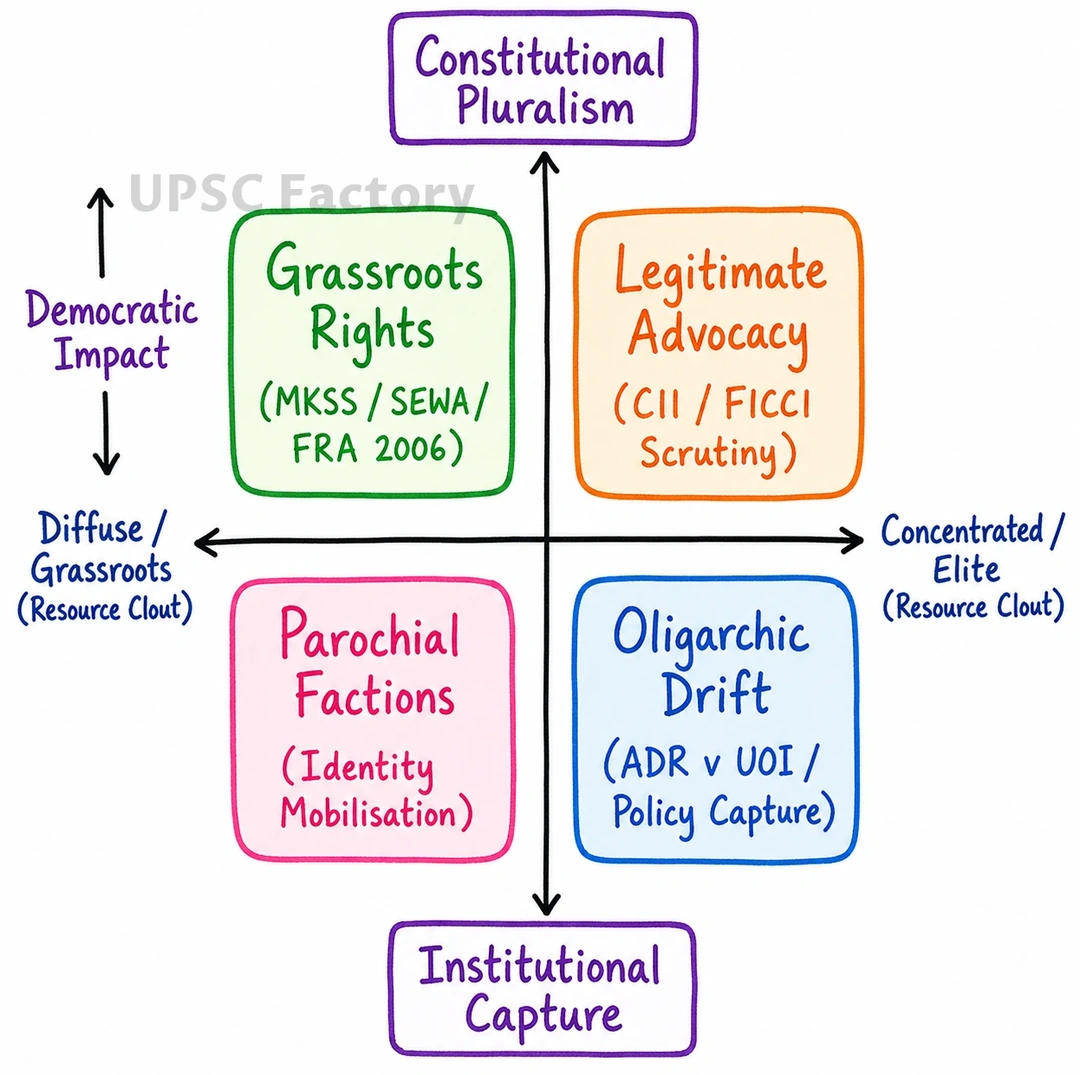
  • Rights-Based Grassroots Enfranchisement: Social movements empower marginalized groups to institutionalize critical rights (e.g., MKSS driving the RTI Act; Mazdoor Kisan Sangharsh).
  • Subaltern & Resource Mobilization: Tribal and informal labor collectives assert constitutional claims over natural resources and welfare (e.g., Niyamgiri Gram Sabha under FRA 2006; SEWA).
  • Asymmetric Access of Elite Lobbies: Corporate lobbies (CII, FICCI) possess structural proximity to policy corridors, marginalizing diffuse, unorganized sector interests.
  • Parochial Fragmentation: Identity-based pressure groups frequently pursue narrow sectarian concessions, aggravating social polarization over systemic enfranchisement.

Corporate-Political Convergence & Threats to Institutional Autonomy

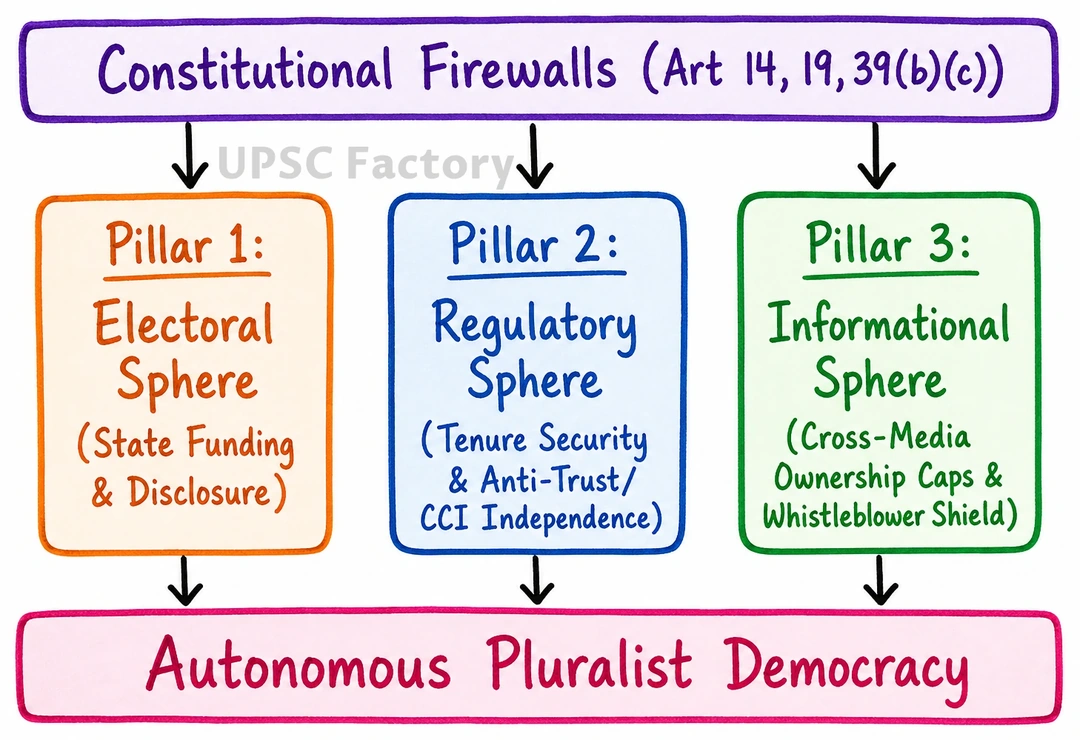
  • Electoral & Legislative Capture: Opaque political finance skews policymaking toward rent-seeking oligarchs (ADR v. UOI, 2024 striking down Electoral Bonds).
  • Regulatory Subversion: Corporate influence weakens statutory oversight, eroding environmental, labor, and anti-trust safeguards (e.g., diluted Environmental Impact Assessment drafts).
  • Compromised Watchdog Neutrality: Nexus-driven appointments and lobbying undermine the enforcement autonomy of bodies like the Competition Commission of India (CCI) and investigative agencies.
  • Fourth Estate Co-optation: Corporate consolidation of media networks compromises objective journalism, manufacturing consent and muting genuine public grievances.


Safeguarding democracy requires statutory lobbying disclosures, state-monitored campaign finance reforms, and robust institutional firewalls to prevent constitutional pluralism from devolving into oligarchic governance.

Q. To what extent do pressure groups, social movements and corporate lobbies deepen pluralistic democracy in India by representing excluded interests? Analyse whether the growing convergence of corporate wealth and political power poses a threat to the autonomy of formal democratic institutions. Read More »

Q. Examine how the separation of powers is practised in India compared to the rigid presidential model of the United States of America. In this context, compare the actual authority of the Indian Prime Minister with that of the President of the USA.

Q. Examine how the separation of powers is practised in India compared to the rigid presidential model of the United States of America. In this context, compare the actual authority of the Indian Prime Minister with that of the President of the USA.

Question from UPSC Mains 2026 GS2 Paper

Model Answer: 

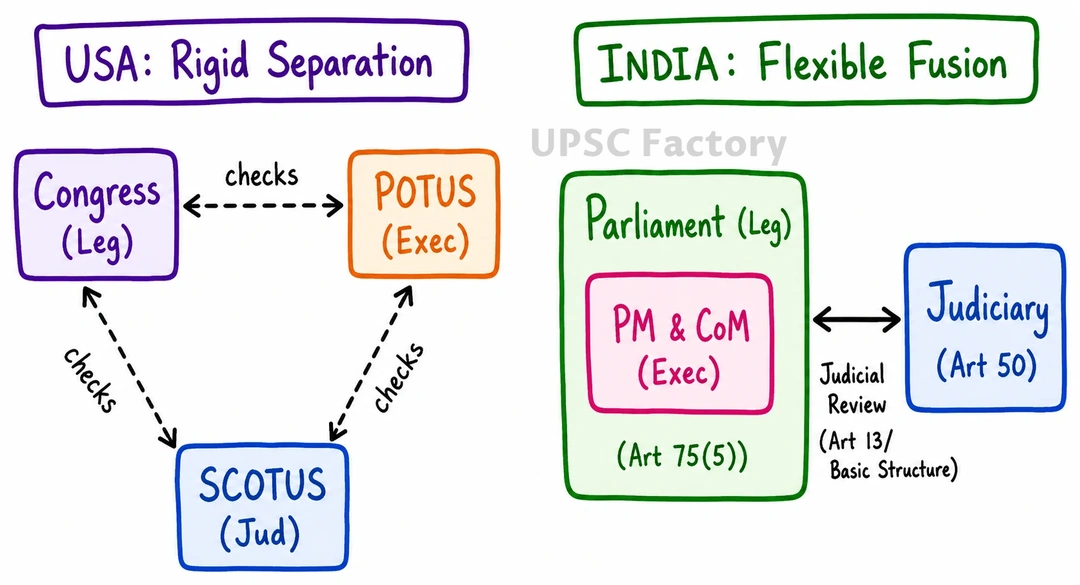
While the US Constitution enforces a rigid tripartite separation of powers (Articles I–III), India adopts Montesquieu’s doctrine flexibly, combining functional overlap and executive-legislative fusion with checks and balances (Ram Jawaya Kapur, 1955).

Separation of Powers: India vs. USA

  • Institutional Model: The US enforces strict personnel separation (Executive cannot sit in Congress); India mandates executive membership within the legislature (Article 75(5)).
  • Checks and Balances: The US relies on structural vetoes (Senate confirmations, presidential veto); India operates on continuous legislative accountability (Article 75(3), Question Hour) and judicial review (Kesavananda Bharati).
  • Judicial Delineation: India constitutionally separates the judiciary from the executive (Article 50), yet allows functional overlap through delegated legislation and tribunals, unlike the rigid US model (Marbury v. Madison).

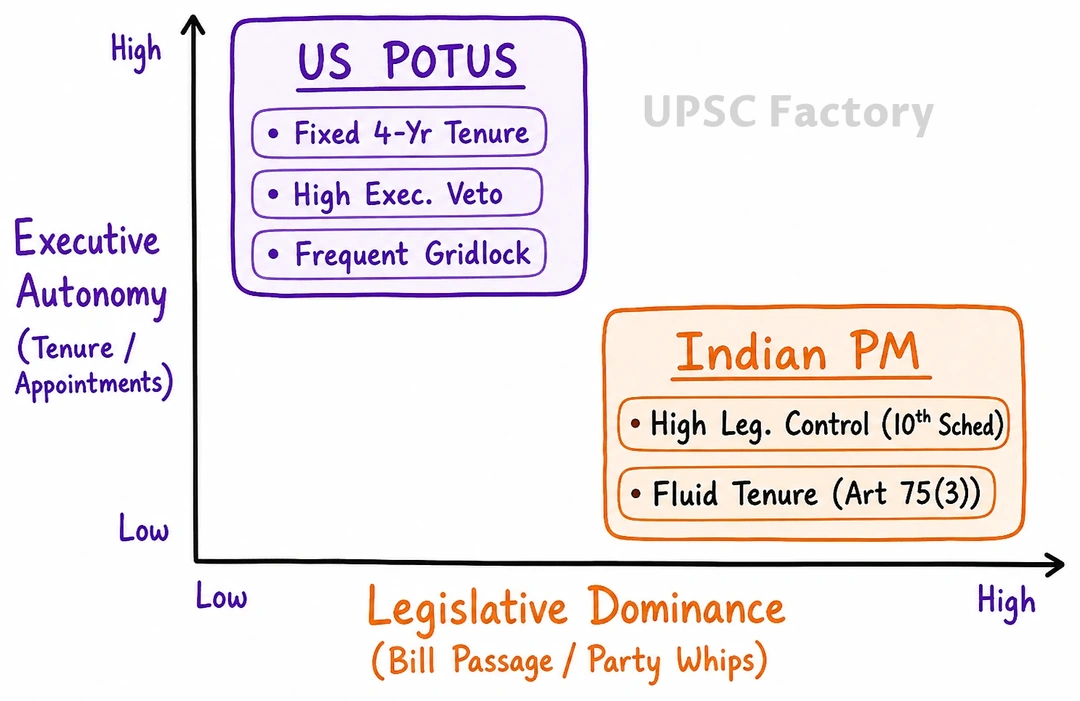
Authority Matrix: Indian PM vs. US President

  • Legislative Dominance: An Indian PM with a majority controls the legislative agenda via party whips and anti-defection laws (10th Schedule); the US President cannot introduce bills directly and frequently faces divided government gridlock.
  • Appointments and Treaties: The US President requires Senate “advice and consent” for treaties and judicial/cabinet appointments; the Indian PM exercises de facto unilateral discretion through presidential aid and advice (Article 74).
  • Tenure and Survival: The US President has a fixed four-year tenure immune to legislative confidence; the Indian PM’s authority depends on sustaining a majority in the Lok Sabha.
  • Emergency and War Powers: The Indian PM can invoke centralized constitutional emergencies (Articles 352, 356); the US President acts as Commander-in-Chief but remains constrained by Congressional funding and the War Powers Resolution (1973).

An Indian Prime Minister backed by a parliamentary majority exercises far greater legislative mastery, whereas the US President commands greater institutional independence and unilateral executive autonomy.

Q. Examine how the separation of powers is practised in India compared to the rigid presidential model of the United States of America. In this context, compare the actual authority of the Indian Prime Minister with that of the President of the USA. Read More »

Q. How far has the Indian federal framework been successful in accommodating regional and cultural diversities? Highlight the role of asymmetric federalism and suggest measures to make dispute resolution mechanisms more effective.

Q. How far has the Indian federal framework been successful in accommodating regional and cultural diversities? Highlight the role of asymmetric federalism and suggest measures to make dispute resolution mechanisms more effective.

Question from UPSC Mains 2026 GS2 Paper

Model Answer: 

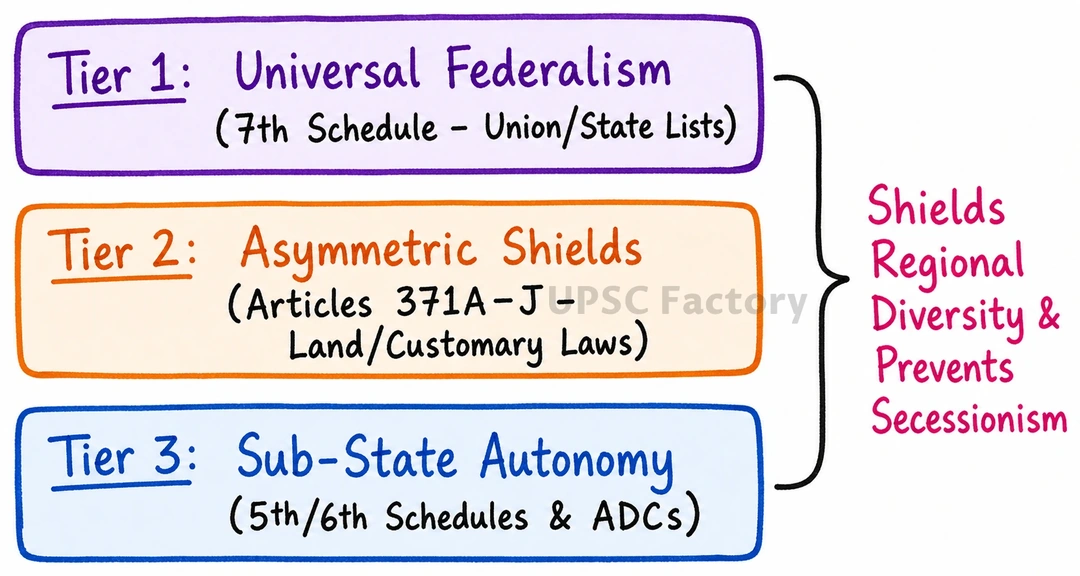
India’s “holding-together” federalism balances national unity with sub-national pluralism, deploying institutional adaptability and asymmetric constitutionalism to manage profound regional, ethnic, and linguistic diversities.

Accommodating Diversity & Asymmetric Federalism: Successes and Faultlines

  • Linguistic & Cultural Pluralism: State reorganization on linguistic lines (SRC 1956) and Eighth Schedule recognition defused major secessionist pressures.
  • Asymmetric Constitutional Protections: Articles 371A–J safeguard customary laws, land ownership, and local identities from central majoritarianism (e.g., Nagaland, Mizoram).
  • Tribal Self-Governance: Fifth and Sixth Schedules empower Autonomous District Councils with legislative and executive devolution (e.g., Bodoland Territorial Council).

  • Fiscal Equalization: Finance Commission transfers utilize equity-based weightages, compensating for geographical and developmental handicaps (e.g., Special Category states).
  • Sub-Regional Gaps: Incomplete devolution triggers persistent demands for statehood and local safeguards (e.g., Ladakh Sixth Schedule demand, Eastern Nagaland).
  • Unitary Friction: Centralizing tendencies via uniform administrative mandates and gubernatorial delays strain regional autonomy (e.g., Article 200 assent controversies).

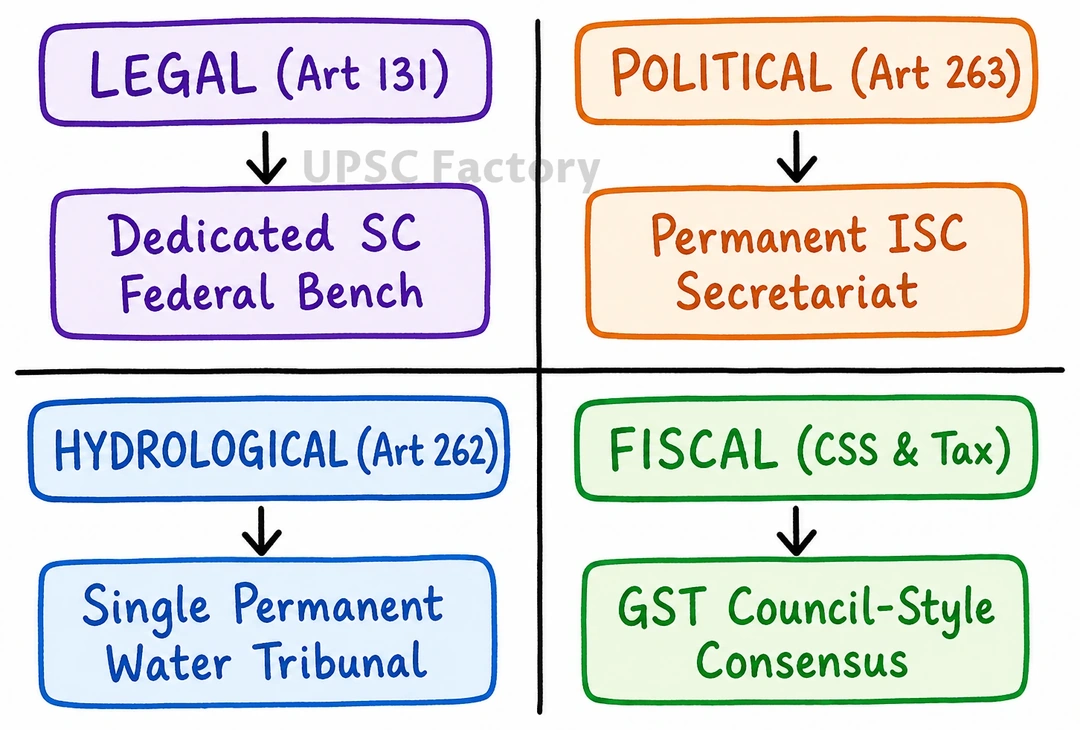
Measures to Strengthen Federal Dispute Resolution

  1. Institutionalize Inter-State Council (Article 263): Mandate bi-annual meetings with an autonomous, permanent secretariat to process inter-governmental frictions proactively (Punchhi Commission).
  2. Dedicated Adjudication under Article 131: Constitute a permanent Federal Bench in the Supreme Court with fixed timeframes to resolve Centre-State legal disputes.
  3. Streamline Inter-State River Water Disputes: Operationalize a single, permanent tribunal with binding awards and real-time data-sharing platforms (Article 262, ISRWD Amendment Bill).
  4. Empower Zonal Councils: Upgrade Zonal Councils from advisory bodies into binding regional coordination hubs for cross-border crime, migration, and infrastructure.
  5. Consensus-Driven Fiscal Platforms: Replicate the GST Council’s collaborative voting architecture for allocating Centrally Sponsored Schemes (CSS) and non-tax federal issues.

Transitioning from episodic dispute management to institutionalized “consultative federalism” is indispensable for sustaining India’s civilizational diversity and constitutional cohesion.


Q. How far has the Indian federal framework been successful in accommodating regional and cultural diversities? Highlight the role of asymmetric federalism and suggest measures to make dispute resolution mechanisms more effective. Read More »

Q. What is meant by judicial legislation? In this context, discuss the verdicts of the apex court allowing “passive euthanasia” and a “living will”.

Q. What is meant by judicial legislation? In this context, discuss the verdicts of the apex court allowing “passive euthanasia” and a “living will”.

Question from UPSC Mains 2026 GS2 Paper

Model Answer: 

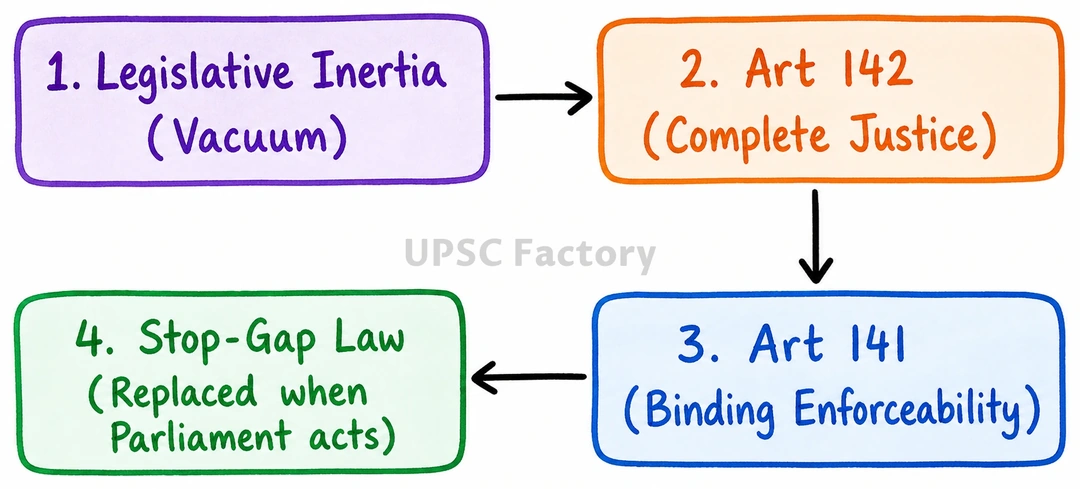
Judicial legislation refers to the judiciary laying down binding rules, procedures, and norms to fill legislative voids, exercising powers under Articles 141 and 142 (e.g., Vishaka Guidelines).

1. Concept and Dimensions of Judicial Legislation

  • Constitutional Basis: Invoked under Article 142 (complete justice) to enforce fundamental rights when statutes are silent.
  • Normative Lawmaking: Creates enforceable obligations equivalent to statutory law under Article 141 until Parliament legislates (e.g., D.K. Basu guidelines).
  • Triggered by Inaction: Operates as a constitutional stop-gap against legislative inertia on complex socio-legal questions.
  • Separation of Powers Tension: Stretches judicial review into the legislative domain, risking judicial overreach if unconstrained.

2. SC Verdicts on Passive Euthanasia and Living Wills as Judicial Lawmaking

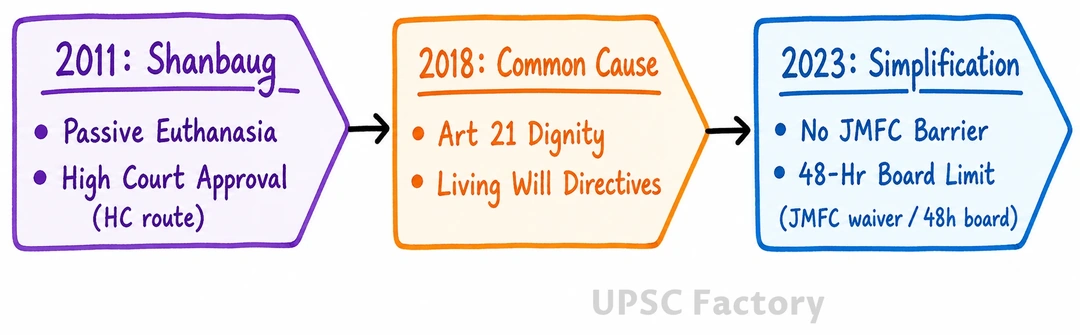
  • Aruna Shanbaug Case (2011):
    • Legalized passive euthanasia (withholding life support) for terminally ill patients in Permanent Vegetative State (PVS).
    • Formulated mandatory interim guidelines requiring High Court approval, bridging the complete statutory vacuum.
  • Common Cause v. UOI (2018):
    • Held the “right to die with dignity” as an intrinsic facet of the Right to Life (Article 21).
    • Legally sanctioned Advance Medical Directives (Living Wills) to preserve patient autonomy.
    • Prescribed detailed administrative mechanisms, including execution protocols and multi-tier Medical Boards (Hospital and Collector-level).
  • Simplification Order (2023):
    • Acted as an iterative regulator by streamlining cumbersome 2018 procedures (e.g., removing Judicial Magistrate attestation; setting strict 48-hour board timelines).
  • Policy Substitution: Directly filled the vacuum left by the unenacted Management of Patients with Terminal Illness Bill.

While judicial legislation protects constitutional freedoms amidst legislative inertia, Parliament must proactively enact a comprehensive end-of-life care law to restore structural separation of powers.

Q. What is meant by judicial legislation? In this context, discuss the verdicts of the apex court allowing “passive euthanasia” and a “living will”. Read More »

Q. Discuss the position of the Governor in the federal polity of India. What is the nature of his power while giving assent to a bill passed by the State Legislature? Is he bound by the aid and advice of his Council of Ministers in all his functions?

Q. Discuss the position of the Governor in the federal polity of India. What is the nature of his power while giving assent to a bill passed by the State Legislature? Is he bound by the aid and advice of his Council of Ministers in all his functions?

Question from UPSC Mains 2026 GS2 Paper

Model Answer: 

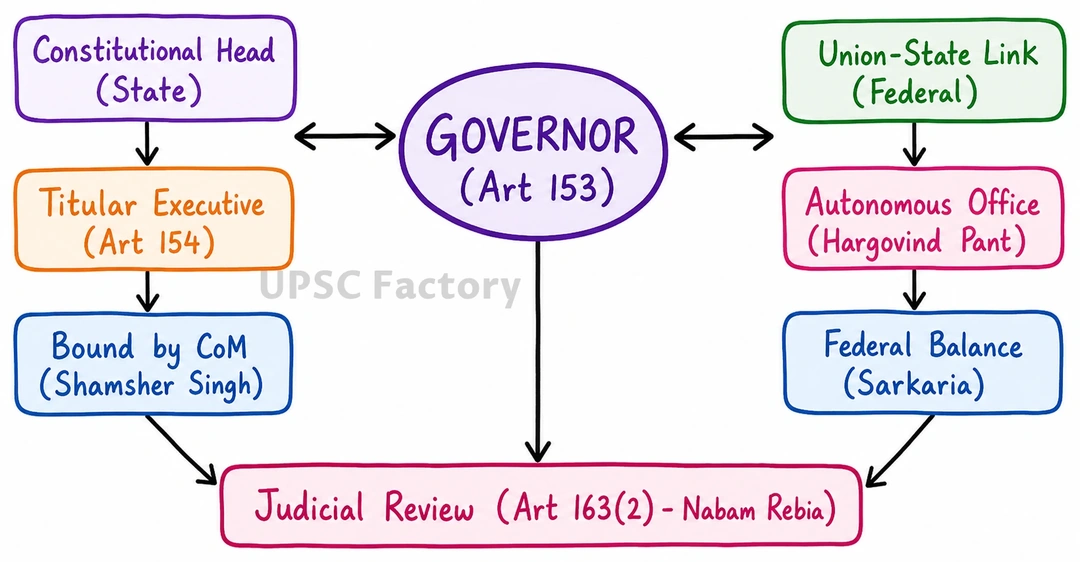
The Governor occupies a dual constitutional capacity under Article 153—acting as the titular executive head of the State and the vital constitutional link between the Union and the States.

1. Position in the Federal Polity

  • Constitutional Head: Functions as a parliamentary figurehead bound by ministerial advice, mirroring the President at the Centre (Shamsher Singh, 1974; Art 154).
  • Federal Linchpin: Bridges Union-State coordination and preserves national integrity, though unilateral actions often trigger federal friction (Sarkaria Commission).
  • Autonomous Constitutional Office: Is neither an employee nor an agent of the Central Government (Hargovind Pant, 1979).

2. Nature of Assent Powers (Article 200)

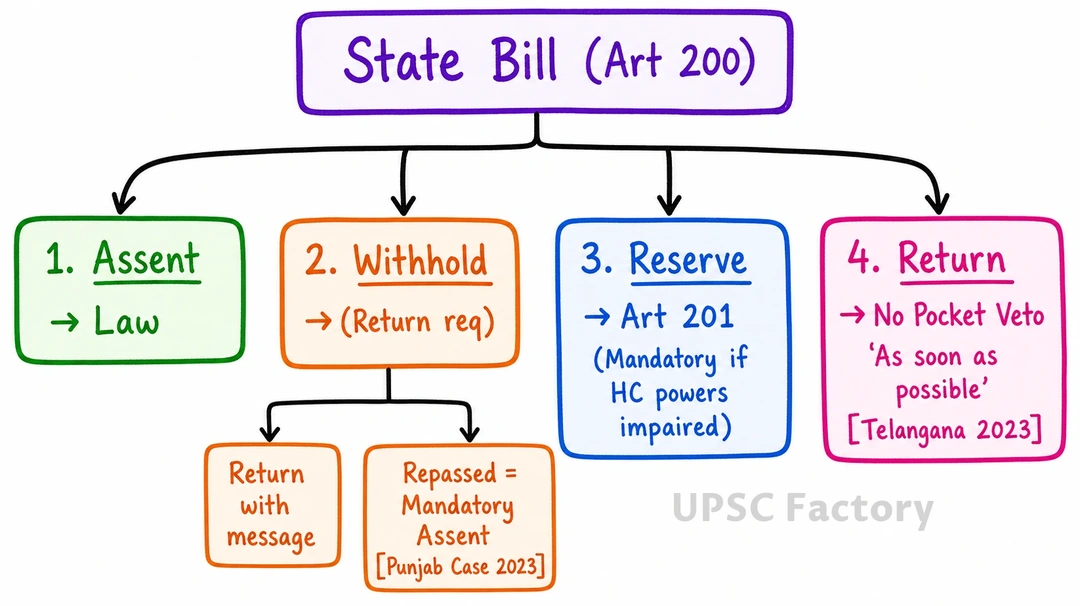
  • Constitutional Alternatives: The Governor can grant assent, withhold assent, return the bill (non-Money Bills) for reconsideration, or reserve it for the President (Article 201).
  • No Pocket Veto: Assent cannot be deferred indefinitely; the phrase “as soon as possible” mandates timely action (State of Telangana, 2023).
  • Qualified Withholding: Withholding assent requires returning the bill with a message; if repassed, assent is mandatory (State of Punjab v. Governor, 2023).
  • Mandatory Reservation: Obligated to reserve bills that derogate from the constitutional powers of the High Court (Article 200, second proviso).

3. Extent of “Aid and Advice” (Article 163)

The Governor is not bound by the Council of Ministers in all functions, possessing limited, non-plenary discretion:

  • Constitutional Discretion: Explicit mandates such as Sixth Schedule tribal administration and special responsibilities under Article 371.
  • Situational Discretion: Appointing the Chief Minister in a hung assembly, dismissing a ministry that has lost legislative majority, or dissolving the house (S.R. Bommai, 1994).
  • Constitutional Limits: Discretion under Article 163(2) is subject to judicial review and cannot be exercised arbitrarily (Nabam Rebia, 2016).

Operationalising the Punchhi Commission’s recommendation for time-bound assent and institutional restraint will align the Governor’s office with cooperative federalism and constitutional morality.

Q. Discuss the position of the Governor in the federal polity of India. What is the nature of his power while giving assent to a bill passed by the State Legislature? Is he bound by the aid and advice of his Council of Ministers in all his functions? Read More »